
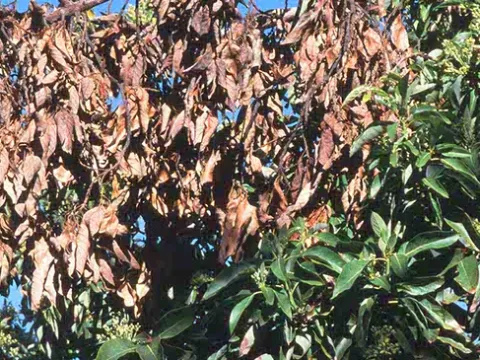
Dothiorella aromatica
Dothiorella aromatica
Dothiorella aromatica is a fungal pathogen classified within the order Botryosphaeriales. It is recognized as a serious threat to woody plants, characterized by its ability to colonize host tissues and induce necrotic lesions.
What the section contains
Dothiorella aromatica
The fungus is primarily known for its anamorphic stage, which produces conidia. These asexual spores are responsible for the secondary spread of the disease across orchards and forestry plantations during the growing season.
Infection usually occurs through wounds, pruning cuts, or natural openings in the plant bark. Once established, the fungal mycelium penetrates the xylem, disrupting water transport and causing systemic stress to the host plant.
Laboratory identification of the pathogen involves the cultivation of the fungus on potato dextrose agar (PDA), where it typically forms dark, grayish-olive colonies. Microscopic examination confirms the presence of pycnidia, the fruiting bodies containing spores.
Because Dothiorella aromatica belongs to a complex family of fungi (Botryosphaeriaceae), accurate identification often requires molecular techniques, such as PCR or sequencing of ribosomal DNA, to distinguish it from closely related species.
This pathogen has a wide host range, attacking various commercially important crops including apples, pears, mangoes, avocados, and walnuts. It is particularly devastating in subtropical and temperate regions where humidity facilitates spore production.
The fungus causes severe wood and bark decay, frequently leading to branch dieback and in extreme cases, the death of the entire tree. Cankers formed on branches can girdle the stem, cutting off the supply of nutrients and water.
Beyond the structural damage to trees, the fungus causes significant economic losses through fruit decay. Infected fruits often develop rot symptoms pre-harvest, leading to premature drop and spoilage during storage and transit.
Orchards under environmental stress—such as those affected by drought, frost, or improper soil management—are significantly more susceptible to infection. The disease often spreads rapidly in such environments, compromising the health of the entire plantation.
The cumulative impact of Dothiorella aromatica includes reduced photosynthetic capacity, lower crop yields, and the long-term deterioration of orchard profitability, necessitating constant monitoring and intervention.
Early symptoms of infection include the development of darkened, slightly sunken patches on the bark of stems and branches. These patches gradually expand, becoming necrotic cankers that may show longitudinal cracks.
Wilting of leaves on affected branches is a common sight, even while the branches themselves remain attached. Upon cutting into the wood, characteristic brown discoloration in the vascular bundles is typically visible, indicating fungal colonization.
Small, black, pimple-like structures known as pycnidia often appear on the surface of dead bark. During damp weather, these structures release spores that can be easily spread by rain splash or wind currents to neighboring healthy tissue.
On fruits, the pathogen manifests as soft, brown circular lesions that spread quickly. In high humidity, a greyish, fluffy mycelial growth may appear on the surface of the fruit rot, eventually resulting in mummification.
In walnut trees, the disease is identified by the blackened appearance of the husks and the subsequent darkening of the internal kernel. This renders the nuts unmarketable and indicates a severe fungal load within the orchard.
Integrated management is essential for controlling this fungus. The most effective cultural practice is the regular removal and destruction of all infected limbs, which helps to reduce the inoculum levels in the orchard environment.
Pruning should be scheduled during dry weather to minimize the risk of infection through fresh cuts. Protective paints or fungicides should be applied immediately to any major wounds to create a barrier against fungal spores.
Chemical control programs involving copper-based fungicides or systemic triazole compounds are widely used. Applications are most effective when timed with bud break and periods of active vegetative growth to protect vulnerable young tissues.
Sanitation practices, including the sterilization of pruning tools with alcohol or a bleach solution between trees, are crucial to prevent human-assisted spread of the fungus across the orchard.
- Annual sanitation pruning to eliminate sources of infection.
- Proactive health management through proper irrigation and fertilization.
- After-harvest fruit treatments to prevent latent infections from developing in storage.