
Discohainesia oenotherae
Discohainesia oen
Description
How to identify
Discohainesia oenotherae is a pathogenic fungus belonging to the Ascomycota division. It is often identified by its conidial stage, historically known as Hainesia lythri.
This pathogen is widely recognized for its ability to cause necrotic diseases in a diverse range of plant species, including both herbaceous perennials and woody shrubs.
The fungus is highly resilient, capable of persisting in infected plant debris and the soil for extended periods, which makes it a significant challenge for crop management.
Taxonomically, it functions as a polyphagous parasite, adapting its life cycle to various host plants and environmental conditions found across temperate and subtropical regions.
Accurate identification requires laboratory analysis, as its symptoms often overlap with those of other soil-borne fungi, necessitating a detailed examination of its characteristic sporodochia.
What it damages
The host range is extensive, including significant impact on Onagraceae, strawberries, raspberries, and various nursery-grown ornamental plants.
The pathogen primary affects the root system and stem base, leading to severe root rot, which subsequently causes the plant to wilt and die due to vascular system failure.
In ornamental and nursery settings, the fungus often causes characteristic necrotic girdling at the crown or base of the stems, effectively cutting off nutrient flow.
Leaf infection manifests as spreading necrotic spots that eventually merge, leading to premature chlorosis, leaf drop, and overall reduction in photosynthetic capacity.
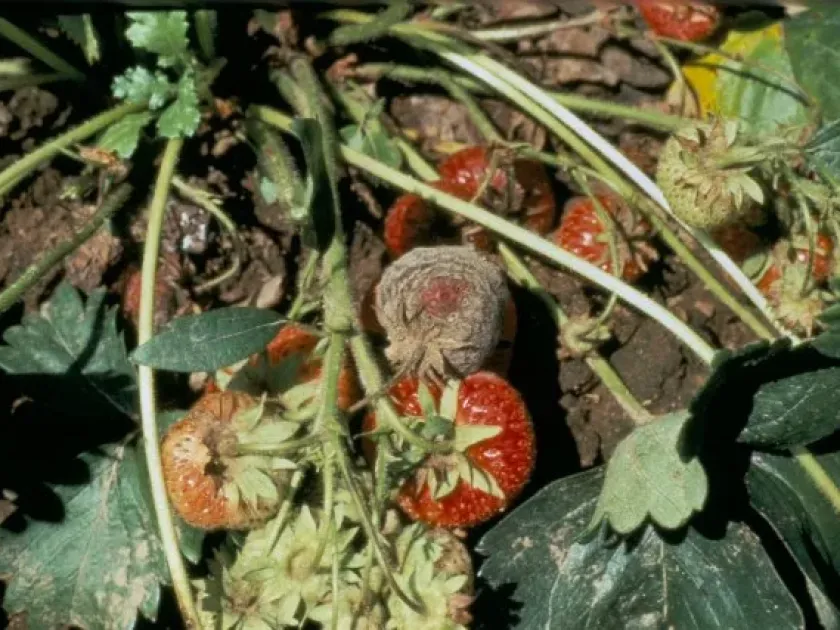
In fruit crops, the pathogen can cause significant economic losses by infecting the fruit itself, leading to rot and rendering the produce unmarketable.
When it appears
Pathogen activity typically initiates in early spring as soil temperatures rise above 10°C, provided that soil moisture levels are sufficient for fungal development.
Throughout the growing season, the fungus produces multiple generations of conidia that are easily dispersed by rain splash, irrigation water, and farm equipment movement.
Periods of high humidity and prolonged rainfall are particularly conducive to the spread of Discohainesia oenotherae, as the spores require moisture for germination.
As the season progresses, the fungus accumulates in the crop environment, increasing the pressure on healthy plants and making control efforts more difficult.
Winter survival is achieved through the formation of resting structures within decaying plant material, ensuring the pathogen remains present for the next cycle.
Signs of infestation
Initial symptoms are often subtle, appearing as small, dark spots on the roots or stem base that quickly evolve into sunken, necrotic lesions.
As the disease progresses, plants exhibit symptoms of water stress: yellowing foliage, loss of turgor pressure, and wilting, despite adequate watering.
Diagnostic signs include the appearance of small, pale, or pinkish sporodochia on the surface of dead or dying tissue during periods of high humidity.
In mature plants, girdling of the stems can cause localized swelling or collapse, with death occurring rapidly once the vascular tissue is fully compromised.
- Root rot leading to sudden wilting.
- Sunken dark lesions on stem bases.
- Leaf chlorosis and necrotic spot development.
- Presence of pinkish spore-bearing structures.
- Fruit decay and mummification.
Control measures
Strict sanitation is the primary control method; all infected plant material should be promptly removed and destroyed to prevent the buildup of inoculum.
Improving soil drainage and optimizing irrigation practices are crucial to minimize the standing water that facilitates spore germination and spread.
Integrating crop rotation and using high-quality, pathogen-free planting stock can drastically reduce the incidence of the disease in commercial fields.
Chemical control involving preventative applications of fungicides, particularly those containing benzimidazoles or triazoles, can be effective when symptoms first appear.
Biological control agents, such as Trichoderma species, are recommended as a sustainable method to suppress pathogen growth within the soil and root zone.
Causes diseases · 3
Discussion
No discussions yet — be the first.