
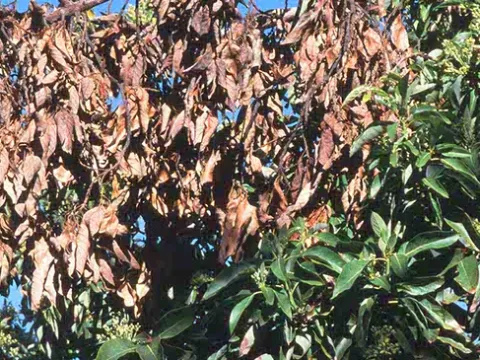
Dothiorella canker
Dothiorella neclivorem
Dothiorella canker is a fungal disease caused by pathogens of the Dothiorella genus, including Dothiorella neclivorem. This pathogen belongs to the Ascomycota division and is primarily responsible for various forms of bark necrosis and dieback in woody perennials.
What the section contains
Dothiorella canker
The fungus affects a wide variety of crops, including apple trees, pears, walnuts, and grapevines. It primarily exploits mechanical wounds, pruning cuts, or frost damage to enter the host plant tissue, causing localized tissue death.
The damage caused by this pathogen is significant as it disrupts the tree's vascular system, leading to stunted growth, leaf chlorosis, and branch dieback. If the infection reaches the main trunk, the entire tree can succumb to the disease, leading to severe economic losses in orchards.
The pathogen overwinters as mycelium or as pycnidia (fruiting bodies) within the bark of infected branches or on dead woody debris. When spring temperatures rise and moisture levels increase due to rainfall, the pathogen releases spores that spread via wind and water splashes.
Infection cycles typically coincide with periods of high humidity and moderate temperatures throughout the growing season. New infection sites are established whenever spores land on susceptible host tissue, especially areas where the protective outer layer of the tree has been compromised.
Symptoms often manifest as dark, depressed areas on the bark that spread over time. As the lesion develops, the bark may crack, revealing the necrotic tissue underneath, and in some cases, a clear or amber-colored gumming can be observed at the infection site.
- Darkened, sunken necrotic lesions on bark.
- Presence of tiny black pycnidia on the surface of dead bark.
- Cracking of the cortex and exposure of wood.
- Dieback of branches or wilting of distal leaves.
The primary control strategy involves rigorous sanitation practices. All infected branches must be pruned at least 15–20 cm below the visible lesion, and all clippings should be removed from the site and destroyed to prevent further spore production.
Maintaining tree vigor through proper fertilization and irrigation helps the plant develop natural resistance. Additionally, protecting pruning wounds with pruning sealers and applying copper-based fungicides during dormancy and early growth stages can significantly reduce the risk of new infections.