
Dothiorella americana
Dothiorella americana
Description
How to identify
Dothiorella americana is a fungal pathogen classified within the kingdom Fungi, class Ascomycetes, and order Botryosphaeriales. It is recognized primarily as a causal agent of branch cankers and bark necrosis in woody plants.
This pathogen functions as a necrotrophic parasite, often exploiting the host's physiological vulnerability caused by environmental stress, such as drought, winter injury, or poor pruning practices.
The life cycle involves the production of pycnidia, small flask-shaped fruiting bodies, which appear as dark, pimple-like structures on the surface of infected bark. These pycnidia release conidia that initiate new infection cycles.
Under laboratory conditions, D. americana produces distinct colonies on potato dextrose agar. Its identification relies on micro-morphological analysis of its asexual spores (conidia) which are typically hyaline and fusiform.
Genetic studies have placed this species within the Botryosphaeriaceae family, a group known for causing significant economic losses in global agriculture due to their wide host range.
What it damages
The host range of Dothiorella americana includes various deciduous fruit trees such as apple, pear, peach, and various stone fruits. It specifically targets the bark and cambial tissues of branches and trunks.
The primary damage caused is the development of cankers—localized areas of dead, sunken bark. If the canker girdles a branch, the portion of the tree distal to the infection will wilt and eventually die.
As the infection spreads, the vascular system is compromised, which restricts the flow of water and minerals. This leads to severe chlorosis, leaf drop, and a drastic reduction in fruit size and quality.
In mature orchards, significant branch dieback can result in the loss of structural integrity of trees, ultimately leading to their premature removal and replacement, causing heavy economic burdens.
Furthermore, the weakened tissue serves as an entry point for wood-boring insects and other opportunistic pathogens, creating a complex disease scenario that is difficult to manage.
When it appears
The disease cycle is highly dependent on climate. Infection typically occurs during the growing season when temperatures range between 15°C and 25°C, creating favorable conditions for fungal growth.
Conidia are dispersed primarily by rain splash and wind, making wet, humid periods particularly risky for orchards. Frequent spring rains significantly accelerate the spread of the pathogen.
During the summer months, the fungus continues to colonize the host tissue. Any cracks in the bark caused by heat stress become prime targets for fungal entry.
The pathogen overwinters as dormant mycelium or pycnidia within the lesions of previously infected branches, ensuring its survival throughout the cold season.
Understanding these seasonal patterns allows growers to optimize the timing of fungicide applications, specifically targeting the periods just before the pathogen becomes most active.
Signs of infestation
Early symptoms include localized discoloration of the bark. These areas may appear darker than surrounding healthy tissue and are often slightly depressed or cracked.
The most distinct sign is the presence of eruptive pycnidia—small, raised, black dots appearing on the bark surface. These are especially visible under moist, high-humidity conditions.
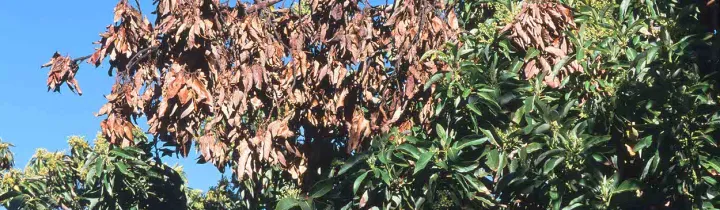
Foliar wilting and browning are common, especially on branches where the infection has progressed to girdle the entire stem, stopping nutrient transport.
Internal bark inspection reveals necrosis of the cambium, often showing a brown or reddish-brown coloration that contrasts sharply with healthy, light-colored tissue.
Exudation of gum or resin from bark cracks is frequently observed, particularly in stone fruit species, as a defensive physiological response to the fungal colonization.
Control measures
Sanitation is the most critical control measure. Growers should prune out infected branches, ensuring all cuts are made well into healthy tissue, and destroy the material by burning to reduce inoculum load.
Protecting trees from abiotic stressors like sunscald and frost damage is essential, as these injuries provide the primary entry points for Dothiorella americana spores.
Copper-based fungicides applied during the dormant season act as effective protectants, coating the bark surface and inhibiting spore germination before the growing season begins.
Balanced fertilization and effective irrigation are vital. Over-fertilization with nitrogen can lead to excessive, soft growth that is more susceptible to infection, while drought stress compromises natural defenses.
Integrated Pest Management (IPM) programs should include regular orchard monitoring for early symptoms to allow for rapid intervention before the pathogen becomes systemic within the tree structure.
Discussion
No discussions yet — be the first.