
Dothiorella canker
Dothiorella gregaria
Dothiorella canker is a plant disease caused by the fungus Dothiorella gregaria (syn. Botryosphaeria dothidea). It is a pathogen belonging to the Botryosphaeriaceae family, known for causing significant damage to woody plants.
What the section contains
Dothiorella canker
The fungus is classified as an opportunistic pathogen. It typically persists in an endophytic state within healthy host tissue, causing damage only when the plant is stressed by environmental factors or injury.
The reproduction occurs through the formation of pycnidia, small black fruiting bodies that develop on the surface of the infected bark. These structures produce numerous conidia (spores) during wet conditions.
The mycelium of the fungus can survive for long periods in woody debris, dead twigs, and the bark of living branches, acting as a constant reservoir for new infections.
Correct identification often requires microscopic examination or laboratory culture, as the symptoms are frequently confused with other types of environmental dieback or canker-causing fungi.
Dothiorella gregaria primarily affects fruit trees such as apple, pear, apricot, and peach. It causes bark necrosis, limb dieback, and in severe cases, the death of the entire tree.
Grapevine cultivars are also susceptible, experiencing cane blight and reduced vigor, which negatively impacts fruit set and vineyard longevity.
In addition to agricultural crops, the fungus infects ornamental and forest trees including walnut, oak, and cedar, which allows the pathogen to cycle between wild and cultivated environments.
Economic losses arise from reduced yields, the cost of tree removal, and the need for frequent pesticide applications to protect the orchard from progressive dieback.
Young trees in nurseries are particularly vulnerable, as infections can lead to severe stunting or the total loss of the planting stock before it reaches the consumer.
Infection cycles are largely weather-dependent, with sporulation and dispersal occurring predominantly in the spring and early summer when moisture levels are elevated.
Spore dispersal is facilitated by rain splashing and wind, allowing the fungus to land on pruning wounds, cracks, or insect-damaged areas of the bark.
During the peak of the growing season, the fungus actively colonizes tissues, with the rate of colonization often accelerating under high-temperature stress.
As autumn approaches, the pathogen prepares for winter dormancy, often producing fruiting bodies on dead or dying branches that will serve as the primary inoculum for the following year.
The disease persists through winter in a quiescent stage within the plant tissue, remaining ready to resume active growth as soon as temperatures rise in the spring.
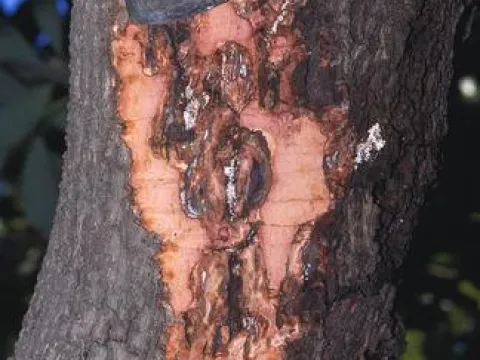
Symptoms often manifest as sunken, discolored patches on the bark of trunks or branches, which may be reddish-brown or dark in color.
Cracking and fissuring of the bark frequently occur at the site of infection, often accompanied by the exudation of sap or gum, particularly in stone fruits.
Internal examination of the bark reveals necrotic lesions (cankers) that penetrate into the cambium and wood, turning the tissue dark brown and necrotic.
In late stages, the outer surface of the affected bark becomes speckled with tiny, pimple-like black pycnidia, which release spores during wet weather conditions.
Infected fruits may show signs of rot, typically starting at the stem end, causing them to darken and fall prematurely from the tree.
Sanitation is the cornerstone of management: all infected branches must be pruned back into healthy wood and promptly burned or removed from the orchard.
Tools used for pruning must be disinfected after each tree to prevent the mechanical transmission of spores to healthy plant tissue.
Promoting tree vigor through balanced irrigation and proper nutrition is crucial, as healthy trees are better equipped to limit the endophytic growth of the fungus.
Chemical control usually involves copper-based fungicides or other authorized compounds applied during the dormant season and after significant pruning events.
- Avoid pruning during wet or rainy periods.
- Protect tree trunks from sunscald with white latex paint.
- Minimize mechanical injuries from machinery and tools.
- Monitor and control insects that provide entry points for the pathogen.