
Discula umbrinella
Discula umbrinella
Description
How to identify
Discula umbrinella is a fungal pathogen classified within the order Diaporthales. It is widely recognized as the anamorphic (asexual) stage of the fungus Apiognomonia errabunda, which is responsible for significant foliage damage.
As a microfungus, it develops within the plant tissue, forming small, cushion-like fruiting bodies known as acervuli. These structures erupt through the epidermis to release asexual spores (conidia).
The fungus is structurally adapted to exploit the vascular and mesophyll tissues of its hosts. It thrives by extracting nutrients and disrupting the physiological balance of the plant leaves and shoots.
Classification identifies it as a member of the Gnomoniaceae family, which contains several important plant pathogens capable of causing necrotic lesions on hardwood tree species.
Diagnosis is usually confirmed by laboratory observation of the conidial masses, which appear as minute, light-colored droplets emerging from the necrotic spots on the leaf underside.
What it damages
This pathogen primarily targets broad-leaved trees, including oak (Quercus), beech (Fagus), linden (Tilia), and birch (Betula). It is a major concern in nursery settings and urban forestry.
The disease, commonly referred to as anthracnose, manifests as severe leaf spot, shoot blight, and premature defoliation, which severely reduces the tree's photosynthetic capacity.
Persistent infections can lead to dieback of twigs and small branches. This weakens the tree's structure and makes it more vulnerable to opportunistic pests and environmental stress.
In nurseries, the pathogen is particularly destructive to seedlings, as early-stage infection can result in stunted growth or the complete loss of young saplings before they reach maturity.
Cumulative damage over several years can result in significant loss of aesthetic value and may eventually lead to the decline and death of highly susceptible tree specimens.
When it appears
The infection cycle initiates in early spring. Overwintering fungal structures in fallen leaf litter or bark crevices become active as temperatures rise and buds begin to open.
Spore dispersal is heavily dependent on moisture. Rainfall and high humidity during the leaf-out period facilitate the spread of conidia from the old foliage to the fresh, susceptible tissue.
The disease progresses rapidly during periods of frequent rain and moderate temperatures. Under these conditions, secondary infection cycles can occur throughout the growing season.
As summer progresses, if the climate turns hot and dry, the visible development of the fungus often slows down, but the mycelium may remain dormant within the host tissues.
The cycle concludes in autumn as the trees shed their leaves. The fungus survives the winter primarily as mycelium or as specialized reproductive structures within the leaf litter.
Signs of infestation
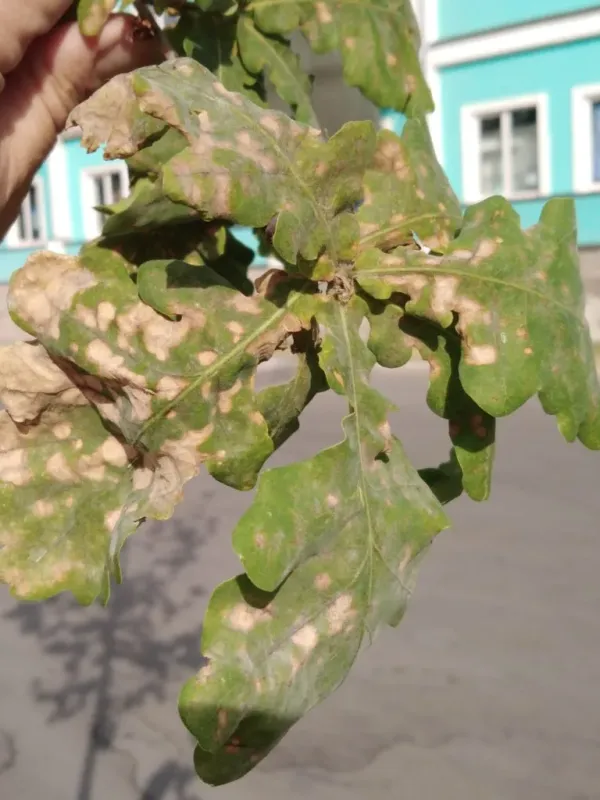
Symptoms begin as irregular, small, dark brown or black spots on the leaves. These lesions often expand and merge, following the pattern of the leaf veins or margins.
The underside of affected leaves frequently exhibits small, raised pustules (acervuli). In damp weather, these pustules can release a visible mass of spores.
Leaf curling, crinkling, and necrosis of the leaf blade are common indicators of infection. Severe cases can cause the entire crown to appear scorched and withered.
Shoot blight symptoms include the development of elongated, sunken cankers on twigs, which may cause the tips of the shoots to die back or break off.
Premature leaf drop is a classic sign of high infection pressure, often occurring long before the normal autumn senescence, leading to thin and sparse tree canopies.
Control measures
Sanitation is the most critical management step. Thorough removal and destruction of fallen leaves and infected twigs are essential to reduce the primary inoculum source for the following spring.
Pruning of affected branches should be performed during dry periods. It is vital to disinfect pruning tools with a bleach solution to prevent the mechanical transmission of the pathogen.
Cultural practices should focus on improving tree health and air circulation within the canopy to minimize the moisture levels that promote fungal development.
Fungicidal applications are most effective as a preventative measure. Treatments should be applied at bud break and repeated if wet conditions persist during the leaf expansion phase.
- Apply copper-based fungicides or systemic triazoles as directed.
- Ensure balanced fertilization to promote vigorous tree growth.
- Avoid overhead irrigation, which mimics rainfall and spreads spores.
Causes diseases · 2
Discussion
No discussions yet — be the first.