
Discostroma corticola
Discostroma corticola
Discostroma corticola is an ascomycete fungus that acts primarily as a bark pathogen in various woody plant species. It is taxonomically situated in the order Pleosporales and typically colonizes the bark tissues of host plants.
What the section contains
Discostroma corticola
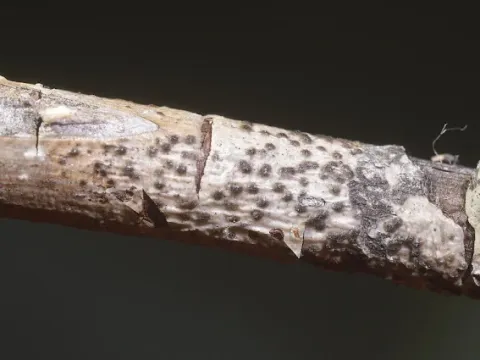
The fungus is characterized by the formation of ascostromata, which appear as small, black, erumpent structures on the surface of the bark. These are the diagnostic features that differentiate this pathogen from other bark-inhabiting fungi.
Biologically, it behaves as a facultative parasite, meaning it can survive on dead organic matter but aggressively attacks tissues weakened by abiotic factors like drought, frost, or mechanical damage.
The fungus spreads via ascospores or conidia, often disseminated by wind and rain splash during favorable humid conditions. It survives the winter cycle within the necrotic bark of host trees, ready to infect new sites in the spring.
The development of the fungus is highly sensitive to moisture levels. Consistent damp conditions in a dense canopy or poor ventilation in orchards create the ideal microclimate for the spores to germinate and penetrate the bark.
Discostroma corticola is known to affect a variety of fruit trees, including apple, pear, and plum, as well as several ornamental woody shrubs. The disease causes significant damage to the vascular system of the branches.
The primary impact of the infection is the development of localized necrosis. As the pathogen advances, it can girdle branches, resulting in sudden wilting and dieback of the distal parts of the infected shoots.
In vineyards, this fungus contributes to the decline of vine stocks, leading to poor yield and premature senescence of the vines. It is often found in combination with other trunk pathogens, complicating the diagnosis.
The pathogen disrupts the flow of nutrients and water from the roots, causing long-term debilitation of the tree. If left unchecked, the progressive necrosis can spread to the main trunk, leading to the eventual death of the entire tree.
Trees stressed by previous pest infestations or poor soil nutrition are significantly more susceptible. Therefore, maintaining general tree vigor is the first line of defense against the spread of the fungus.
Symptoms initially manifest as darkened, slightly sunken patches on the bark. These patches may eventually crack, revealing the underlying woody tissue which often shows signs of discoloration.
A key sign during humid weather is the eruption of small, black, raised structures (ascostromata) breaking through the epidermis of the bark. These are often clustered around the necrotic areas.
In stone fruit trees, excessive gumming is a common reaction to the infection in the area surrounding the necrotic tissue. The bark itself loses its elasticity, becomes brittle, and may peel off in strips.
Leaves on affected branches often show signs of chlorosis or may simply dry out and hang on the branches prematurely. This is a secondary effect caused by the disruption of water transport to the foliage.
If the bark is removed from an infected area, the underlying cambium usually appears dark brown or black. This indicates that the pathogen has successfully penetrated beyond the dead outer bark layer.
The most effective management strategy involves rigorous sanitation practices. All infected branches must be pruned at least 10–15 cm below the visible necrosis and immediately disposed of by burning to destroy the inoculum.
Preventing mechanical damage to the bark is essential, as these wounds serve as entry points for the spores. Applying protective tree paints or whitewash to trunks can help shield the bark from sunscald and frost damage.
Fungicidal sprays, particularly those based on copper, are effective when applied during the dormant season. These treatments help reduce the surface population of spores and prevent new infections.
Always ensure that pruning tools are disinfected with alcohol or a bleach solution between trees to prevent the cross-contamination of healthy plants during the maintenance season.
- Regular inspection of bark integrity during the growing season.
- Balanced fertilization to promote tree health and resistance.
- Proper orchard drainage to reduce atmospheric humidity.
- Systemic fungicides used as a preventative measure in high-risk zones.