
Dothiorella ulmi
Dothiorella ulmi
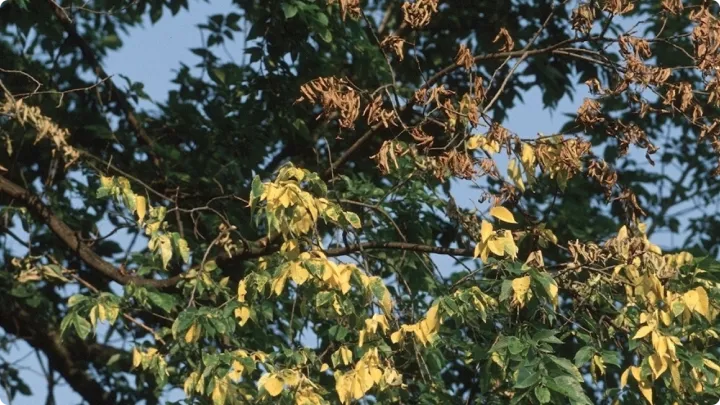
Description
How to identify
Dothiorella ulmi is a fungal pathogen classified as an ascomycete. It is primarily responsible for vascular wilts and branch dieback in various species of elm trees (Ulmus), causing significant economic and aesthetic damage.
The fungus manifests by developing mycelium within the vascular tissue of the host, eventually clogging the xylem. This mechanical blockage prevents the upward movement of water and essential nutrients from the roots to the crown.
Reproductive structures called pycnidia appear as small black dots on the bark of infected branches. These structures release spores, which serve as the primary inoculum for spreading the disease further.
As a pathogen, it is highly persistent and can survive for extended periods within dead wood or leaf debris. Its ability to remain latent in host tissues allows it to infect trees over several seasons.
Understanding the life cycle of Dothiorella ulmi is essential for arborists and foresters, as the fungus often acts in conjunction with environmental stressors to compromise tree vitality.
What it damages
The primary hosts of this fungus are elm trees. The pathogen is capable of infecting both young nursery stock and mature trees, often leading to rapid crown decline.
Symptoms include branch dieback, leaf chlorosis, and premature senescence of the foliage. Severe infections can lead to the death of the entire tree within a few growing seasons.
The economic impact of this pathogen is significant, particularly in urban environments where elm trees are a major component of the landscape. Loss of these trees reduces shade and property value.
The damage is systemic; the fungus travels through the vascular system, leaving necrotic streaks beneath the bark. This structural weakness often makes branches susceptible to breakage during windstorms.
In addition to direct damage, the fungus renders the host susceptible to secondary infestation by bark beetles, which can transmit the pathogen to neighboring healthy trees.
When it appears
The infection cycle typically begins in the spring when rising temperatures and humidity trigger the release of conidia. These spores are spread by water splash, wind, or insect vectors.
Summer conditions with warm, humid weather are ideal for the rapid colonization of host tissues by the mycelium. During this peak period, the symptoms of wilting become most visible.
In autumn, the fungus prepares for winter by slowing down its metabolic processes and deepening its presence in the woody tissues of the elm tree.
Winter survival is facilitated by the fungus remaining dormant within the bark and dead wood. The pathogen can withstand freezing temperatures, ensuring it is ready to activate again the following spring.
The transition between spring and summer remains the most critical window for new infections, necessitating heightened vigilance during this period.
Signs of infestation
Early identification is key to managing the disease. Look for wilting leaves that do not shed immediately, followed by the appearance of discolored, necrotic spots on the foliage.
When cutting into an affected branch, one will observe a distinct brown discoloration in the sapwood, often forming a ring or streaks that indicate vascular obstruction.
- Presence of black fruiting bodies (pycnidia) on the bark.
- Progressive dieback of the crown starting from the tips.
- Premature yellowing or browning of leaves.
- Dark, discolored vascular tissue visible in branch cross-sections.
- Longitudinal cracks in the bark of infected branches.
If left untreated, the dieback progresses downwards from the crown to the main trunk, eventually resulting in the complete failure of the tree's hydraulic system.
Regular monitoring of the branch structure allows for the detection of initial dieback, which is a hallmark sign of the infection's progression.
Control measures
Sanitation is the most effective control measure. Pruning infected branches at least 30–50 centimeters below the visible signs of necrosis is necessary to ensure the removal of all infected wood.
Fungicide applications, specifically systemic treatments, can be used to protect high-value trees or manage early-stage infections. Proper application timing is critical for success.
Maintaining tree vigor through appropriate fertilization and adequate irrigation is vital. A healthy tree has a much better chance of walling off the infection compared to an stressed one.
Mechanical damage to roots and trunks should be avoided, as these injuries provide easy entry points for fungal spores. Installing protective barriers in urban settings can reduce this risk.
In cases of severe infestation, complete removal and destruction of the infected tree are necessary to eliminate the source of inoculum and protect the surrounding environment.
Causes diseases · 1
Discussion
No discussions yet — be the first.