
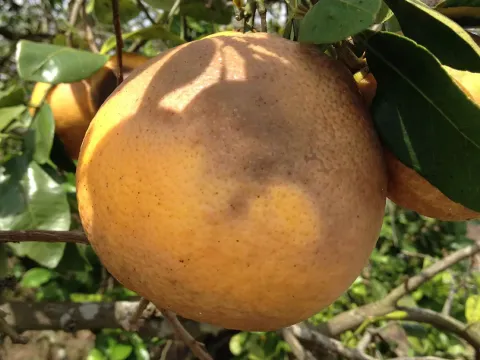
Diplodia natalensis
Diplodia natalensis
Diplodia natalensis (synonym Lasiodiplodia theobromae) is an ascomycete fungus in the class Dothideomycetes. It is a cosmopolitan, polyphagous pathogen known to infect hundreds of plant species, particularly in tropical and subtropical regions.
What the section contains
Diplodia natalensis
The fungus is characterized by the production of pycnidia, which are dark-colored fruiting bodies that contain conidia. These spores are the primary means of dispersal and infection for the pathogen within an orchard setting.
Taxonomically, it belongs to the family Botryosphaeriaceae. The mycelium is robust and capable of degrading complex plant tissues, facilitating rapid colonization of host organs such as branches, stems, and fruits.
Cultural characteristics of the pathogen include fast growth rates on common laboratory media, typically exhibiting a dense, grey-to-black aerial mycelium that eventually develops black pycnidia.
Accurate identification is based on observing its morphological traits, including the shape and size of conidia, and molecular diagnostic tools such as ITS sequencing, which distinguishes it from related species.
In citrus, Diplodia natalensis causes stem-end rot and branch dieback. This disease significantly impacts the economic value of citrus crops by reducing both yield and the shelf life of harvested produce.
The pathogen invades the vascular system of trees, causing xylem blockage. This results in the progressive dieback of branches, starting from the tips and extending downwards, eventually leading to the decline of the entire tree.
Fruit infection is often latent, meaning the fungus remains dormant in the fruit peel until conditions become favorable for decay. Once established, it causes rapid rotting of the internal pulp.
Outside of citrus, it is a major pathogen of cocoa, rubber trees, banana, and various tropical fruits. The damage includes pre-harvest fruit drop, dieback of shoots, and decay during transport and storage.
The economic impact is multi-fold: direct loss of crops, increased cost of fungicide applications, and the necessity of discarding infected shipments during trade inspections.
The development of Diplodia natalensis is highly favored by warm and humid climates. The optimal growth temperature for the fungus ranges between 25°C and 30°C (77°F–86°F).
Infection cycles are most intense during the rainy season. Rainfall acts as a vector, splashing spores from infected debris or pycnidia onto healthy plant parts, where they germinate under high humidity conditions.
The fungus overwinters in dead branches, twigs, and mummified fruits left in the canopy or on the ground. These act as primary sources of inoculum when environmental conditions improve in the spring.
Physiological stress caused by drought or improper irrigation makes trees more susceptible. Wounding through pruning or harvest is a critical seasonal factor that provides direct entry points for the pathogen.
Post-harvest decay is a significant concern year-round in storage facilities, especially if temperature control is not strictly maintained, allowing for rapid latent-to-active transitions of the fungal infection.
Initial symptoms on branches include chlorosis of leaves followed by wilting and the death of twigs. Upon peeling back the bark, dark necrotic lesions are visible in the underlying wood and cambium.
Fruit symptoms typically begin at the stem end as a small, water-soaked spot. This area rapidly expands, darkens to a brown or black color, and becomes leathery or soft as the internal tissue decomposes.
Under favorable high-humidity conditions, the surface of affected fruit or bark may show tiny, raised black pimples, which are the pycnidia of the fungus extruding spores.
- Dark necrotic lesions on twigs and branches
- Stem-end rot starting at the fruit peduncle
- Darkening and softening of fruit tissues
- Presence of black fruiting bodies (pycnidia) on infected tissues
- Premature yellowing and drop of leaves
Advanced stages of decay result in a characteristic unpleasant odor and the complete breakdown of the fruit structure, rendering it non-marketable.
Cultural practices are the cornerstone of management. Pruning of infected branches should be performed during dry periods, and all removed material must be promptly burned to destroy the inoculum source.
Chemical control involving copper-based fungicides or systemic compounds is used to protect trees after pruning and to reduce the incidence of fruit infection during the growing season.
Post-harvest treatments, such as dipping fruits in antifungal solutions, can prevent stem-end rot from developing during storage. Maintaining cold storage at temperatures below 5°C is crucial for inhibition.
Integrated pest management should focus on maintaining tree vigor through appropriate fertilization and water management, as well as protecting trees from mechanical injuries during field operations.
Quarantine measures and the use of certified disease-free nursery stock are essential for preventing the introduction of this pathogen into new, healthy orchard areas.