
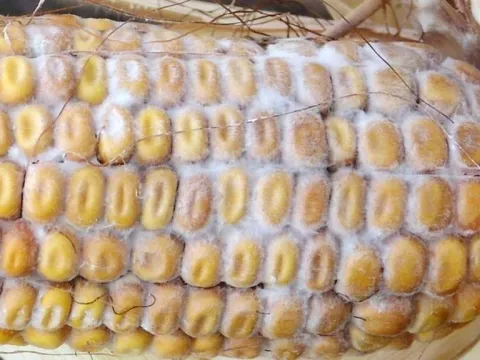
Diplodia ear rot of corn
Diplodia macrospora
The causative agent of this disease is the fungus Diplodia macrospora, which belongs to the kingdom Fungi, phylum Ascomycota. It is a significant phytopathogen known to cause ear rot and stalk rot in maize crops.
What the section contains
Diplodia ear rot of corn
The fungus survives as pycnidia and mycelium in crop residues left in the field or in the soil. During the growing season, pycnidia produce conidia that are disseminated by wind or rain splashes, facilitating the spread of the disease.
The infection process typically begins during the silking stage. Favorable conditions for the pathogen include prolonged periods of high humidity and moderate temperatures during the reproductive development of the corn plant.
The pathogen colonizes the ear by penetrating through husks or the shank, growing rapidly within the tissues. It breaks down structural components, leading to the disintegration of grain quality.
Diplodia macrospora is morphologically distinguished from other Diplodia species by its larger spore size, which is a critical characteristic for accurate diagnostic identification in professional laboratories.
The primary host for this pathogen is corn. The disease manifests as dry rot on ears and necrotic lesions on stalks, causing significant economic losses in various maize-producing regions.
Infection leads to a reduction in the weight of thousand grains, kernel shriveling, and a dull, discolored appearance of the ears. The nutritional quality of the grain is severely compromised by fungal infestation.
Stalk rot weakens the plant's structural integrity, causing lodging. This creates major challenges for mechanical harvesting and increases physical losses of the corn crop in the field.
The production of mycotoxins by the fungus renders the contaminated grain unsuitable for livestock feed or industrial processing, imposing strict quality controls on the harvest.
In cases of severe epiphytotics, the damage can impact a large portion of the field, leading to a substantial decrease in total yield and reduced marketability of the maize grain.
The initial signs appear as a white or grayish fungal mat developing under the husks of the ear. The husks may remain tightly adhered to the ear, creating a humid environment that promotes fungal growth.
Kernels eventually turn brown or black, lose their luster, and become brittle. Small, black structures called pycnidia will appear on the surface of the husks and cob, serving as fruiting bodies for the fungus.
Stalk symptoms involve the discoloration of lower nodes, which become soft and structurally weak. Internal stalk tissue may exhibit significant decay and dark-colored mycelial growth.
Under high-humidity conditions, a dusty appearance caused by the release of conidia can be seen on the affected plant parts. Infected plants often show premature senescence compared to healthy ones.
If the infection occurs early in the season, the entire ear can be transformed into a rotted, moldy mass, resulting in total loss of grain productivity for that specific ear.
Crop rotation is the most effective cultural practice to manage the pathogen. Avoiding continuous corn cultivation in the same field for several seasons helps reduce the concentration of inoculum in the soil.
Proper tillage techniques, such as deep incorporation of crop residues, accelerate the decomposition of infected debris, which significantly reduces the survival rate of the fungus.
Selecting resistant or tolerant hybrids is a key strategy for integrated pest management. Breeding programs prioritize varieties that exhibit traits, such as tighter husks, which provide physical barriers against fungal entry.
Seed treatment with broad-spectrum fungicides is essential for protecting seedlings during the early stages of growth, ensuring uniform plant emergence and better overall vigor.
Timely harvesting is critical to minimize the time ears spend in the field under conditions conducive to rot. If necessary, foliar fungicide applications during the silking stage can be employed in high-risk environments.