
Dilophospora leaf spot
Dilophospora holci
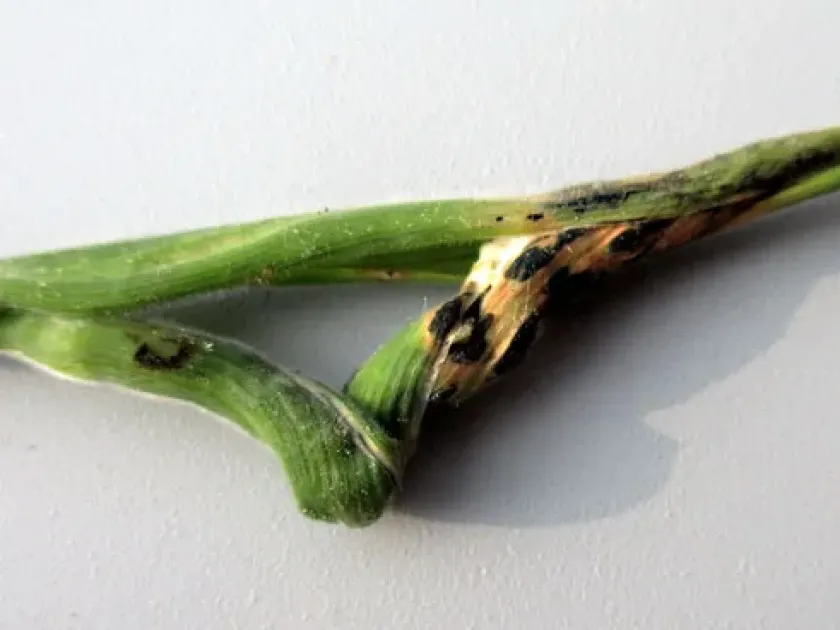
Description
How to identify
The causal agent of this disease is the fungus Dilophospora holci. It belongs to the Ascomycota phylum. This pathogen is specialized in infecting various cereal crops and grasses, often acting in synergy with the plant-parasitic nematode Anguina tritici.
The fungus develops its mycelium within the host plant tissues. A diagnostic feature is the formation of pycnidia, which are dark, flask-shaped structures where asexual spores (conidia) are produced.
The relationship between the fungus and the nematode is unique. The nematode creates wounds in the plant tissue, allowing the fungal spores to enter, while the fungus provides a habitat for the nematode development.
Identification typically involves observing the characteristic pycnidia on leaves and spikes. Laboratory analysis confirms the presence of the pathogen by isolating the fungus from infected tissue segments.
Microscopic examination of the conidia is essential for a definitive diagnosis, as they possess distinct branched appendages that differentiate them from other cereal pathogens.
What it damages
The disease affects a wide range of cereals including wheat, barley, rye, and forage grasses. It causes significant damage to the plant's vegetative structure, leading to weakened growth and reduced vigor.
The primary economic damage is caused by the deformation of the ear, which prevents proper grain filling. This results in empty or shriveled grains, significantly lowering the yield per hectare.
By attacking the leaves and stems, the pathogen reduces the plant's photosynthetic capacity, which leads to early senescence and loss of plant biomass during the critical filling stage.
Infested fields may show reduced grain quality, making the produce unsuitable for milling or seed production, which causes direct financial losses to farmers.
If not managed, the disease can spread rapidly through the movement of contaminated seed lots, potentially introducing the pathogen into previously healthy regions.
Signs of infestation
Symptoms initially appear as elongated, chlorotic lesions on the leaves. As the infection progresses, these spots turn greyish-brown and eventually develop black, pin-point structures (pycnidia).
Infected leaves often curl and wither. The disease can spread to the leaf sheaths and culms, causing them to show similar discoloration and the presence of fungal fruiting bodies.
The most severe sign is visible on the spike, where it becomes distorted and darkened. The glumes may show black patches, and the formation of healthy grains is completely disrupted.
During humid weather, a black, oily-looking mass of conidia may be visible on the surface of the infected plant parts, facilitating the dispersal of spores to neighboring plants.
Overall, a heavily infected crop appears stunted and patchy, with many plants failing to reach their normal height or maturity compared to surrounding healthy plants.
Control measures
The most important control measure is the use of high-quality, certified seed. Cleaning seeds using specific equipment to remove nematode galls is critical in preventing the disease spread.
Crop rotation is highly effective. Moving away from susceptible hosts for at least two years helps break the survival cycle of the nematode and the fungus in the field.
Good weed management is essential, as wild grasses act as secondary hosts and reservoirs for the fungus and the vector nematode throughout the growing season.
Post-harvest sanitation, including deep plowing and the burial of crop residues, helps to reduce the inoculum level in the soil and prevents the pathogen from overwintering.
While chemical control with fungicides is an option, it must be integrated into a broader strategy that primarily targets the nematode vector and relies on preventative agronomic practices.
Causes diseases · 1
Discussion
No discussions yet — be the first.