
Diplodia corticola
Diplodia corticola
Diplodia corticola is an ascomycete fungus in the class Dothideomycetes and order Botryosphaeriales. It is recognized as a serious pathogen affecting the bark and cambium of various woody plants.
What the section contains
Diplodia corticola
The fungus often behaves as an endophyte, dwelling within healthy plant tissues without causing immediate symptoms, which allows it to remain latent until the host is stressed.
It completes its reproductive cycle by producing pycnidia—fruiting bodies that release conidia. These spores serve as the primary inoculum for spreading the disease within a plantation.
Transmission occurs through the dispersal of spores by splashing raindrops, wind currents, and vectors such as bark beetles, which provide entry points into the wood.
Accurate identification requires professional laboratory analysis, including culturing on selective media and DNA-based diagnostic techniques to confirm the presence of this specific pathogen.
The primary damage caused by this pathogen is the development of extensive necrotic bark cankers, which inhibit nutrient and water flow, leading to branch or whole-tree mortality.
While the pathogen is most famous for its impact on oak species, including cork and holm oaks, it has a broad host range that includes various deciduous tree species.
The destruction of cambial tissue stops radial growth and weakens the tree's defensive systems, frequently inviting secondary infestations by wood-boring insects.
In forestry, this pathogen causes severe economic losses by reducing the quality and volume of timber, as well as damaging the cork production potential of affected trees.
The cumulative effect of Diplodia infections leads to progressive forest decline, reducing the overall resilience of the ecosystem to other biotic and abiotic threats.
Fungal activity and sporulation are triggered by high humidity levels, particularly during the spring and early summer when mild temperatures favor mycelial growth.
Visible symptoms are most pronounced during the late summer, coinciding with seasonal droughts that exacerbate the water deficit caused by the impaired vascular system.
The pathogen overwinters as mycelium within infected bark, stems, and woody debris, maintaining viability even in cold conditions until the next favorable growth season.
Water stress is a primary driver of disease progression: when an oak tree experiences drought, its ability to compartmentalize the fungus decreases, allowing it to colonize deeper tissues.
Recurrent infection cycles can occur throughout the growing season, provided that alternating weather patterns support spore germination and colonization of new host tissues.
Key symptoms include the presence of sunken, necrotic bark lesions on the trunk and branches, often accompanied by resinous exudates or dark staining.
A classic sign is 'dieback', where branches in the crown suddenly wilt, turn brown, and remain attached to the tree long after death occurs.
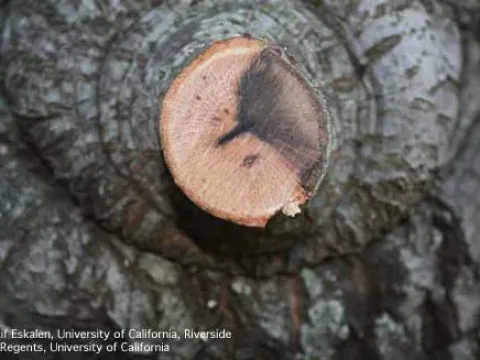
Upon removing the outer bark, deep internal necroses in the cambium layer are visible, typically displaying dark brown or black discolored streaks in the wood.
In later stages of the disease, tiny black structures called pycnidia appear on the surface of the dead bark, marking the culmination of the pathogen's reproductive phase.
General foliage yellowing, curling, and premature leaf drop are common systemic indicators that the tree's health is severely compromised by the infection.
Management centers on sanitation, which involves the rapid removal and destruction of infected branches or entire trees to reduce the overall inoculum density in the forest.
Silvicultural practices should focus on preventing physical damage to tree stems, as wounds created by machinery act as primary infection courts for the fungal spores.
While chemical control with fungicides may be considered in nurseries or high-value urban settings, its effectiveness is often limited by the fungus's deep colonization of host tissues.
Promoting forest health through proper site selection and soil moisture management helps trees maintain the vigor required to resist opportunistic pathogens like D. corticola.
- Prompt removal and disposal (burning/chipping) of dead plant material.
- Sterilization of pruning tools between trees to prevent transmission.
- Monitoring of tree health, particularly during prolonged drought periods.
- Selection of resistant tree genotypes for reforestation and planting programs.