
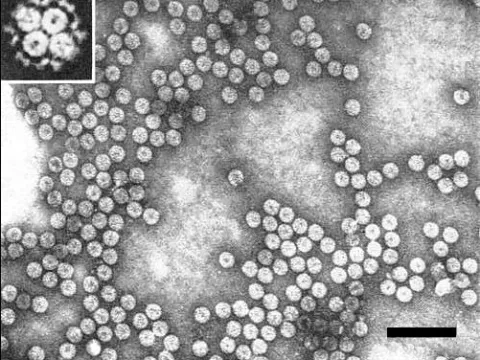
Cowpea chlorotic mottle virus
Cowpea chlorotic
Cowpea chlorotic mottle virus (CCMV) is a well-studied plant virus belonging to the genus Bromovirus within the Bromoviridae family.
What the section contains
Cowpea chlorotic mottle virus
The virus consists of non-enveloped, icosahedral virions containing a tripartite single-stranded RNA genome, which facilitates efficient replication.
It is classified as a significant phytopathogen that primarily targets plants within the Leguminosae family, disrupting their metabolic functions.
Transmission occurs primarily through mechanical sap contact or via specific insect vectors, such as leaf-feeding beetles, which spread the pathogen in field settings.
The virus exhibits remarkable stability, allowing it to persist in various environmental conditions, which presents challenges for integrated pest management.
The virus primarily affects cowpea (Vigna unguiculata), but it has a broad host range including soybeans, beans, and various wild legumes.
Infection results in systemic stress to the host, significantly interfering with normal physiological processes and reducing overall biomass production.
Economic damage is substantial, as infected plants show reduced pod set, smaller seed size, and poorer overall quality of the harvestable crop.
When infestation occurs early in the growing season, the developmental stunting can lead to total crop failure in susceptible legume varieties.
Beyond direct yield loss, the virus weakens plants, making them more susceptible to secondary fungal or bacterial infections under stress.
The most distinct symptom is the appearance of chlorotic spotting and a characteristic mottle pattern on the foliage of infected plants.
Vein clearing often precedes the development of mosaic patterns, leading to a visible loss of green color and overall reduction in photosynthetic capacity.
Deformation of the leaf surface, such as curling or crinkling, is a common indicator of advanced systemic viral infection in legume crops.
Plants often exhibit stunted growth, reduced height, and shorter internodes, which negatively impact the architecture and density of the crop canopy.
Symptoms are typically most pronounced during periods of rapid plant growth, especially when temperature conditions favor viral replication.
The primary control measure is the deployment of resistant crop varieties bred to prevent the virus from replicating or spreading within plant tissues.
Managing insect vector populations through timely and selective application of insecticides remains a cornerstone of limiting disease transmission.
Sanitation practices, including the eradication of host weeds in and around the field, are essential to remove potential overwintering reservoirs.
Implementing effective crop rotation and maintaining spatial isolation from older, potentially infected plots can significantly reduce the risk of outbreaks.
- Rigorous disinfection of agricultural tools and machinery between fields.
- Use of certified, virus-free seeds and planting materials.
- Early identification and roguing of symptomatic plants to limit spread.