
Cowpea mild mottle virus
Cowpea mild
Cowpea mild mottle virus (CMMV) is a plant pathogenic virus belonging to the genus Carlavirus and the family Betaflexiviridae. It is a single-stranded RNA virus that primarily infects leguminous plants.
What the section contains
Cowpea mild mottle virus
The virus is transmitted by the whitefly Bemisia tabaci in a non-persistent manner, which makes its spread very rapid within dense crop populations.
Mechanical transmission via sap, contaminated pruning tools, or simple leaf-to-leaf contact during field management practices is also a common route of infection.
CMMV is recognized globally as a significant pathogen, particularly in tropical and subtropical regions where host plants grow year-round.
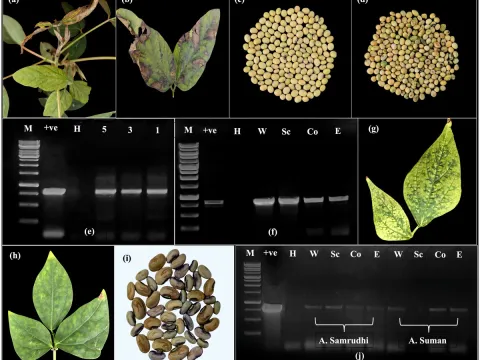
Proper identification requires molecular diagnostic techniques such as ELISA or RT-PCR, as symptoms can be easily confused with nutritional deficiencies or other viruses.
The virus causes severe damage to several essential crops, including cowpea, soybean, bean, and peanut, leading to considerable harvest losses.
Infection results in physiological disruption, leading to stunted growth, reduced leaf surface area, and poor photosynthesis, which directly impacts yield quality and quantity.
Seeds from infected plants are often malformed, smaller, or show reduced germination rates, impacting the next generation of crops.
The economic burden of CMMV includes not only yield reduction but also the cost of vector control and the loss of commercial marketability for infected produce.
Plants infected at the seedling stage rarely achieve normal development, often leading to a complete lack of reproductive output.
The virus outbreaks usually align with the peak activity of whitefly populations, which thrive in warm, dry weather conditions.
Weeds act as a primary reservoir for the virus during the off-season, allowing the pathogen to persist until the next planting window.
Seasonal migration patterns of whiteflies from neighboring fields often dictate the timing of CMMV transmission into new crops.
Increased temperatures generally accelerate the replication cycle of the virus within the host tissue, leading to faster symptom development.
In regions with mild winters, the infection cycle remains continuous, putting subsequent planting cycles at high risk of rapid reinfection.
The most common symptoms include mild mosaic patterns, leaf chlorosis, and vein clearing on the foliage, which progress as the infection becomes systemic.
Leaves often show deformation, crinkling, and a reduction in size, giving the canopy a bushy or stunted appearance.
Stunting is a hallmark of CMMV infection, characterized by shortened internodes and a decrease in overall plant height and biomass.
Flowers and pods may be fewer in number, and pods often exhibit necrotic spots, malformation, or internal seed discoloration.
- Mild mosaic or mottling on leaves.
- Leaf distortion and curling.
- Reduced internode length and stunting.
The use of certified virus-free seeds is the most critical first step in managing CMMV, as many legume crops can harbor the virus in their seeds.
Implementation of integrated pest management (IPM) to suppress whitefly populations is essential for reducing the spread within the field.
Sanitation practices, including the eradication of host weed species around field edges, significantly reduce the initial viral inoculum.
Cultural methods, such as adjusting planting dates to avoid peak vector activity, have shown effectiveness in limiting the severity of infection.
Rogueing, the process of promptly identifying and removing symptomatic plants, is highly recommended to isolate the virus before it spreads to healthy neighbors.