
Covered smut of oats
Ustilago kolleri
Description
How to identify
Covered smut is caused by the basidiomycete fungus Ustilago kolleri. It is a strictly specialized pathogen that affects plants within the Avena genus.
The fungus is a systemic parasite. The primary infection source is spores (teliospores) that are carried on the surface of the seeds or lodged beneath the glumes of the oat grains.
Systemically, the pathogen spreads through the plant tissue from the germinating seed until it reaches the developing floral structures, where it completes its reproductive stage.
Ustilago kolleri is morphologically and genetically distinct from the loose smut pathogen, primarily due to its different infection biology and the way its spores are presented on the host.
The lifecycle is strictly obligate, meaning the fungus cannot survive or complete its development outside of the living host plant throughout its primary growth stages.
What it damages
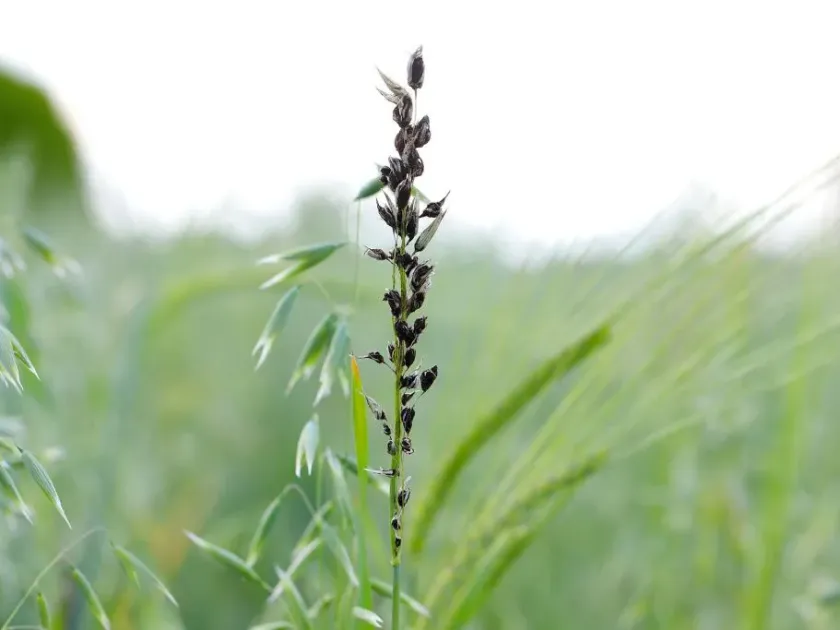
The disease causes significant damage by replacing the grain and floral parts of the oat panicle with a dense mass of black, dusty teliospores.
Direct yield loss is proportional to the percentage of infected tillers in the field. In severe cases, the grain quality is completely compromised, making the crop unfit for commercial use.
Infected crops also experience a reduction in overall vigor, which may lead to secondary issues such as increased susceptibility to lodging and environmental stress.
The contamination of healthy grain during the harvesting process spreads the spores to subsequent generations, perpetuating the disease cycle in the following seasons.
Economic impacts extend to the costs of chemical fungicides and cleaning machinery needed to sanitize seed lots to meet agricultural safety standards.
When it appears
Infection occurs exclusively during the germination stage of the oat seed. When the seed begins to sprout, the fungal spores germinate and penetrate the seedling tissues.
Environmental factors during planting, particularly soil moisture and temperature, are critical. Soil temperatures ranging from 15°C to 20°C generally favor the infection process.
Following infection, the mycelium grows internally alongside the plant's developing meristematic tissues throughout the vegetative growth period.
The disease cycle remains hidden until the plant reaches the heading stage, at which point the fungus replaces the panicle with its spore-bearing structures.
Spread is facilitated during harvest when the smutted panicles break apart, releasing clouds of spores that contaminate both the soil and the remaining clean grain.
Signs of infestation
Symptoms are typically observed at the heading stage when the panicles emerge. The individual spikelets are replaced by the black, powdery spore mass of the fungus.
Unlike loose smut, the spore mass in covered smut is held together for a longer duration by a thin, grey membrane, preventing immediate dispersal.
The affected panicles often appear stunted or deformed. However, before the heading stage, the infected plants usually appear identical to healthy ones.
Once the protective membrane finally ruptures, the dark spores are easily dispersed by wind and mechanical action during the combining process.
- Panicles replaced by masses of black, sooty spores.
- Spore masses remain enclosed by a thin membrane for an extended period.
- No visible grain production in affected tillers.
- Deformity of the inflorescence structure.
Control measures
Seed treatment is the most effective and primary control strategy for covered smut. Systemic fungicides applied to seeds effectively kill spores present on the grain surface.
The use of certified, disease-free seed is essential to prevent the introduction of Ustilago kolleri into new fields or unaffected regions.
Selecting resistant oat cultivars provides a durable and sustainable solution to managing this pathogen, reducing the need for intensive chemical intervention.
Proper agronomic management, including optimal planting depth and soil conditioning, helps ensure rapid seedling emergence, reducing the time the seed is vulnerable to infection.
Good agricultural hygiene during harvest and storage, including the disinfection of equipment, prevents the contamination of clean seed batches with smut spores.
Causes diseases · 1
Discussion
No discussions yet — be the first.