
Cotton leaf curl virus
Cotton leaf
Description
How to identify
Cotton leaf curl virus (CLCuV) is a devastating plant pathogen belonging to the Geminiviridae family and the Begomovirus genus. It possesses a single-stranded DNA genome and causes severe systemic disease in cotton plantations worldwide.
The virus is exclusively transmitted by the whitefly Bemisia tabaci. This insect vector acquires the virus while feeding on the phloem of infected host plants and transmits it to healthy plants during subsequent feeding sessions.
There is no evidence of mechanical transmission or seed-borne transmission for this virus, which underscores the primary importance of controlling the insect vector population to maintain field health.
Taxonomically, the virus exhibits high genetic variability, leading to the development of various strains that can overcome the resistance of previously successful cotton cultivars.
Diagnostic identification in the field relies on observing clinical symptoms, while laboratory confirmation is typically performed using PCR and molecular sequencing techniques to identify specific viral complexes.
What it damages
The pathogen infects various Gossypium species, leading to severe physiological disruptions. Infected plants show stunted growth, which severely limits their photosynthetic capacity and overall biomass production.
The economic impact of CLCuV is profound, often resulting in complete yield losses in highly susceptible varieties. The inability of the plant to develop reproductive structures effectively renders the crop unprofitable.
Beyond yield reduction, the fiber quality is negatively affected. Cotton fibers produced from infected plants are often shorter, weaker, and less uniform, significantly reducing their market value in the textile industry.
The infection forces the plant into a dwarf state, preventing normal node expansion. In severe cases, the entire architecture of the cotton plant is deformed, making it unable to support normal boll development.
Alternative hosts, particularly weeds within the Malvaceae family, act as viral reservoirs. These weeds maintain the virus during the off-season, ensuring a ready source of inoculum for the next growing cycle.
Signs of infestation
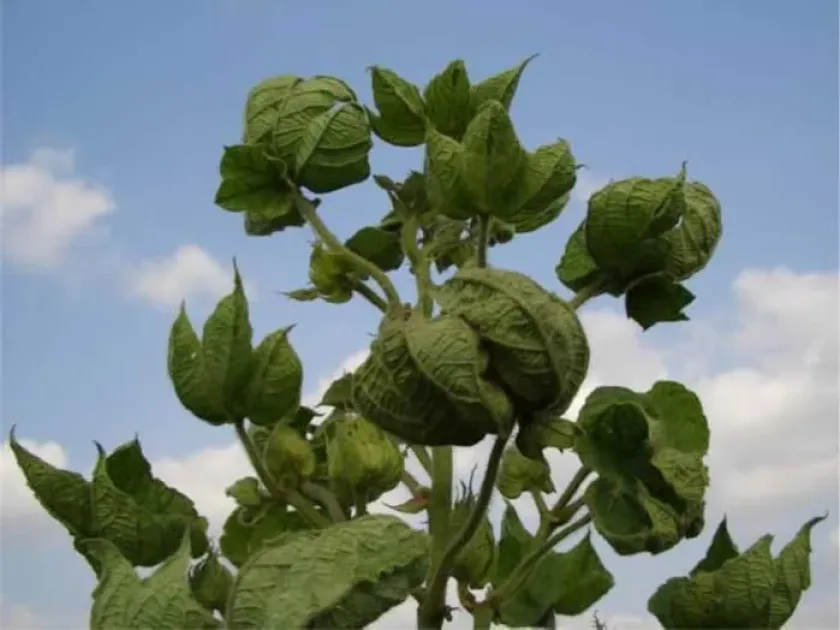
The hallmark symptom of the disease is the upward or downward curling of leaves, combined with a characteristic thickening and darkening of the veins on the underside of the leaf blades.
Affected plants exhibit a bushy appearance due to shortened internodes and stunted growth. The leaves may show chlorosis and have a stiff, leathery texture, which is a classic indicator of the viral stress.
One of the most distinct diagnostic features is the development of enations, which are small, leafy outgrowths on the underside of the leaves, primarily occurring along the veins.
Floral development is severely impacted, with flower buds often aborting or failing to open properly. If bolls do form, they are typically malformed and yield very little to no usable cotton.
- Upward or downward leaf curling.
- Thickened and darkened leaf veins.
- Formation of enations (leafy outgrowths).
- Stunted growth and bushy appearance.
- Severe shedding of floral buds and bolls.
Control measures
Integrated Pest Management (IPM) is essential for controlling CLCuV, with a primary focus on the reduction of the Bemisia tabaci whitefly population using effective insecticides.
Cultural practices are vital: farmers must prioritize the removal of alternative weed hosts, especially those from the Malvaceae family, which serve as year-round reservoirs for the virus.
The use of resistant or tolerant cotton varieties is the most sustainable long-term strategy for managing the disease, especially in regions where the virus has become endemic.
Implementing proper spacing between different planting dates can help interrupt the migration cycle of the whitefly, thereby reducing the rate of viral spread across different fields.
Field scouting and the roguing of early-infected plants are critical steps. By removing infected plants before the virus spreads throughout the population, farmers can significantly mitigate the overall impact of the outbreak.
Causes diseases · 2
Discussion
No discussions yet — be the first.