
Passiflora ringspot
Passiflora ringspot
Description
How to identify
Passiflora ringspot is a viral disease caused by the Passiflora ringspot virus (PRSV-P), which is a member of the Potyvirus genus. It is a severe pathogen that causes systemic infection in passion fruit crops worldwide.
The virus is characterized by flexuous, filamentous particles containing single-stranded RNA. Due to its systemic nature, once a plant is infected, the virus spreads to all parts, making internal eradication impossible.
What it damages
The primary host for this pathogen is Passiflora edulis. Infections lead to significant yield losses, reduced fruit quality, and stunted plant growth, often rendering the crop economically non-viable.
Affected plants show a progressive decline in health, leading to lower fruit yields and poor quality of harvested produce. In commercial orchards, heavy infection rates often require early replacement of the entire planting.
When it appears
The virus persists in infected perennial host plants, which serve as the primary reservoir. Transmission occurs mainly via aphid vectors, which acquire the virus in a non-persistent manner and transmit it within seconds.
Spread is most rapid during warm seasons when aphid populations are abundant. Mechanical transmission through contaminated pruning tools is also a significant factor in spreading the infection within greenhouses or gardens.
Signs of infestation
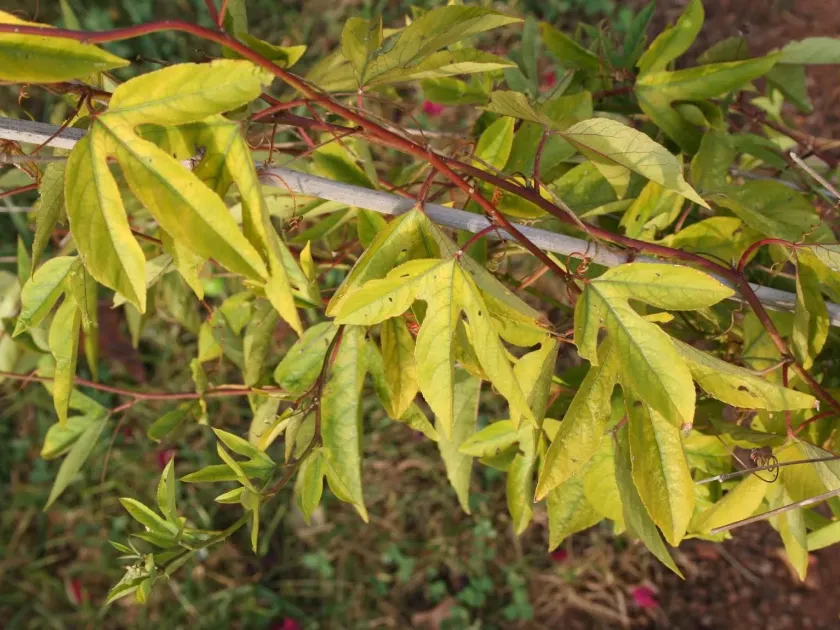
The most diagnostic symptom is the presence of chlorotic rings or spots on the leaves. As the disease progresses, these symptoms become more pronounced, leading to severe mosaic patterns.
- Chlorotic rings and leaf spots
- Deformed, puckered, and twisted foliage
- Stunted shoot growth
- Ringspot symptoms on the fruit skin
Control measures
There are no direct chemical treatments available to cure plants infected with Passiflora ringspot virus. Management focuses entirely on sanitation and vector control to mitigate the spread.
Effective control requires strict weeding to eliminate alternative host plants and regular monitoring for aphid populations. Use of insecticidal soaps or systemic insecticides is necessary to keep vector numbers low.
Remove and destroy all symptomatic plants immediately to prevent further spread. Growers should prioritize the use of virus-indexed, certified healthy nursery stock to establish new plantings.
Causes diseases · 1
Discussion
No discussions yet — be the first.