
Passion fruit woodiness virus
Passion fruit
Description
How to identify
The Passion fruit woodiness virus (PWV) is a plant pathogenic virus classified within the Potyvirus genus. It consists of a single-stranded RNA genome protected by a flexible filamentous protein coat.
As an obligate parasite, the virus resides within the phloem tissues of the host plant, hijacking cellular machinery to facilitate its own replication and systemic spread.
Transmission occurs primarily through aphid vectors, such as Myzus persicae, which acquire the virus while probing infected plants and transmit it non-persistently to healthy ones.
Mechanical transmission also plays a significant role in the spread of PWV, particularly through contaminated pruning tools or direct contact between damaged foliage during high-density cultivation.
Detection is often verified via serological tests like ELISA or molecular methods such as RT-PCR, as visual assessment can be unreliable due to overlapping symptom profiles.
What it damages
The virus primarily affects Passiflora edulis (passion fruit), causing severe physiological disruption that manifests in reduced plant vigor and developmental abnormalities.
Infected plants exhibit a significant reduction in overall yield, both in terms of fruit quantity and quality, often rendering the crop commercially unviable.
Fruit produced by infected vines is characterized by increased hardness, woodiness, and severe deformation, significantly reducing the edible pulp content.
In young plants, the virus can lead to stunted growth and premature death, essentially eliminating the potential for future harvest and productivity.
Economic damage is exacerbated by the need for costly plantation removal and site decontamination, as the virus can persist in alternative weed hosts nearby.
When it appears
Viral infection and spread are highly correlated with the seasonal activity of aphid populations, which are most prolific during warm and humid weather conditions.
In spring and throughout the vegetative growth period, high-frequency insect movement promotes rapid transmission across the entire field.
Stable, moderate temperatures favor both the rapid multiplication of the virus within the host and the survival of the insect vectors responsible for its dissemination.
In tropical and subtropical regions, the virus remains active throughout the year, utilizing secondary hosts to maintain a constant reservoir of inoculum.
Epidemic outbreaks are most frequent following sudden climate shifts that stress the host plants, rendering them more susceptible to successful viral entry.
Signs of infestation
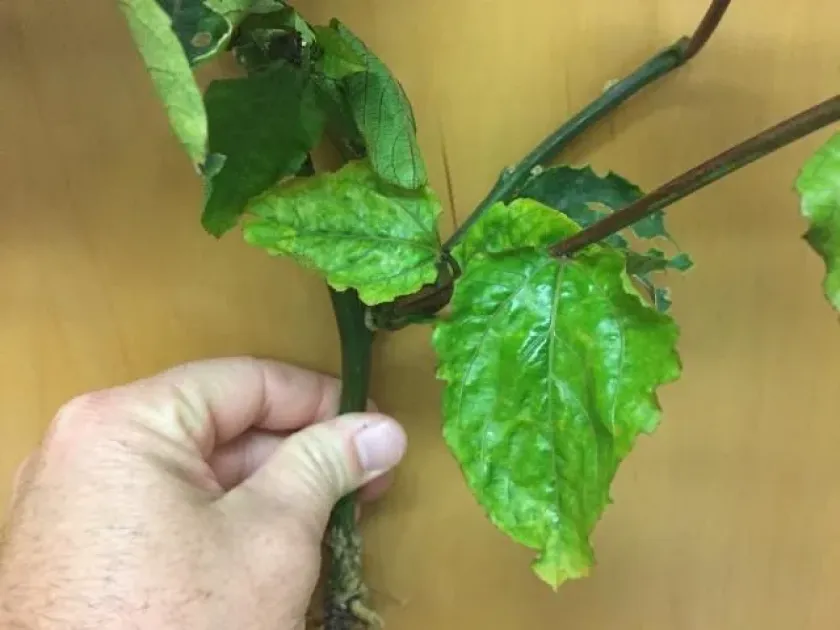
The earliest visual symptoms often include chlorotic mottling, mosaic patterns, or distinct ringspots on the youngest developing leaves of the plant.
Plants frequently exhibit stunted, "woody" shoots with shortened internodes, which results in a characteristically distorted and bushy growth habit.
Fruit symptoms are highly distinct, showing significant thickening of the pericarp and a rigid, woody feel, which is the primary source of the virus's common name.
The canopy often shows premature leaf drop and yellowing, while the floral structures may abort before fruit set, significantly impacting reproductive efficiency.
Overall, affected plants look sickly, with irregular, deformed foliage and a marked decrease in the structural integrity of the stems and fruit.
Control measures
The most effective strategy for managing PWV is the exclusive use of clean, virus-indexed nursery stock, ensuring the foundation of the orchard is pathogen-free.
Strict field sanitation involves the frequent monitoring and prompt rogueing (removal) of all symptomatic plants to minimize the pool of available viral inoculum.
Integrated pest management (IPM) focusing on the control of aphid vectors using selective insecticides is crucial for limiting the spread within commercial orchards.
Disinfection of all pruning and harvesting equipment with appropriate chemical agents is mandatory to prevent the mechanical transmission of the virus between vines.
Developing and deploying resistant cultivars remains the long-term goal, while barrier cropping may also help reduce the influx of vectors from surrounding areas.
Discussion
No discussions yet — be the first.