
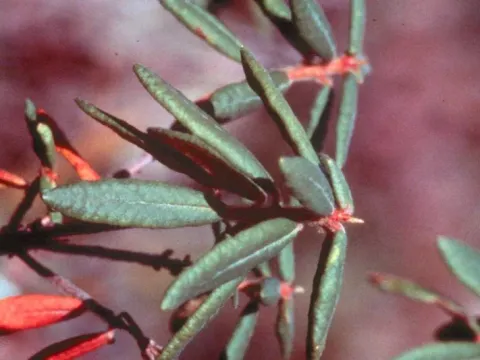
Chrysomyxa reticulata
Chrysomyxa reticulate
Chrysomyxa reticulata is a fungal pathogen within the division Basidiomycota. It is a specialized parasite primarily targeting spruce species (Picea), responsible for causing specific needle rust symptoms.
What the section contains
Chrysomyxa reticulata
This fungus exhibits a complex life cycle, characteristic of many rust fungi, often requiring specific conditions to complete its development. It is widely distributed in forest ecosystems where spruce trees are common.
The pathogen utilizes mycelial growth to colonize the internal tissues of the needles. By extracting nutrients, it impairs the metabolic functions of the host plant, leading to significant physiological stress.
Taxonomically, it belongs to a group of rust fungi known for their morphological complexity. Microscopic examination of spore structures is essential for species-level differentiation and accurate phytopathological diagnosis.
The fungus is highly adapted to cooler, humid climates, where environmental conditions frequently favor the dispersal and germination of spores during the growing season.
The primary host of Chrysomyxa reticulata is the spruce tree. The disease leads to needle chlorosis, premature needle drop, and overall thinning of the canopy, significantly reducing the tree's vigor.
Infections interfere with photosynthesis, as needles become discolored and fall off before the end of their natural life cycle. This impact is particularly severe in younger trees, affecting their height growth and development.
Heavily infected stands show signs of crown degradation, starting from the lower branches where humidity levels remain higher. This creates a cycle where the tree becomes increasingly susceptible to environmental stressors.
Beyond individual tree health, the pathogen causes economic losses in nurseries and forestry operations. Reduced growth rates and mortality among seedlings can disrupt reforestation efforts and commercial spruce production.
Weakened trees are often predisposed to secondary infestations by wood-boring insects and other opportunists. Managing the pathogen is therefore crucial for maintaining the integrity of spruce-dominated forest stands.
The initial symptoms are subtle, consisting of small yellow spots appearing on the needles. As the fungal mycelium colonizes the tissue, these spots expand, signaling the progression of the disease.
The diagnostic stage is marked by the development of bright, orange-yellow pustules on the needles. Once mature, the needle epidermis ruptures to release spores into the environment.
Needle shedding occurs as a direct response to the infection, leading to visible thinning of the branches. This usually happens mid-to-late season, creating a debris layer of diseased needles under the trees.
- Yellowing and browning of needles during the growing season.
- Visible orange-colored spore-bearing pustules (aecia or uredinia) on needle surfaces.
- Premature needle cast, particularly noticeable on lower branches.
- Curling or abnormal twisting of individual needles.
- Reduced shoot elongation in infested spruce trees.
Regular inspection of the lower canopy is recommended during spring and early summer, as this is when the pathogen is most active and visible symptoms begin to manifest on the new or previous year's growth.
Sanitation is a cornerstone of management. Removing and burning infected branches or fallen needles helps to significantly reduce the inoculum load in the vicinity of healthy trees.
In nurseries, management practices focus on canopy ventilation. By controlling planting density and ensuring good air circulation, growers can minimize the humidity levels that the fungus requires for infection.
Fungicidal applications, particularly those containing copper or systemic active ingredients, can protect foliage during peak risk periods. Treatment should be timed to coincide with favorable environmental conditions for the fungus.
Maintaining tree vigor through proper fertilization and site management plays a vital role in resistance. A healthy tree can often withstand and recover from limited infections more effectively than a nutrient-deficient one.
Continuous monitoring programs enable the early detection of localized outbreaks. By targeting these early stages, foresters and nursery managers can avoid widespread applications of chemicals and contain the disease efficiently.