
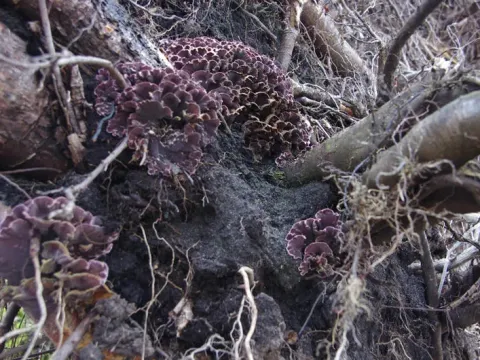
Chondrostereum purpureum
Chondrostereum purpureum
Chondrostereum purpureum is a basidiomycete fungus within the Stereaceae family. It is recognized as a significant plant pathogen, known primarily for causing the characteristic Silver Leaf disease in woody plants.
What the section contains
Chondrostereum purpureum
The fungus produces fruiting bodies that are typically resupinate to pileate in shape. The upper surface is often tomentose (hairy) and grayish-brown, while the hymenium (underside) exhibits a distinct purplish or violet hue, especially when fresh and moist.
As a facultative parasite, it predominantly infects trees through fresh wounds such as pruning cuts, frost cracks, or mechanical damage. The fungus colonizes the xylem, where it thrives and interferes with the plant's vascular integrity.
Dispersal is primarily aerial, as spores are released from the fruiting bodies during wet weather and travel with wind currents. These spores are highly resilient and can colonize susceptible host tissues throughout the year.
Understanding its biology is crucial for orchard management, as the fungus often persists in dead wood, making sanitation a vital component of integrated disease control programs.
The fungus affects a wide range of fruit trees, including apples, pears, plums, cherries, apricots, and peaches. Its economic impact is highest in stone fruit orchards where it can cause significant yield losses.
Silver Leaf disease is triggered by fungal toxins that travel through the vascular system. These toxins accumulate in the leaves, causing the upper epidermis to separate from the underlying mesophyll cells.
This separation creates air pockets, which refract light and produce the signature silvery, metallic sheen on the foliage. While the leaves change color, the fungus itself is not present in the leaf tissue, but rather in the branches or trunk.
Over time, the infection leads to the systemic decay of the tree's vascular system. This results in the dieback of branches, stunted growth, and eventual death of the entire tree if the infection reaches the main trunk.
Besides fruit trees, C. purpureum is known to attack various ornamental and wild broad-leaved trees, such as poplars and willows, which can serve as secondary reservoirs for the pathogen.
The most prominent symptom is the metallic or pearly silver appearance of the leaves. This often starts on one or two branches before spreading progressively to other parts of the tree canopy.
Infected leaves may become brittle and deformed. As the disease advances, the tree shows reduced vigor, and in severe cases, the fruit quality significantly degrades, or the fruit fails to mature properly.
Cross-sectioning an affected branch reveals a dark, brownish-red staining within the heartwood. This discoloration is a definitive indicator of the pathogen's presence and its progression through the xylem.
During the late stages of the disease, after a branch or the tree has died, the fungus produces its characteristic fruiting bodies on the bark. These appear as leathery, fan-shaped brackets that grow in clusters.
The presence of these fruiting bodies confirms that the wood is thoroughly colonized. This stage is particularly dangerous, as the tree will release large amounts of spores into the environment.
The primary control strategy involves strict wound management. Pruning should be avoided during wet or damp weather, which creates the optimal conditions for spore germination and infection.
All pruning wounds larger than 2 centimeters in diameter must be sealed with a protective wound dressing or a fungicidal paste to prevent airborne spores from landing and entering the wood.
If an infection is detected, affected branches should be pruned back to healthy wood, ensuring at least 15–20 cm of clean tissue is removed beyond the stained area to eliminate the fungal mycelium.
Sanitation is mandatory; all infected wood must be removed from the orchard and burned immediately. It should not be left on the ground, as it can continue to release spores for months.
When the main trunk is colonized by the fungus, the tree is usually beyond saving and should be removed completely, including the root system, to prevent the disease from spreading to adjacent healthy trees.