
Chrysanthemum nematode
Cool
Description
How to identify
The chrysanthemum nematode (Aphelenchoides ritzemabosi) is a microscopic foliar nematode belonging to the phylum Nematoda. It is a major endoparasite that lives within the leaves and stems of various plant species.
The adult worms are slender and transparent, measuring about 0.8–1.0 mm in length. They use a needle-like stylet to penetrate plant cells, inject digestive enzymes, and feed on the cell contents.
This pest thrives in warm, humid conditions. Under optimal temperatures (around 20-25°C), its life cycle can be completed in approximately 10 to 14 days, leading to rapid population explosions.
The nematode is aquatic and requires a film of water on the plant surface to migrate from one leaf to another. It spreads through splashing water, overhead irrigation, and contaminated tools.
Taxonomically, it belongs to the class Chromadorea, order Aphelenchida, and family Aphelenchoididae. It can survive in soil, dormant buds, and dead plant tissues for several months.
What it damages
The chrysanthemum nematode affects a wide range of hosts, including Chrysanthemum, Aster, Dahlia, Zinnia, and Strawberries. It is considered a serious pest in both greenhouse and field production.
By feeding on the mesophyll tissue, the nematodes cause significant internal damage. This disrupts the plant's ability to photosynthesize and transport nutrients, leading to reduced vigor and stunted growth.
In heavy infestations, the entire foliage may dry out and become brittle, causing the plant to lose its ornamental or commercial value. Severely affected plants often die prematurely.
The economic impact is high because infected stock cannot be sold, and the pathogen is difficult to eradicate once established in a greenhouse environment.
Because the nematode does not typically invade the root system, the damage is restricted to the above-ground parts of the plant, which makes foliar inspection critical.
Signs of infestation
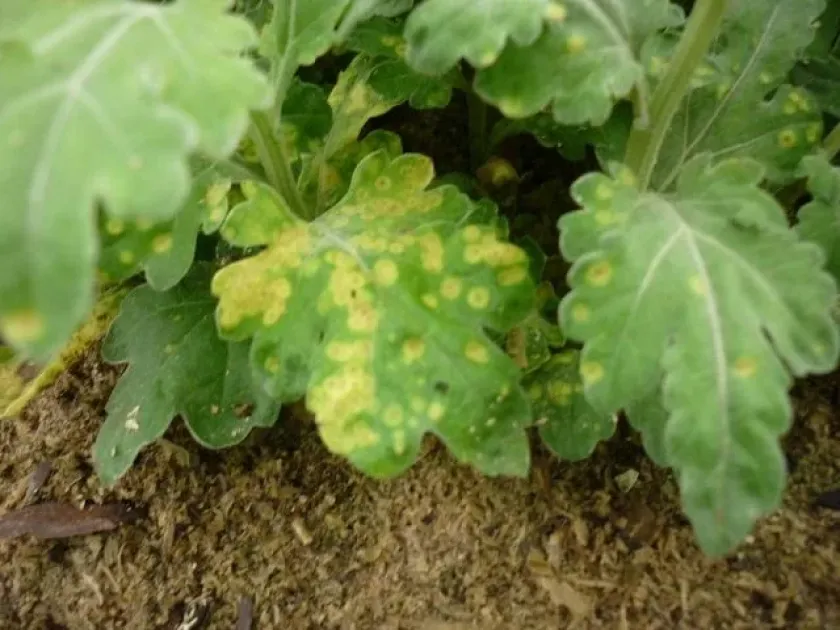
The first symptoms often appear on lower leaves as light green to yellow spots located between the leaf veins. These areas quickly turn brown or black as the plant tissue dies.
The necrotic lesions often have a distinctive wedge-shaped or angular appearance because the movement of the nematode is limited by the veins of the leaf.
As the infection progresses, the leaves curl up, turn brown, and hang down from the stem. The necrosis spreads upwards from the lower leaves to the top of the plant.
In some cases, buds may become distorted or fail to open, resulting in malformed flowers or total loss of flowering. Plants may appear generally stunted and unhealthy.
Laboratory confirmation via the Baermann funnel technique or simple soaking of leaf tissue in water to observe the nematodes under a microscope is necessary for positive identification.
Control measures
Preventive measures are the most effective way to manage this pest. This includes sourcing healthy, nematode-free stock and isolating any new plants before introducing them to the main collection.
Hot water treatment is a standard practice for cuttings. Soaking plant material in water at 43–45°C (110–113°F) for 15–20 minutes is effective in killing nematodes without damaging the plant.
Avoid overhead watering to prevent the spread of nematodes through splashing droplets. Use drip irrigation or sub-irrigation systems to keep the foliage dry.
Sanitation is crucial; remove and destroy all infected plant materials, including fallen leaves and debris, as they harbor the nematodes during the off-season.
- Ensure proper weed management, as many weeds act as alternative hosts.
- Use sterilized soil or growing media in greenhouses to eliminate soil-borne populations.
- Apply registered nematicides in commercial settings, adhering strictly to dosage and timing instructions.
Causes diseases · 1
Discussion
No discussions yet — be the first.