
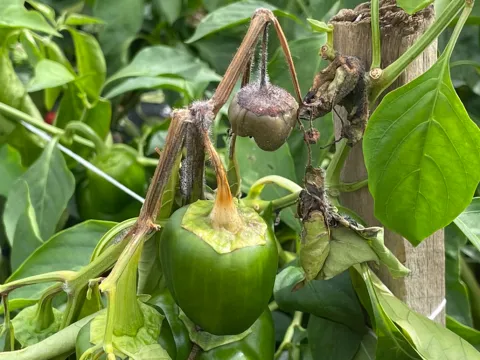
Choanephora fruit rot
Choanephora cucurbitarum
Choanephora cucurbitarum is a pathogenic fungus belonging to the order Mucorales (class Mucoromycetes). It is well-known as a primary cause of wet rot and blossom blight in various horticultural crops.
What the section contains
Choanephora fruit rot
The fungus is characterized by the production of large, dark-colored sporophores that give infected plant tissue a distinct "fuzzy" or "whisker-like" appearance. This visual feature is the hallmark for identifying the disease in the field.
It acts as both a facultative parasite and a saprophyte. Its ability to decompose dead tissue allows it to thrive in debris, providing a constant source of inoculum for subsequent crop plantings.
The life cycle involves the formation of asexual sporangiospores, which facilitate rapid spread during the growing season, and sexual zygospores, which allow the fungus to persist in soil under adverse conditions.
Due to its opportunistic nature, it rapidly colonizes weakened, wounded, or senescing plant tissues, particularly when moisture levels remain high for extended periods.
Cucurbits are the primary hosts, including cucumbers, squash, pumpkins, melons, and watermelons. Additionally, peppers, beans, and certain flowers can be affected by the pathogen.
The fungus specifically targets flowers, young fruits, and sometimes succulent stems. It frequently initiates infection at the blossom end, where aging floral parts provide a perfect substrate for fungal growth.
Infection leads to rapid necrosis of the floral tissues, followed by a soft, watery rot that quickly consumes the developing fruit, leading to total yield loss of the affected portion.
Direct damage to the fruit is not just cosmetic; it renders the product completely unmarketable and promotes the spread of secondary bacterial pathogens that may exacerbate the decay process.
In intensive cultivation systems, Choanephora can result in significant economic losses, especially when weather conditions are conducive to rapid fungal proliferation during the peak flowering stage.
The disease thrives in warm, humid conditions. High temperatures ranging from 20°C to 30°C (68°F to 86°F), coupled with high relative humidity, are ideal for the development of the pathogen.
Free water on the surface of plants, caused by heavy rain, morning dew, or overhead irrigation, is essential for spore germination and successful penetration of plant tissues.
Outbreaks are most common during mid-to-late summer when canopy density creates a microenvironment that traps moisture and limits air circulation within the plant rows.
Spores are disseminated by wind, splashing water from rain or irrigation, and pollinating insects that travel between infected and healthy blossoms, spreading the pathogen mechanically.
In protected greenhouse environments, the disease can be a persistent issue if ventilation is poor and humidity levels are not carefully managed throughout the crop cycle.
The initial symptom is the rapid browning and wilting of flower petals. This is soon followed by the appearance of a dark, hair-like fungal growth that covers the decaying tissue.
Infected fruits exhibit a watery, soft rot that quickly turns mushy. The color of the decaying fruit often changes to a dark brown or black as the fungus covers it with its spore-bearing structures.
- Watery soft rot of fruits.
- Dark, fuzzy mycelial growth.
- Blight and decay of flowers.
- Sunken necrotic lesions on stems.
- Unpleasant odor of decomposing tissues.
When stems are affected, they develop soft, water-soaked lesions that can girdle the plant, causing the entire vine to wilt and die above the point of infection.
Under magnification, the diagnostic sign is the presence of dark sporangioles at the tips of the sporangiophores, which differentiates it from common bacterial soft rots.
Cultural practices are paramount: ensure proper crop rotation to break the life cycle and avoid planting susceptible cucurbits in the same soil for at least three consecutive years.
Improve air circulation by adopting proper spacing and training vines to trellises. This helps reduce the humidity in the canopy and promotes faster drying after rainfall.
Using plastic or straw mulch beneath plants helps prevent direct contact between developing fruits and the soil, significantly lowering the chance of infection by soil-borne spores.
Fungicide applications may be necessary during periods of high disease pressure. Preventive sprays with copper-based products or registered protectant fungicides can limit initial infection.
Sanitation is critical. Regularly monitor the field and remove any decayed fruits or wilting flowers immediately to reduce the amount of inoculum present in the environment.