
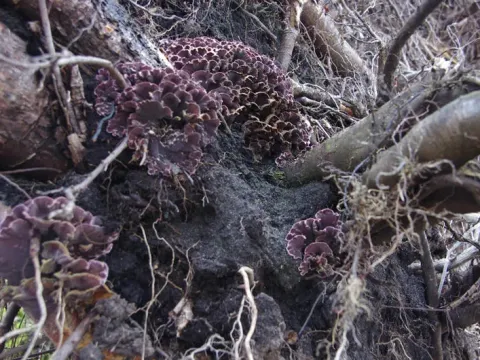
Chondrostereum purpureum
Chondrostereum pupureum
Chondrostereum purpureum is a basidiomycete fungus that typically acts as a saprotroph on dead wood but can become a destructive parasite on living trees.
What the section contains
Chondrostereum purpureum
The fruit bodies are leathery, bracket-like or crust-like structures. The upper surface is hairy and brownish, while the fertile underside is purplish or lilac-colored.
Taxonomically, it belongs to the Kingdom Fungi and the Division Basidiomycota. It is the primary cause of the well-known systemic condition referred to as silver leaf disease.
The fungus infiltrates the tree through wounds in the bark caused by pruning, storms, or frost. Once established, it grows within the tree's vascular system.
The pathogen is widespread in temperate climates and is known to be highly resilient, making it a difficult adversary for fruit tree growers.
The fungus primarily targets Rosaceae family members, including apple, pear, plum, cherry, and apricot trees, causing severe structural and physiological damage.
It also infects various deciduous forest trees such as poplars, willows, and birches, which can serve as reservoirs for the fungus near orchards.
The fungus secretes toxins that travel through the xylem, causing foliage symptoms and systematically poisoning the host tree's transport tissues.
Internally, the fungus causes wood rot, weakening the tree's structure and often leading to branch breakage or the complete death of the plant.
Economic damage is substantial, as infected trees often become unproductive and eventually need to be removed to prevent further spread of spores.
The most iconic symptom is the metallic, silvery sheen on leaves. This is caused by the separation of the leaf cuticle from the epidermis, which creates air pockets.
It is important to note that the fungus itself is not present in the silvered leaves; the foliage symptoms are caused by systemic toxins produced in the branches.
A cross-section of an infected branch usually reveals deep, dark brown, or reddish-brown staining of the wood, which is a hallmark of the fungal colonization.
During the final stages of the disease, diagnostic purplish fruit bodies emerge from the bark of dead or severely dying branches.
Infected trees typically show stunted growth, leaf curl, and premature leaf drop, which drastically reduces the photosynthetic capacity of the plant.
Sanitary pruning is the most critical control measure. Infected branches must be pruned back to healthy wood, ensuring the cut reveals no dark staining.
All pruning equipment must be thoroughly disinfected after each cut to prevent the transfer of spores from infected trees to healthy specimens.
Large wounds and pruning cuts should be sealed with wound dressings or antifungal paints to physically block the entry of fungal spores.
Avoid pruning during humid or wet weather conditions, as high moisture facilitates the dispersal and germination of fungal spores on open cuts.
Promoting tree health through appropriate irrigation, fertilization, and protecting against frost damage helps trees resist initial colonization by the pathogen.