
Choanephora infundibulifera
Choanephora infundibulifera
Description
How to identify
Choanephora infundibulifera is a fungal-like organism belonging to the phylum Mucoromycota. In agricultural settings, it is recognized as a serious pathogen causing wet rot, necrosis, and blossom blight on various horticultural crops.
The organism is characterized by its aggressive colonization of plant tissues, typically entering through wounds caused by insects or mechanical damage. Once established, it secretes enzymes that break down plant cell walls, leading to rapid tissue collapse.
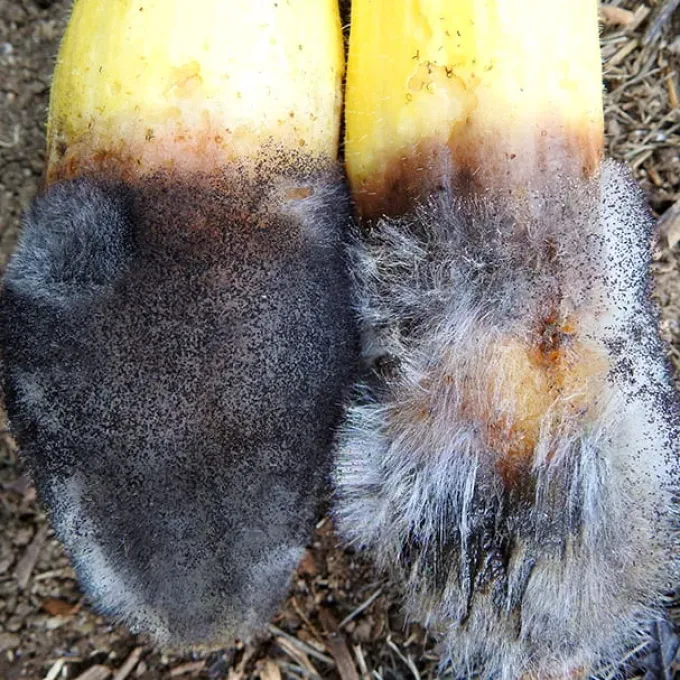
The pathogen is visually identified by the presence of a dense, fuzzy, grayish-to-brownish fungal mat on infected surfaces. Under microscopic examination, the sporangiophores exhibit a unique funnel-like shape, which is the origin of the species name.
The life cycle of this pathogen includes the production of resistant spores (zygospores) that persist in soil and crop debris. Under favorable environmental conditions, these spores germinate to initiate new infection cycles, spreading via wind, rain splashes, or insect vectors.
It is considered a highly opportunistic pathogen that thrives in protected environments like greenhouses, where it can cause significant yield losses if left uncontrolled.
What it damages
Choanephora infundibulifera has a broad host range, primarily affecting members of the Cucurbitaceae, Solanaceae, and Fabaceae families. Common susceptible crops include zucchini, pumpkins, cucumbers, peppers, tomatoes, and beans.
The disease frequently targets reproductive organs. Infections on blossoms are particularly destructive, as the rot spreads quickly to the developing ovaries, resulting in fruit abortion or significant deformation.
Infected fruits lose their marketability and storage potential. Under high humidity conditions, the rot can consume an entire fruit within a few days, turning it into a soft, decomposing mass.
On stems and leaves, the pathogen causes necrotic lesions that expand over time. This tissue necrosis significantly impairs the plant's photosynthetic ability and can lead to systemic wilting.
The virulence of this disease lies in its ability to spread rapidly throughout a crop field, making it a critical threat during periods of high moisture and warm temperatures.
When it appears
Peak activity for Choanephora infundibulifera occurs under conditions of high relative humidity (above 85%) and warm temperatures, specifically between +25°C and +30°C.
In protected greenhouse cultivation, the risk of infection persists year-round if ventilation is inadequate, leading to condensation on plant surfaces.
In open fields, disease outbreaks are most common following periods of heavy rain followed by hot weather. This specific combination provides the necessary moisture for rapid spore germination.
Extended drought periods typically suppress the pathogen's spread, but the introduction of surface moisture—through dew or irrigation—quickly reactivates the dormant fungal mycelium.
Pollinating insects and pests act as significant mechanical vectors, transporting spores from infected blossoms to healthy ones, thereby facilitating the spread of the disease.
Signs of infestation
Initial symptoms manifest as small, water-soaked spots on flower petals. These spots rapidly expand, turning brown or black as the tissue decays.
- A dense, fuzzy, grayish-brown growth on flowers, fruit, and tender stems.
- Visible black pin-head-sized sporangia embedded within the fungal growth.
- Rapid softening of fruit tissue, often without a strong fermentation odor.
- Necrotic darkening of shoot tips in areas with poor airflow.
- Premature shedding of flower buds and young fruit due to pedicel infection.
When fruit are infected during maturation, they become covered in a visible layer of sporulating fungus, which is easily dispersed by air currents to neighboring plants.
Leaf lesions typically appear as dark brown, circular, or irregular zones that may be mistaken for Alternaria blight, though the fuzzy growth is a unique diagnostic feature.
Control measures
The primary management strategy is environmental control. This includes maintaining proper ventilation in greenhouses to reduce humidity and preventing excessive soil moisture.
Sanitation is a critical cultural practice. Removing and destroying all infected plant debris immediately is essential to reduce the primary inoculum load in the growing area.
Integrated Pest Management (IPM) is necessary to control insects that wound plant tissues, as these injuries provide the entry points required for the fungus to establish infection.
Chemical control may involve the application of broad-spectrum fungicides effective against Mucoralean fungi, ensuring that safety intervals are strictly followed before harvest.
Preventative applications of biological fungicides, such as those containing Bacillus subtilis or Trichoderma species, have shown efficacy in suppressing pathogen development on plant surfaces.
Causes diseases · 1
Discussion
No discussions yet — be the first.