
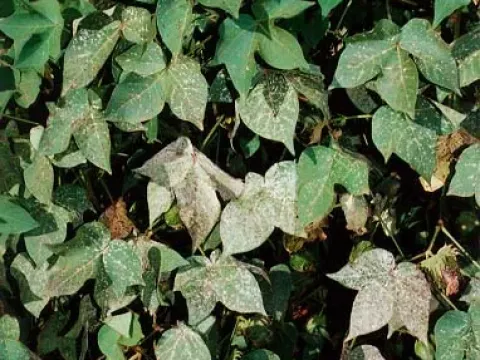
Cercosporella leaf spot of cotton
Cercosporella gossypii
Cercosporella gossypii is a fungal pathogen that causes leaf spot disease in cotton plants. It belongs to the class of imperfect fungi (Deuteromycetes) and is known for its specialized parasitic nature.
What the section contains
Cercosporella leaf spot of cotton
The fungus reproduces primarily through conidia, which develop on conidiophores protruding from the stomata of the host plant leaves, forming visible tufts under high humidity.
This pathogen has a well-defined biological cycle, requiring sufficient moisture for the spores to germinate and penetrate the host tissue, leading to localized infections.
The fungus persists in the environment during non-cropping seasons through mycelium or conidia located on plant debris or in the upper layers of the soil.
Systematically, it is a significant plant pathogen that requires accurate diagnosis to differentiate it from other fungal leaf spot diseases affecting cotton crops.
The primary host for this pathogen is the cotton plant (Gossypium), with the disease being most prevalent in regions with high humidity and moderate temperatures.
The infection mainly targets the leaves, causing them to develop spots that interfere with photosynthetic activity, which is crucial for the plant's overall development.
Severe infestations lead to premature defoliation, which stunts the plant's growth and drastically reduces its ability to produce high-quality cotton bolls.
The economic impact of the disease is significant, as it leads to reduced lint yield and degradation of fiber quality, affecting market value and processing efficiency.
In addition to leaf damage, severe outbreaks can spread to bracts and other plant parts, further weakening the plant and reducing its reproductive capacity.
The first symptoms appear as small, circular, or irregular spots on the leaves, which gradually increase in diameter as the infection progresses.
The spots are often characterized by a light brown to grayish center, frequently surrounded by a darker border that separates the diseased tissue from the healthy leaf area.
Under humid conditions, a visible fungal growth appears on the underside of the leaves at the center of the spots, representing the conidial mass of the pathogen.
As the disease advances, the spots may coalesce, covering large parts of the leaf surface, which subsequently leads to tissue necrosis and leaf drying.
Microscopic examination of these spots reveals the presence of specific fungal structures, which are essential for confirming the presence of Cercosporella gossypii.
Effective management begins with robust agronomic practices, such as deep plowing after harvest to bury infected plant residues, thereby reducing the inoculum reservoir.
Crop rotation is essential to break the pathogen's life cycle and prevent the accumulation of spores in the soil, protecting future crops from early infection.
The use of fungicides is recommended when environmental conditions favor disease spread, provided that the application is timed correctly based on disease monitoring.
Planting resistant cotton cultivars is the most effective long-term strategy for preventing widespread damage and reducing reliance on chemical control methods.
Proper weed control and maintaining optimal planting density improve field aeration, which helps lower humidity levels and suppresses the development of fungal pathogens.