
Cereal Fusarium
Northern cereal
Description
How to identify
Cereal Fusarium is a broad complex of fungal diseases caused by species of the genus Fusarium, classified under the division Ascomycota. These pathogens are highly adaptable and can infect cereals at any stage of their development, from germination to harvest.
The fungi persist in the soil, on crop residues, and within seed lots as mycelium, chlamydospores, or conidia. Their ability to survive as saprophytes on dead organic matter allows them to remain present in the field even in the absence of a host crop.
A distinctive biological feature of these pathogens is the production of harmful mycotoxins, such as deoxynivalenol (DON) and zearalenone. These toxins represent a significant biosafety hazard, rendering infected grain unsafe for both human and animal consumption.
The life cycle is multifaceted, involving both soil-borne infections of the root system and airborne infections of the heads. Spore dispersal is highly dependent on environmental conditions, particularly moisture and temperature patterns during flowering.
Common species, including Fusarium graminearum and Fusarium culmorum, are prevalent worldwide, frequently causing both local infections and widespread epidemics in intensive cereal-producing regions.
What it damages
Fusarium impacts a wide range of economically vital crops, including wheat, barley, rye, oats, and maize. The most severe form of the disease is Fusarium Head Blight (FHB), which drastically reduces crop yield and grain quality.
Root and crown rots caused by Fusarium result in stunted growth, seedling blight, and poor stand establishment. Infected root systems decay, limiting the plant's ability to uptake water and nutrients, which often leads to lodging before harvest.
The infection of the head prevents proper grain filling, resulting in "tombstone" (shriveled, lightweight) kernels. This leads to substantial losses in weight, nutritional value, and seed germination potential.
The economic impact is compounded by the contamination of the grain with mycotoxins. Such grain is often rejected by grain processors and is subject to strict regulatory limits, causing massive financial losses for producers.
The continuous cultivation of susceptible cereal crops in the same field encourages the buildup of Fusarium inoculum, leading to progressive soil fatigue and heightened disease pressure each season.
When it appears
The most critical window for head infection is during the flowering (anthesis) phase of the cereal crop. The presence of pollen and specific humidity levels on the spikes makes them highly receptive to Fusarium spores.
Development is favored by prolonged periods of high humidity (exceeding 75-80%) and warm to moderate temperatures (15°C to 25°C). Frequent rain events during these periods serve as primary drivers for spore release and infection.
Root rot infections typically peak during the early vegetative stages, particularly under cool, wet spring conditions that slow down seedling emergence and vigor, giving the fungus a competitive advantage.
During the grain-filling period, humid weather conditions can trigger secondary infections, allowing the mycelium to proliferate throughout the grain tissue and synthesize high levels of toxic metabolites.
Snow mold, another form of Fusarium infection, manifests during the winter season if conditions allow for mycelial growth under the snow cover, particularly in crops that entered dormancy in a weakened state.
Signs of infestation
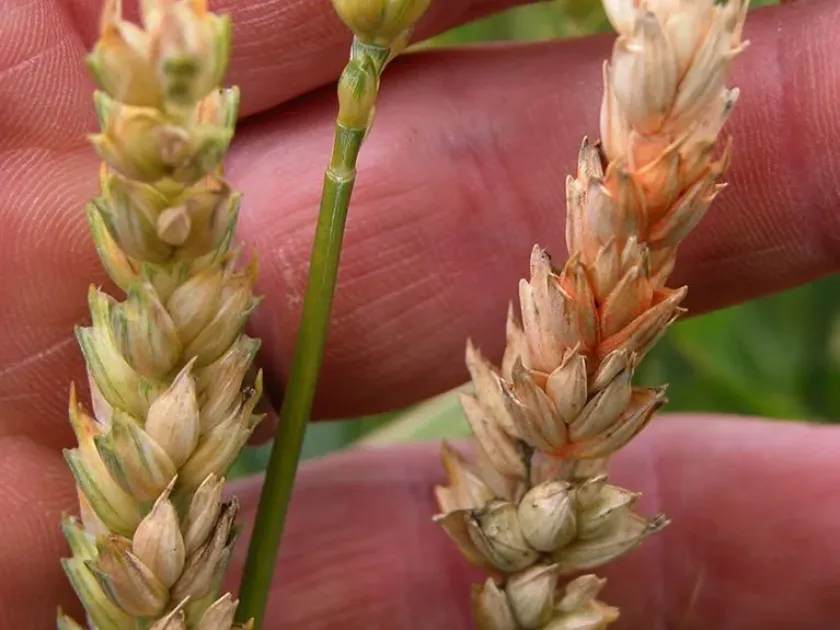
The hallmark symptom of Fusarium Head Blight is the premature bleaching of the spikes. Infected spikelets appear white or light-tan, contrasting with the healthy green parts of the head.
A characteristic sign under moist conditions is the emergence of pink or orange fungal growth on the glumes and rachis of the spike. This growth consists of masses of fungal spores.
Affected kernels are shriveled, often white or pinkish in color, and may show visible fungal mycelium on the surface. Internally, the embryo and endosperm are often partially or fully decomposed.
Root rot symptoms include browning of the base of the stem and the root system. Seedlings affected by the fungus often die before emerging or appear chlorotic and necrotic shortly after germination.
Microscopic examination of infected tissues reveals septate hyphae and the presence of crescent-shaped macroconidia, which are key diagnostic markers for identifying the Fusarium genus.
Control measures
- Treatment of seeds with effective fungicidal protectants prior to planting.
- Implementation of crop rotation strategies that avoid consecutive planting of susceptible cereals.
- Deep tillage or incorporation of crop residues to promote the degradation of organic material hosting the fungus.
- Application of foliar fungicides during the flowering stage to prevent primary head infection.
- Utilization of resistant cultivars and sourcing certified, disease-free seed material.
Effective management requires an integrated approach that reduces the amount of primary inoculum in the field, primarily by managing crop residues, which serve as the main reservoir for the pathogen.
Optimizing plant nutrition, especially the balance between nitrogen and potassium, can bolster plant cell wall integrity, making it more difficult for the pathogen to penetrate the tissue.
Timely harvesting is essential to prevent the grain from remaining in the field during wet, late-season conditions, which can lead to rapid colonization of the spikes by the fungus.
Discussion
No discussions yet — be the first.