
Cercosporidium leaf spot
Cercosporidium graminis
Description
How to identify
The causal agent of this disease is the fungus Cercosporidium graminis, which belongs to the Kingdom Fungi and the genus Cercosporidium. As a fungal phytopathogen, it primarily infects the vegetative organs of various cereal crops.
This pathogen reproduces asexually through conidia, which serve as the primary inoculum for spreading the infection within a field. It thrives as a parasite within plant tissues and survives as saprotroph on crop residues when the host is absent.
The fungal mycelium penetrates plant cells through the stomata or epidermal tissue. Once inside, it colonizes the leaf tissue and eventually breaks through the surface to produce conidia, which are then dispersed by wind and rain splashes.
Taxonomically, this fungus is categorized among the deuteromycetes, representing a significant group of leaf-spotting pathogens that require precise identification via microscopic observation to distinguish from similar species.
Environmental conditions such as high humidity and moderate temperatures ranging from 18°C to 22°C are ideal for the rapid development of the fungus. Extended periods of leaf wetness significantly increase the infection rate in dense cereal stands.
What it damages
Cereal crops, including wheat, barley, and rye, are the primary hosts for Cercosporidium graminis. It can also colonize wild grasses, which act as secondary reservoirs for the pathogen during the off-season.
The damage caused is primarily manifested through the reduction of the photosynthetic surface area. By infecting the leaves, the fungus disrupts the plant's ability to produce energy, which directly impacts the grain filling process.
Severe infections lead to the premature senescence and death of leaves, starting from the lower canopy. This loss of foliage significantly reduces the plant's vigor and capacity to produce high-quality grain, leading to yield losses.
Furthermore, the disease weakens the plant's systemic resistance, making it more susceptible to opportunistic secondary infections. Economic losses are often realized through lower grain weight, reduced test weight, and compromised milling properties.
Under favorable weather conditions, the pathogen can cause significant damage to the crop canopy, necessitating proactive monitoring and timely intervention to prevent widespread economic loss.
Signs of infestation
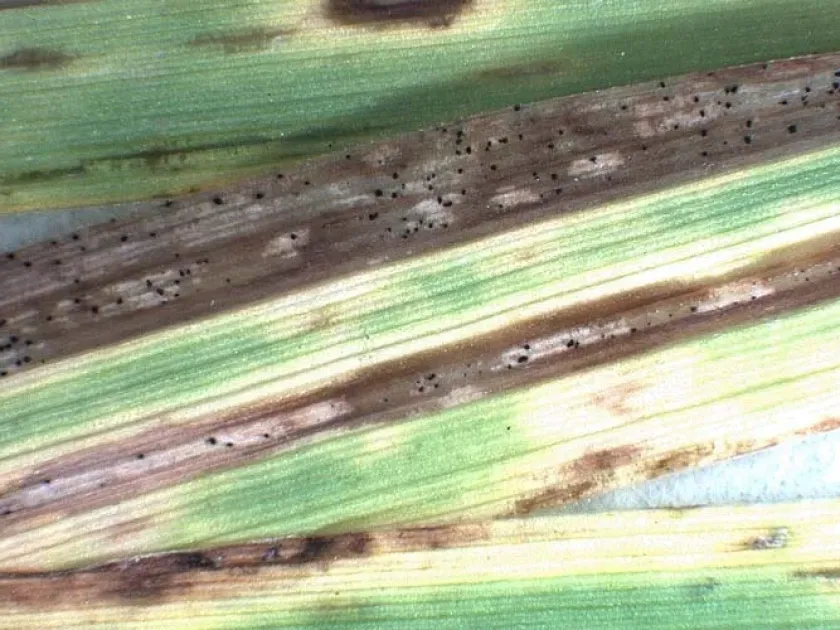
Early symptoms appear as small, light-brown spots on the leaf surface. As the infection progresses, these spots expand into oval or irregular shapes, often surrounded by a darker brown border that is characteristic of the species.
A distinctive feature of this infection is the presence of a grayish or olive-tinted fungal growth in the center of the spots, particularly when moisture levels are high. This is where the conidial development occurs.
As the disease advances, individual spots may coalesce, creating large necrotic areas that cause the entire leaf to wither and turn yellow. This often results in a scorched appearance of the field, especially in the lower foliage.
Leaf sheaths may also become infected, showing similar spotting patterns. In some cases, the necrosis can be severe enough to impair the plant's structural integrity, although this is less common than simple leaf loss.
Field diagnosis involves observing the progression of lesions from the base of the plant upwards, noting the shape and color of the lesions as primary indicators of the presence of the pathogen.
Control measures
Integrated disease management is essential. The most effective cultural control is the thorough incorporation of crop residues into the soil, which helps to accelerate the decomposition of fungal inoculum present in the debris.
Chemical control is often necessary during the growing season. Systemic fungicides, particularly those belonging to the triazole or strobilurin classes, have shown good efficacy in suppressing the development of leaf spots.
Strategic planning of crop rotation is highly recommended to break the life cycle of the fungus. Avoiding monocultures of susceptible grain crops can significantly reduce the pressure of the disease on a yearly basis.
Maintaining optimal nitrogen fertilization levels is important to prevent overly lush growth that keeps the canopy humid and susceptible to fungal colonization. Additionally, selecting resistant varieties provides a long-term solution.
- Crop rotation practices.
- Application of fungicides.
- Stubble management.
- Selection of resistant cereal cultivars.
Causes diseases · 1
Discussion
No discussions yet — be the first.