
Cercospora regalis
Cercospora regalis
Cercospora regalis is a highly specialized fungal plant pathogen classified within the kingdom Fungi, division Ascomycota, and class Dothideomycetes. As a member of the genus Cercospora, it is recognized for causing significant leaf spot diseases in various plant species.
What the section contains
Cercospora regalis
The fungus colonizes plant tissues by entering through stomata or mechanical wounds. Once inside, the mycelium spreads within the parenchyma, eventually emerging through the leaf surface to form dense fascicles of conidiophores bearing conidia, which facilitate further spread of the pathogen.
The life cycle of the pathogen is driven by asexual reproduction. Conidia are disseminated primarily by wind, rain splashes, and movement of equipment or insects. Upon landing on a suitable host leaf under high humidity, the conidia germinate and initiate a new cycle of infection.
Overwintering occurs primarily through mycelia or small, hardened sclerotium-like structures present on plant debris, fallen leaves, and stems. When favorable spring temperatures arrive, these structures resume conidia production, serving as the primary source of inoculum.
Optimal development of the fungus requires a specific microclimate characterized by temperatures between 20°C and 28°C, combined with prolonged leaf wetness or high relative humidity to support the germination of fungal spores.
The primary hosts for Cercospora regalis are plants within the Asteraceae family. The pathogen is known for its high host specificity, often targeting particular ornamental and wild plant species, which can lead to significant physiological stress for the infected plants.
While the infection is largely confined to the foliage, severe outbreaks can spread to petioles and young shoots. This systemic stress impairs the plant's ability to conduct photosynthesis, which is critical for growth and the development of flowers or seeds.
As the disease progresses, leaves yellow prematurely and eventually drop. This defoliation reduces the overall vigor of the plant, stunts its growth, and makes the host increasingly vulnerable to opportunistic secondary pathogens that may cause further tissue damage.
In nursery or high-density agricultural settings, widespread infection can result in the loss of large batches of young plants. This causes direct economic losses to producers who rely on the aesthetic or biological quality of their stock.
The pathogen is particularly destructive during extended rainy seasons, where persistent moisture allows for rapid colonization and development across the entire canopy of a plant population.
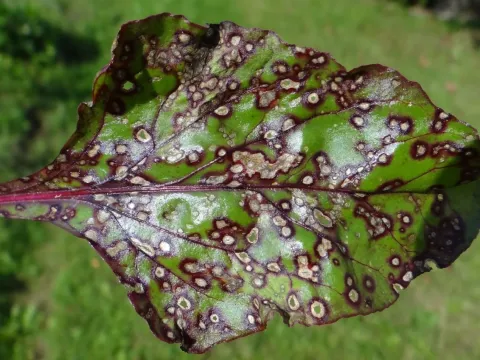
Initial infection manifests as small, chlorotic spots on the leaves. Over time, these spots expand, often turning into irregular brown or grey lesions characterized by a distinct dark border that separates the diseased tissue from healthy areas.
Microscopic examination of these necrotic spots reveals an olive-grey or black velvety layer, which is the conidial sporulation of the fungus. This layer acts as the primary reservoir for secondary infection cycles throughout the growing season.
As the disease advances, individual spots may coalesce to cover larger areas of the leaf blade. This extensive necrosis leads to tissue brittleness, cracking, and eventual drying, often resulting in a ragged or tattered appearance of the foliage.
Infection patterns typically move from the bottom of the plant upwards. Lower leaves, being closer to the soil and experiencing longer periods of moisture retention, serve as the initial epicenters for the fungal development.
Damage to the petioles can impede the vascular transport of water and essential nutrients, causing the entire leaf to wilt and die rapidly, even before large necrotic spots have fully covered the leaf surface.
A successful management strategy must include stringent sanitation practices. Removing and burning infected plant material is essential to reduce the inoculum load, as these remnants serve as the primary overwintering sites for the fungus.
Crop rotation is a vital cultural control method. By avoiding the cultivation of susceptible species in the same location for several consecutive years, producers can significantly diminish the survival and persistence of the pathogen in the soil.
Fungicidal applications, particularly those utilizing copper-based compounds or systemic triazoles and strobilurins, are highly effective when applied preventatively or at the earliest signs of infection to inhibit further fungal spread.
Managing the plant microclimate is also crucial. Increasing plant spacing and promoting airflow within the canopy lowers humidity levels, making the environment less conducive to fungal spore germination and colonization.
- Selection of resistant plant varieties or cultivars.
- Elimination of weed hosts that may harbor the pathogen.
- Implementation of drip irrigation to keep foliage dry.