
Cercospora leaf spot of grape
Pseudocercospora vitis
Description
How to identify
The causative agent of the disease is the fungus Pseudocercospora vitis (synonym Cercospora vitis). It is a phytopathogenic fungus that specifically targets the foliage of grapevines.
The fungus develops its mycelium within the leaf tissues, eventually emerging through the stomata to produce clusters of conidiophores and conidia on the leaf surface.
Propagation is facilitated by wind, water splashes from rain, or overhead irrigation, which spread the infectious spores to healthy leaves throughout the growing season.
The pathogen overwinters primarily in infected fallen leaves or on dormant vine tissues, where it remains viable until the following spring.
Development is favored by warm temperatures (20-28°C) and high relative humidity, which are essential for rapid spore production and successful infection cycles.
What it damages
The disease primarily affects Vitis vinifera and other grape species. It is most prevalent in regions characterized by heavy rainfall or prolonged leaf wetness.
Initial infection typically starts in the lower canopy of the vines, moving upward as the season progresses and the humidity within the canopy remains high.
The primary damage is caused by the loss of photosynthetic leaf area, leading to poor sugar accumulation in grapes and overall vine decline.
Early defoliation caused by severe infections weakens the vines, negatively impacting their ability to produce quality fruit in subsequent years.
Furthermore, poor cane maturation resulting from the disease increases the risk of winter injury, as the vines fail to harden off correctly before the cold season.
Signs of infestation
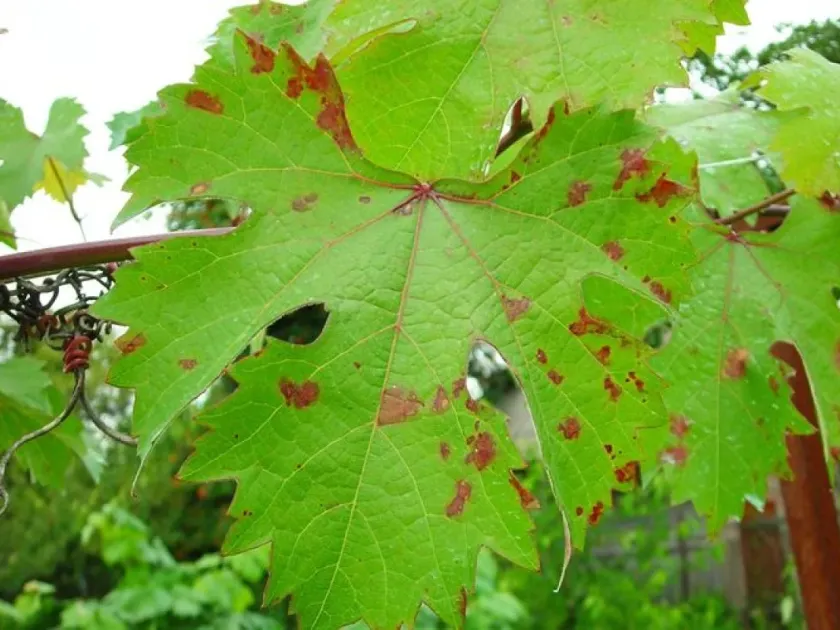
Symptoms appear as small, irregularly shaped spots on the leaves, which gradually enlarge and turn dark brown or reddish-brown with a necrotic center.
A distinct olive-gray to dark velvety fungal growth can be observed on the underside of these spots, which confirms the presence of the pathogen.
On the upper leaf surface, the spots are often surrounded by a light yellow halo, contrasting with the dark necrotic center of the infection site.
Stems, petioles, and rachises may also show dark, elongated lesions that disrupt the transport of nutrients to the grape clusters.
- Dark brown leaf spots.
- Velvety fungal growth on the underside of leaves.
- Yellowing halo around necrotic spots.
- Premature dropping of infected leaves.
Control measures
Sanitation is the first line of defense; removing and disposing of infected leaf litter is critical to reducing the primary inoculum source for the next season.
Improving canopy management through proper pruning, thinning, and trellising helps to lower humidity levels and allows foliage to dry faster after rain.
Fungicide applications, including copper-based products or systemic fungicides, are effective when applied preventatively before major infection periods.
Monitoring the vineyard for the first signs of leaf spot is essential, with treatment programs typically starting after bloom if weather conditions are conducive.
Balanced plant nutrition, particularly potassium application, strengthens plant cell walls and enhances the overall resistance of the vine to fungal invasion.
Causes diseases · 1
Discussion
No discussions yet — be the first.