
Cauliflower mosaic virus
Cauliflower mosaic
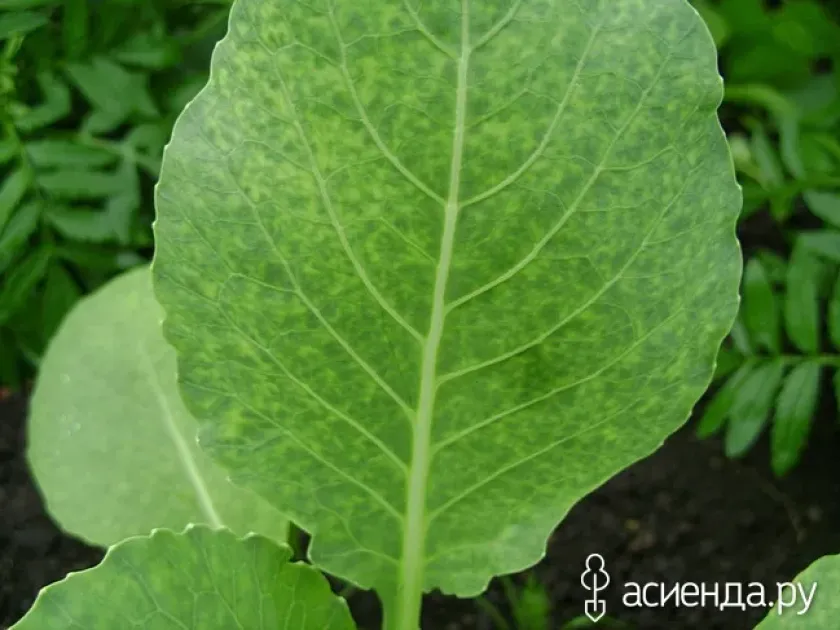
Description
How to identify
Cauliflower mosaic virus (CaMV) is the type species of the genus Caulimovirus within the family Caulimoviridae. It is a pararetrovirus containing a double-stranded DNA genome, which is a rare feature among plant viruses.
The virus particles are isometric with a diameter of approximately 50 nm. It replicates via a process of reverse transcription, involving the transcription of DNA into RNA and back into DNA within the host cell.
CaMV is primarily transmitted in a non-persistent manner by aphids, most notably the cabbage aphid (Brevicoryne brassicae). This means the virus can be acquired and transmitted by the vector within seconds of feeding.
Apart from insect vectors, mechanical transmission is possible in laboratory conditions or through handling. However, in field agriculture, aphid-mediated transmission remains the primary route of disease spread.
The virus has a narrow host range, restricted largely to the family Brassicaceae. Understanding its biology is essential for developing resistance breeding programs and robust crop protection strategies.
What it damages
The damage caused by CaMV manifests as significant yield loss and reduction in quality. Infected brassica crops such as broccoli, cauliflower, and cabbage often exhibit stunted growth and malformation.
The virus interferes with the host's hormonal balance and metabolic processes, specifically photosynthesis. This leads to reduced biomass production and weakened structural integrity of the harvested produce.
Infection at the seedling stage is particularly devastating, as it often results in the death of the plant or the development of severely stunted, non-marketable heads that fail to reach standard sizes.
The economic impact is exacerbated by the fact that infected plants are more susceptible to secondary fungal and bacterial pathogens, which can cause rotting of the head and further limit storage potential.
In large-scale farming, CaMV outbreaks can result in significant financial losses due to the need to discard stunted crops and the high costs associated with repeated insecticide applications.
Signs of infestation
The most common symptoms include a mosaic pattern on the leaves, characterized by alternating shades of light green, yellow, and dark green spots, typically localized along the leaf veins.
Leaf deformation is a hallmark of CaMV infection, often appearing as curling, wrinkling, or a stunted, rosette-like habit. The edges of the leaves may become distorted or wavy.
Stunting is observable throughout the entire plant. Infected cauliflower heads may develop unevenly, appear smaller than normal, and exhibit discolored patches, making them unappealing to consumers.
Vein clearing is an early diagnostic sign where the small veins of the leaves lose their green color, standing out against the darker leaf tissue as the disease progresses.
In severe infections, necrosis or dead tissue may appear along the veins or in the leaf lamina. This is usually associated with advanced disease stages or physiological stress on the plant.
Control measures
Effective control of CaMV relies on integrated pest management (IPM) strategies, with a primary focus on the suppression of aphid populations to prevent the spread of the virus from plant to plant.
Sanitation is a critical factor. Removing weed hosts from the vicinity of production fields—such as shepherd's purse and wild mustard—drastically reduces the primary reservoirs of the virus.
Utilization of high-quality, virus-free transplants is recommended. Growers should ensure that the nursery environment is strictly managed to keep aphid populations below the threshold of economic damage.
Maintaining spatial isolation from existing brassica crops can effectively delay the arrival of migratory aphids and reduce the overall infection pressure during the critical early growth phases.
While chemical control of the virus itself is not possible, the strategic use of insecticides and reflective mulches can help reduce aphid landing rates and slow the transmission of the virus in the field.
Causes diseases · 2
Discussion
No discussions yet — be the first.