
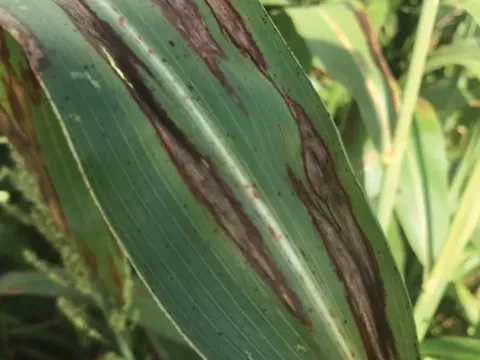
Sorghum leaf spot
Phoma sorghina
Sorghum leaf spot is caused by the fungus Phoma sorghina (formerly Phoma insidiosa), which is a member of the kingdom Fungi and the phylum Ascomycota. It is a widespread pathogen affecting sorghum species globally.
What the section contains
Sorghum leaf spot
The fungus produces pycnidia, small black fruiting bodies embedded within the infected plant tissues. These pycnidia contain numerous conidia, which are the primary spores responsible for spreading the disease under humid conditions.
The pathogen survives the winter primarily in crop residues and infected seeds. This ability to overwinter makes it a persistent threat in regions where sorghum is grown continuously.
Infection is favored by warm, humid weather with frequent rain showers. The conidia are splashed onto the foliage by rain or transported by wind, where they germinate and enter through stomata or wounds.
Phoma sorghina is also known to produce mycotoxins, such as tenuazonic acid, which can contaminate grain and potentially cause toxicity issues if consumed by livestock.
The disease primarily attacks leaves, leaf sheaths, stems, and panicles. Severe infection leads to significant necrotic lesions on the leaves, reducing the photosynthetic capacity of the plant.
When the stems are infected, the structural integrity of the plant is compromised, leading to stalk rot and lodging. This makes mechanical harvesting difficult and increases yield losses.
Panicle infection is particularly damaging, as it directly affects seed filling and quality. Infected seeds are often discolored, smaller in size, and have poor germination rates.
In forage sorghum, the disease reduces both biomass yield and the nutritional quality of the fodder, making it less palatable and potentially toxic to animals.
Economic losses are cumulative, starting from reduced plant vigor in the seedling stage to grain yield reduction and quality degradation at harvest time.
Symptoms typically begin as small, circular or irregular spots on the leaves. These spots are initially tan or brown and often surrounded by a dark reddish-purple margin.
As the lesions mature, they often coalesce into larger necrotic areas. The presence of small, dark, pimple-like pycnidia in the center of these spots is a hallmark of Phoma infection.
Stem infections manifest as dark, elongated streaks or sunken lesions. These weakened areas can break easily under heavy wind or rain conditions.
Panicles show signs of discoloration, with individual florets turning dark grey or black. In high humidity, a fungal mycelium may be visible on the surface of the panicle.
Seeds harvested from infected panicles often exhibit black or brown discolorations on the seed coat, indicating the presence of the pathogen within the seed tissue.
Effective management begins with using certified, disease-free seeds treated with systemic fungicides to protect seedlings from early-season infections.
Crop rotation is a critical strategy. Rotating sorghum with non-host crops like legumes or sunflowers helps reduce the inoculum levels in the soil over time.
Tillage practices that incorporate crop debris deep into the soil facilitate the decomposition of residue, thereby reducing the survival rate of the fungus.
Selecting hybrids with known resistance or tolerance to leaf spot diseases is the most sustainable way to minimize the impact of Phoma sorghina.
- Apply fungicides during the growing season if weather conditions favor disease development.
- Control grassy weeds that may serve as alternative hosts for the pathogen.
- Optimize plant density to improve air circulation within the canopy.
- Ensure balanced fertilization to prevent overly lush growth that attracts pathogens.