
Sorghum downy mildew
Sclersopora sorghi
Description
How to identify
Sorghum downy mildew is caused by the oomycete Sclerospora sorghi. It is an obligate parasite that specifically infects members of the Poaceae family, primarily causing systemic infections in sorghum and maize crops.
The disease cycle involves both sexual and asexual reproduction. Oospores, the sexual spores, survive in the soil and plant residues, serving as the primary source of infection. Asexual conidia are produced under high humidity conditions and facilitate rapid secondary spread.
Infection primarily occurs via root penetration by germinating oospores. Once inside, the mycelium spreads systemically throughout the developing plant, invading the vascular tissues and shoots.
The pathogen thrives in temperate to warm environments with high moisture levels. Optimal conditions for conidial production include nighttime temperatures around 20-22°C and high relative humidity.
Genetic diversity within Sclerospora sorghi populations can lead to the emergence of new physiological races, which poses a significant challenge for resistance breeding programs globally.
What it damages
The damage caused by Sclerospora sorghi is severe, often resulting in significant yield losses. Systemic infection leads to stunted plant growth, characterized by shortened internodes and profuse tillering.
The most devastating impact is the sterility of the panicle. The inflorescence often fails to produce grain or becomes entirely malformed into leaf-like structures, rendering the plant completely unproductive.
Infected seedlings may die shortly after emergence, leading to poor crop stands and the necessity for costly reseeding operations in affected agricultural fields.
The presence of the pathogen also negatively affects the biomass quality of fodder sorghum. Nutritive value is compromised, and the presence of fungal tissue may make the forage less palatable for livestock.
Economic losses are exacerbated in areas where continuous cropping is practiced, as the soil inoculum density increases year after year, leading to recurrent epiphytotics.
Signs of infestation
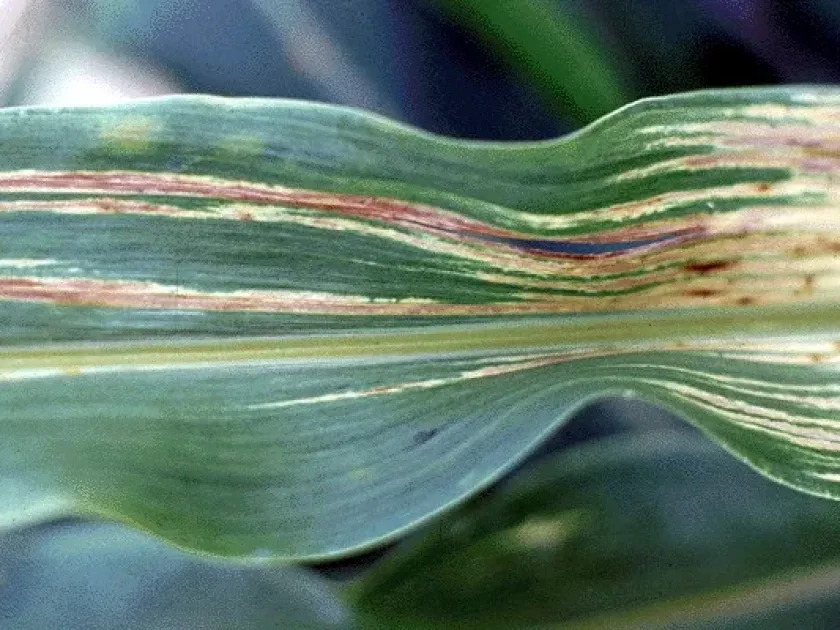
The initial symptom of sorghum downy mildew is chlorosis of the leaves. Pale yellow or white longitudinal stripes appear, following the leaf veins as the plant continues to develop.
During humid nights, a dense, white, downy fungal growth appears on the lower surfaces of the leaves. This is the sporulation phase, representing the active release of conidia for further spread.
As the disease progresses, the leaves become necrotic, brittle, and may eventually shred. This "shredding" symptom is caused by the breakdown of leaf tissue where oospores have been produced.
Affected plants often show systemic malformations, including a "fan-like" growth habit or the transformation of floral parts into vegetative structures (phyllody).
- Chlorotic striping on leaves.
- White, downy growth on the underside of leaves.
- Stunting and abnormal excessive tillering.
- Severe malformation or sterility of the panicle.
- Leaf shredding due to necrotic tissue breakdown.
Control measures
Effective management begins with strict crop rotation. Avoiding sorghum or maize on the same field for at least 3-4 years significantly reduces the soil-borne oospore population.
The utilization of resistant or tolerant cultivars is the primary and most effective control measure. Breeders work to incorporate resistance genes that can withstand local strains of the pathogen.
Seed treatment with systemic fungicides is crucial to protect seedlings during the vulnerable stage of germination and early development against soil-borne infection.
Cultural practices, such as deep plowing, help to bury crop residues, which can accelerate the decomposition of infected plant material and reduce the survival of oospores.
Maintaining optimal soil health and proper sowing dates allows for vigorous plant growth. Plants that establish quickly are less susceptible to early-stage infection compared to those struggling with unfavorable environmental conditions.
Causes diseases · 1
Discussion
No discussions yet — be the first.