
Olpidium borzii
Olpidium borzii
Olpidium borzii is a member of the kingdom Fungi and the phylum Chytridiomycota. It is a primitive, microscopic organism functioning as an obligate parasite on plant roots.
What the section contains
Olpidium borzii
The organism lacks a true mycelium, existing instead as a simple thallus or plasmodium within the host cell. This distinct characteristic places it among the lower fungi, often called chytrids.
Its life cycle centers on the production of motile zoospores equipped with a single flagellum, allowing them to swim through water films in the soil to locate new roots.
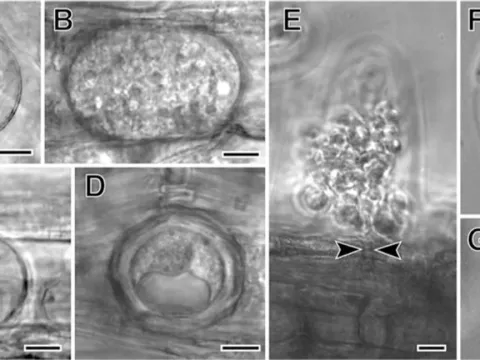
Resting spores, or cysts, are the primary survival structures of the pathogen. These spores possess thick walls that allow them to endure harsh conditions for several years.
Due to its microscopic size and lack of visible external fungal structures, diagnosis relies primarily on root tissue microscopy and molecular diagnostics like PCR analysis.
The primary damage caused by Olpidium borzii involves the destruction of root hairs and the epidermal layer of the roots, hindering water and nutrient uptake.
Infected plants show signs of severe stunting, chlorosis, and physiological stress. In agricultural settings, this leads to significant reductions in overall yield and vigor.
The pathogen is particularly devastating for seedlings and young transplants, where the root system is not yet fully developed, leading to potential crop failure.
Secondary infections are a common consequence, as the damaged root tissue becomes highly susceptible to colonization by various soil-borne bacteria and other fungi.
The economic impact is most profound in high-intensity agriculture, such as greenhouse vegetable production, where the pathogen can spread rapidly through the recirculating water.
Active infection typically occurs during periods of high soil moisture. The mobility of zoospores is entirely dependent on water films present in the soil substrate.
The development of the pathogen is favored by moderate temperatures ranging between 15 and 22 degrees Celsius, which often overlap with the prime growing season for many crops.
Poor soil drainage and over-irrigation create the ideal environmental triggers for the release of zoospores, facilitating the rapid spread of the disease across a field.
The pathogen can be disseminated through irrigation water, contaminated farming equipment, or the movement of infected soil from one greenhouse block to another.
Even in dry conditions, the pathogen survives as quiescent resting spores, which quickly germinate and become active as soon as favorable wet conditions return.
Visible symptoms are often non-specific, characterized by stunted growth, leaf yellowing (chlorosis), and wilting, especially during peak temperature periods.
A closer inspection of the root system reveals browning, softening, and tissue decay. In many cases, the roots may appear thinner and less branched than those of healthy plants.
Microscopic analysis of the root cells reveals the presence of intracellular sporangia. These structures are often clearly visible within the cells of the root epidermis.
As the disease progresses, the root system fails to provide adequate hydration, causing the plant to show signs of drought stress despite adequate soil moisture levels.
In greenhouses, the disease pattern often appears in clusters, following the movement of water or the use of common equipment among rows of plants.
The most effective strategy for managing Olpidium borzii is strict sanitation to prevent the introduction of the pathogen into new areas or clean substrates.
Implementing a proper crop rotation cycle is essential to starve the pathogen by removing host plants for several years, allowing resting spores to lose viability.
Soil disinfection, particularly through steaming, is the gold standard for eradicating resting spores in commercial greenhouse operations before the new planting season.
- Ensure the use of certified pathogen-free seeds and seedlings.
- Maintain proper drainage to prevent water stagnation in the root zone.
- Sanitize tools, containers, and footwear between different cultivation zones.
Promoting general plant health through balanced fertilization and pH control can help the crop withstand the stress caused by minor levels of root colonization.