
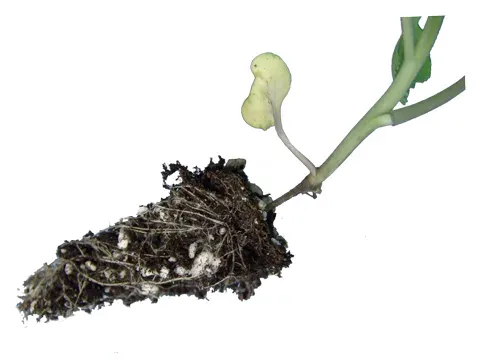
Olpidium brassicae
Olpidium brassicae
Olpidium brassicae is a primitive member of the kingdom Protista, specifically classified within the Chytridiomycota phylum. It functions as an obligate parasite, living within the cells of plant roots.
What the section contains
Olpidium brassicae
The life cycle involves motile zoospores that require free moisture in the soil to navigate and locate a suitable host root. Upon contact, the zoospore encysts and enters the root hair or epidermal cell.
Inside the plant cell, the fungus develops into a thallus that eventually produces sporangia. These sporangia release new zoospores through a discharge tube, facilitating the rapid spread of the pathogen in dense plant populations.
In dry or unfavorable conditions, the pathogen produces thick-walled resting spores, known as cystosori. These allow the fungus to survive in soil for several years, making it difficult to eradicate once it has established.
Beyond direct damage to roots, Olpidium brassicae is recognized as an important vector for several plant viruses, notably the Tobacco Necrosis Virus, which causes additional necrotic symptoms in various crops.
The primary hosts of Olpidium brassicae include most members of the Brassicaceae family, such as cabbage, broccoli, cauliflower, Brussels sprouts, and radish.
By infecting the root system, the pathogen disrupts the uptake of water and vital nutrients, leading to stunted growth, wilting, and potential death of the seedlings during early development.
While often associated with cabbage, the pathogen has a wide host range, including lettuce and several weed species, which can serve as reservoirs for the fungus in greenhouses or field settings.
Economic damage is most severe in commercial nurseries where high planting density and high humidity create ideal conditions for the pathogen to spread from one seedling to the entire crop.
In addition to vegetable crops, it can impact tobacco and other ornamentals, causing significant nursery losses if the substrate is not properly sterilized or managed.
Initial signs are often subtle, presenting as a general lack of vigor in seedlings, including chlorosis (yellowing of leaves) and delayed development compared to healthy specimens.
Root symptoms typically involve browning and decay. The root system becomes sparse and fragile, preventing the plant from anchoring properly or accessing enough soil resources for growth.
In advanced infections, stem-base rot occurs, creating a dark, constricted zone at the soil line. This is commonly referred to in the agricultural industry as a component of the "damping-off" complex.
Seedlings with internal infections often collapse or fall over, especially when the soil is saturated, as the weakened root structure cannot support the weight of the developing plant.
Failure to thrive after transplanting is a major indicator of chronic infection; plants may remain stunted throughout their cycle and exhibit increased susceptibility to other opportunistic soil pathogens.
Soil management is the most effective preventative measure. Using steam-sterilized or solarized potting mixes for seedling production is essential to eliminate resting spores.
Controlling soil moisture levels is critical. Because the pathogen relies on water for zoospore transmission, preventing waterlogged conditions significantly reduces the risk of an outbreak.
Strict sanitation protocols must be followed in greenhouses. This includes cleaning trays, benches, and irrigation lines between batches to ensure no residual soil or spores remain.
Biological control agents, such as beneficial Trichoderma species, can be applied to the soil to compete with or parasitise the pathogen, effectively limiting its colonization of root surfaces.
In cases where the disease is detected, prompt removal and destruction of infected plants, combined with sanitation of the surrounding area, are necessary to prevent further spread within the greenhouse facility.