
Botryodiplodia
Botryodiplodia
Botryodiplodia is a genus of fungi within the Botryosphaeriaceae family that acts as a significant phytopathogen, primarily causing necrosis in woody plants.
What the section contains
Botryodiplodia
The fungus is characterized by its ability to exist in both parasitic and saprophytic forms, allowing it to persist in the environment for extended periods.
It reproduces through pycnidia—small, flask-shaped fruit bodies that release spores when triggered by specific environmental conditions like rain or humidity.
These spores are primarily wind- or water-borne, facilitating the spread of the pathogen across orchards, forests, and nursery settings.
Taxonomically, it is classified among the Ascomycota, a group of fungi known for causing various types of wood-rotting and stem-blight diseases.
The pathogen causes significant damage to various fruit, nut, and ornamental trees, often leading to limb dieback and severe structural decay.
It infects through wounds in the bark caused by pruning, environmental stress, insect feeding, or natural cracks, disrupting the vascular system of the tree.
Infected branches exhibit inhibited sap flow, which results in chlorosis, foliage wilting, and premature leaf drop during the growing season.
When the infection girdles the branch or trunk, it causes the distal parts of the tree to die, significantly reducing the overall productivity of the crop.
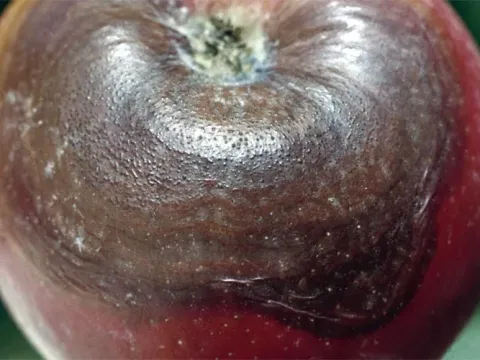
Fruit crops may also suffer from post-harvest decay if the fungus colonizes the fruit tissue prior to or during the storage period.
The disease development is heavily dependent on favorable environmental conditions, with peak activity occurring during warm and humid weather.
Spring serves as a critical time for initial infections, as trees emerge from dormancy and become susceptible to spore penetration.
Summer droughts or heatwaves act as stress factors, weakening the tree's natural defenses and allowing the pathogen to spread more aggressively.
The fungus survives the winter dormant phase in the form of mycelium embedded within the bark or in mummified fruits left on the trees.
The dissemination of conidia happens whenever high moisture levels coincide with the temperature requirements of the specific fungal species.
Early symptoms appear as dark, sunken lesions on the bark that slowly expand into larger necrotic zones if left unchecked.
Upon peeling back the affected bark, one can observe brown discoloration and decay within the underlying cambium and xylem layers.
Small black, pimple-like structures representing the fungal fruiting bodies (pycnidia) are often visible on the surface of the dead bark.
Affected branches often show a "scorched" appearance with sudden wilting and browning of leaves, which may persist on the branches for some time.
Chronic infections eventually lead to extensive cracking, bark splitting, and potentially the death of the entire tree if the pathogen reaches the main trunk.
Management centers on sanitation; pruning and destroying all dead or visibly infected branches is essential to reduce the inoculum load.
It is vital to prune back into healthy wood, ensuring that no mycelial growth remains in the tissue of the treated branches.
Tools used for pruning must be disinfected after every cut on an infected tree to prevent the mechanical transmission of spores to healthy specimens.
Chemical control involving copper-based fungicides can be applied as a preventive measure during the dormant season to protect vulnerable bark areas.
Maintaining optimal plant health through proper irrigation, fertilization, and stress management is the most effective long-term defense against Botryodiplodia.