
Boron toxicity
Boron toxicity
Boron toxicity is a physiological disorder in plants caused by an excessive accumulation of boron in plant tissues. It is not a biological disease but a chemical stressor that significantly impacts the normal metabolic functions of crops grown in high-boron soils.
What the section contains
Boron toxicity
This condition occurs when boron concentrations in the soil solution or irrigation water exceed the specific tolerance levels of the plant species. It is a common challenge in arid and semi-arid regions where soil salts are naturally concentrated.
From an agronomic perspective, this is considered a form of soil chemical imbalance. Unlike nutrient deficiencies, toxicity is harder to reverse and often requires long-term soil amelioration strategies to restore agricultural productivity.
Identification requires precise chemical analysis of both soil and leaf samples. Boron is relatively immobile in most plants, so testing older leaves often provides the most accurate reflection of accumulated toxicity levels.
The disorder impairs essential cellular processes, including photosynthesis and protein synthesis. As the toxicity progresses, plants exhibit reduced vigor, poor growth, and increased susceptibility to secondary pathogenic infections.
Sensitive crops such as citrus, grapes, beans, and various stone fruits are highly susceptible to boron toxicity. In these plants, even slight levels of boron excess can drastically reduce total fruit yield and quality.
The root system is severely inhibited under high boron conditions. The tips of the roots often show stunted growth or necrosis, which prevents the plant from effectively absorbing water and essential soil nutrients.
For cereals and grains, the damage manifests as poor grain filling and abnormal ear development. The plants reach maturity prematurely, and the harvested grain is often shriveled and of poor market quality.
In orchards and vineyards, boron toxicity leads to leaf necrosis and subsequent premature defoliation. This drastically reduces the photosynthetic capacity of the plants, weakening the trees over several growing seasons.
On a commercial scale, boron toxicity causes significant economic losses. Fields affected by this condition may show patchy growth or complete crop failure, necessitating the adoption of more tolerant varieties.
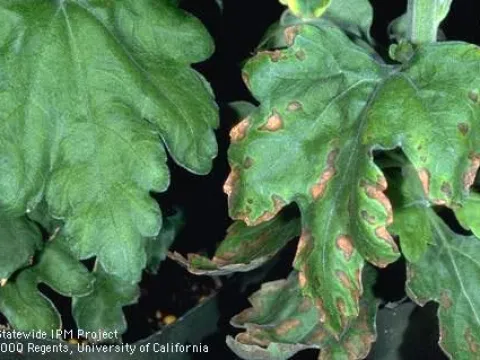
The most distinctive symptom of boron toxicity is marginal leaf necrosis. It typically begins at the leaf tips and margins, moving inward as the boron concentration in the tissue increases, causing browning and death.
Chlorotic spots often appear on the foliage, eventually turning brown or dark black. These necrotic areas are the result of the plant's inability to process the high accumulation of boron in the leaf epidermis.
Premature leaf drop is a hallmark sign of high boron exposure. The plant attempts to shed its damaged, toxic foliage to protect its core physiological functions, leading to sparse canopies in affected trees.
Deformed growth, including shortened internodes and twisted leaves, is frequently observed in sensitive species like vines. The overall appearance is one of severe stunting and reduced canopy development.
Resinous exudates may form on the bark or branches of some fruit tree varieties. These symptoms, combined with the browning of the root tips, serve as clear indicators of chronic boron overload within the plant.
Leaching is the primary mechanical method for controlling boron toxicity. By applying large amounts of high-quality irrigation water, excess soluble boron can be washed below the root zone, provided that proper drainage is in place.
The application of lime or gypsum can help mitigate boron toxicity. Calcium has an antagonistic relationship with boron, meaning that increasing calcium levels in the soil can reduce the uptake and harmful effects of boron.
Effective water management is crucial in arid regions. If irrigation water is found to have high boron content, it is necessary to implement filtration systems or blend the supply with lower-boron water sources.
Selecting tolerant cultivars is the most sustainable approach for farming in high-boron areas. Ongoing breeding programs focus on developing varieties that exclude boron or effectively store it in non-sensitive tissues.
- Perform frequent soil and leaf tissue testing.
- Avoid using fertilizers containing boron on high-boron soils.
- Improve soil drainage to facilitate efficient leaching.
- Incorporate organic matter to improve soil buffering capacity.