


Prices in stores
No offers yet — stores have not added prices for this product yet.
Similar varieties with prices
-
AntonivkaLLC 'ELITA' SHEBEKINSKY DISTRICT
from 0.2 €per 1 kg
-
 TacitusSaatbau
from 8.64 €per 1 kg
TacitusSaatbau
from 8.64 €per 1 kg
-
 Raduga
from 55.5 €per 1 kg
Raduga
from 55.5 €per 1 kg
-
 AsorySECOBRA RECHERCHES S.A.S
from 0.4 €per 1 kg
AsorySECOBRA RECHERCHES S.A.S
from 0.4 €per 1 kg
Type of Development
Winter wheat
Wheat Type
Soft wheat variety
Awnedness
Awnless
Growing Season
280-290 days
Your mark
0 votes
0% positive ratings
Description
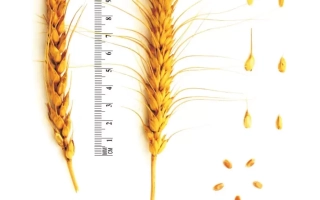
The Jangal winter soft wheat variety was developed by breeders at the Yershov experimental station of irrigated farming and the Southern Research Institute of Agriculture. This late-maturing and tall variety belongs to the albidum group and is characterized by a white, awnless, prism-shaped ear 8.5-10 cm in length with thin white awn-like appendages. The grain is large, egg-shaped with a shallow groove, white in color, and glassy in texture, ensuring high-quality flour and bread. The mass of 1000 grains ranges from 35 to 46 grams, indicating the grain's size and high commercial value.
Jangal has good winter hardiness, resistance to lodging and shattering on the root, as well as field resistance to leaf rust. The variety is distinguished by high potential yield, which reached 8.5 tons per hectare in experimental conditions. It is adapted to the forest-steppe eco-type and recommended for cultivation in the Lower Volga region, including the western and central right-bank areas of the Saratov region. Drought resistance and resistance to lodging are at the level of the Left-Bank 1 variety, which makes Jangal a reliable choice for various climatic conditions.
The commercial value of the variety is due to stable grain production with good technological and baking qualities, as well as high demand for white-seeded winter wheat. Late maturity dates allow for obtaining a consistently high yield in years with a wet summer. Jangal competes well with other grain market varieties thanks to the combination of high grain quality, disease resistance, and adaptability to growing conditions.
Jangal has good winter hardiness, resistance to lodging and shattering on the root, as well as field resistance to leaf rust. The variety is distinguished by high potential yield, which reached 8.5 tons per hectare in experimental conditions. It is adapted to the forest-steppe eco-type and recommended for cultivation in the Lower Volga region, including the western and central right-bank areas of the Saratov region. Drought resistance and resistance to lodging are at the level of the Left-Bank 1 variety, which makes Jangal a reliable choice for various climatic conditions.
The commercial value of the variety is due to stable grain production with good technological and baking qualities, as well as high demand for white-seeded winter wheat. Late maturity dates allow for obtaining a consistently high yield in years with a wet summer. Jangal competes well with other grain market varieties thanks to the combination of high grain quality, disease resistance, and adaptability to growing conditions.
Crop & resistance
Crop
Disease resistance
Specifications
| Type of Development | |
|---|---|
| Wheat Type | |
| Awnedness | |
| Growing Season | 280-290 days |
| Plant: height | 100-110 cm |
| Seed: mass 1.000 pcs seeds | 35-40 grams |
| Winter Hardiness, Ratings (9-1) | 7 |
| Resistance to lodging | |
| Potential Yield | 8-9 tons |
| Registration year | 2008 |
| Catalog | Catalog → Wheat |
| Manufacturer | Federal Agrarian Scientific Center of the South-East |
| Legal data |
Show · 1 |
| Country | Russia |
No reviews yet. Be the first to share your experience.
Alternatives
Wheat seeds · similar varieties




See also
Often considered together with this variety




Recently viewed
Products you’ve viewed on this site
Reviews