


SKU #59551
·
49 views
MOSCOW 35
Wheat
ФГБНУ Федеральный исследовательский центр «Немчиновка»User rating
0 votes0% positive reviews
No ratings yet — be the first.
Type of Development
Spring wheat
Wheat Type
Soft wheat variety
Ostistost'
Ostistaya
Growing Season
90-100 days
About product

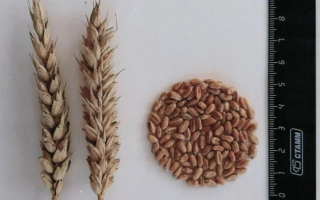
The Moscow 35 wheat is a soft spring wheat (Triticum aestivum L.) of medium-late maturity type with a vegetation period ranging from 86 to 105 days. The plant is of medium height, featuring white heads and awn-like appendages. This variety is distinguished by its high yield, reaching 50-60 centners per hectare on well-cultivated soils, and by its stability. The mass of 1,000 grains varies from 36…
Type of Development
Spring wheat
Wheat Type
Soft wheat variety
Ostistost'
Ostistaya
Growing Season
90-100 days
Description
The Moscow 35 wheat is a soft spring wheat (Triticum aestivum L.) of medium-late maturity type with a vegetation period ranging from 86 to 105 days. The plant is of medium height, featuring white heads and awn-like appendages. This variety is distinguished by its high yield, reaching 50-60 centners per hectare on well-cultivated soils, and by its stability. The mass of 1,000 grains varies from 36 to 45 grams, indicating a large grain size. Moscow 35 possesses excellent baking qualities, making it in demand in agriculture and the food industry.
The variety is characterized by high plasticity and adaptability to various climatic conditions, allowing for successful cultivation in different regions. It is resistant to shedding and germination of grains on the root, as well as to lodging and drought. Pests and diseases affect the crop to a minor degree: the variety is weakly susceptible to rust, powdery and solid bunt, powdery mildew, while the grain aphid causes average damage. Thanks to these qualities, Moscow 35 is widely used as an insurance crop for under-seeding and re-seeding of winter wheat.
The optimal sowing rate is from 4.0 to 6 million viable seeds per hectare, with sowing recommended to be carried out early in spring. The variety withstands frosts and heat well, ensuring a stable yield even under unfavorable weather conditions. Moscow 35 meets quality standards and has been used in agriculture since 1975, confirming its reliability and efficiency in grain production.
The variety is characterized by high plasticity and adaptability to various climatic conditions, allowing for successful cultivation in different regions. It is resistant to shedding and germination of grains on the root, as well as to lodging and drought. Pests and diseases affect the crop to a minor degree: the variety is weakly susceptible to rust, powdery and solid bunt, powdery mildew, while the grain aphid causes average damage. Thanks to these qualities, Moscow 35 is widely used as an insurance crop for under-seeding and re-seeding of winter wheat.
The optimal sowing rate is from 4.0 to 6 million viable seeds per hectare, with sowing recommended to be carried out early in spring. The variety withstands frosts and heat well, ensuring a stable yield even under unfavorable weather conditions. Moscow 35 meets quality standards and has been used in agriculture since 1975, confirming its reliability and efficiency in grain production.
Video · 1 video
Suggest a video →Crop & resistance
Crop
Disease resistance
Pest resistance
Specifications hover over for a hint about the specification
| Type of Development | |
|---|---|
|
Wheat Type
Wheat Type
Biologically hard wheat differs from soft wheat in its greater demand for soil fertility and agronomic conditions (especially regarding field cleanliness from weeds), lower drought resistance and plasticity, relatively weaker root development, especially nodal roots, and lower ti... |
|
| Ostistost' | |
| Growing Season | 90-100 days |
| Seed: mass 1.000 pcs seeds | 35-40 grams |
| Resistance to lodging | |
| Potential Yield | 5-6 tons |
| Registration year | 1975 |
| Catalog | Catalog → Wheat |
| Manufacturer | ФГБНУ Федеральный исследовательский центр «Немчиновка» |
| Legal data |
Show · 1 |
| Country | Russia |
Store offers
Prices are updated on loadLoading offers…
Aggregator catalog: prices are collected automatically from store websites, normalized by AI and converted at the current exchange rate. Before ordering, confirm the price and availability on the store's website. This block is not indexed by search engines — the data is loaded after the page opens.
Not yet комментариев. Be the first!
Alternatives
Wheat seeds · similar varieties







See also
Often considered together with this variety




Recently viewed
Products you’ve viewed on this site
Reviews · 0