


SKU #36794
·
53 views
Epihraf
Wheat
User rating
0 votes0% positive reviews
No ratings yet — be the first.
Type of Development
Winter wheat
Wheat Type
Soft wheat variety
Growing Season
240-270
Registration year
2023
About product

A reliable soft winter wheat variety with proven plasticity and high quality standards, developed by the PBGI.
Type of Development
Winter wheat
Wheat Type
Soft wheat variety
Growing Season
240-270
Registration year
2023
Description
A Benchmark of Ukrainian Breeding
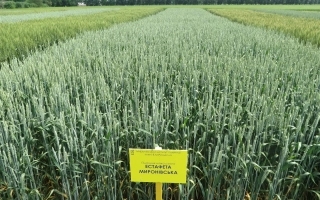
The «Epigraf» wheat variety represents the core of the breeding expertise at the Plant Breeding and Genetics Institute (PBGI) in Ukraine. Developed specifically to withstand the challenging pedoclimatic conditions of the region, this soft winter wheat has earned a reputation as a reliable performer. It is widely recognized for its ability to bridge the gap between high genetic potential and real-world field endurance.
Agronomic Profile
With a vegetation period of 240–270 days, «Epigraf» is engineered to maximize the utilization of winter and spring moisture, securing a robust yield before the peak of summer heat hits. As a soft wheat variety, it is primarily valued for its consistent milling and baking quality, making it a preferred choice for producers who prioritize stability in their supply chains.
- Originator: Plant Breeding and Genetics Institute (PBGI), Ukraine.
- Crop type: Soft winter wheat.
- Growth cycle: 240–270 days.
- Application: Milling industry and food production.
In the market, «Epigraf» occupies a niche of a "trusted workhorse." Unlike highly demanding intensive hybrids, this variety is characterized by its plasticity—its ability to maintain yield stability despite minor variations in agronomic management. For farmers across Ukraine, it remains a consistent solution that balances risk management with steady productivity, ensuring reliable harvests regardless of seasonal volatility.
Crop & resistance
Crop
Specifications hover over for a hint about the specification
| Type of Development | |
|---|---|
|
Wheat Type
Wheat Type
Biologically hard wheat differs from soft wheat in its greater demand for soil fertility and agronomic conditions (especially regarding field cleanliness from weeds), lower drought resistance and plasticity, relatively weaker root development, especially nodal roots, and lower ti... |
|
| Growing Season | 240-270 |
| Registration year | 2023 |
| Catalog | Catalog → Wheat |
| Legal data |
Show · 1
|
| Country | Ukraine |
Store offers
Prices are updated on loadLoading offers…
Aggregator catalog: prices are collected automatically from store websites, normalized by AI and converted at the current exchange rate. Before ordering, confirm the price and availability on the store's website. This block is not indexed by search engines — the data is loaded after the page opens.
Not yet комментариев. Be the first!
Alternatives
Wheat seeds · similar varieties





See also
Often considered together with this variety






Recently viewed
Products you’ve viewed on this site
Reviews · 0