(Bigarreau Hatif Burlat, Bigarreau Ativ Burlat, Bigarreau Early Burlat, Bigarreau Burlat, Early Burlat)
This variety originates from France. It was discovered near Lyon around 1915 as a chance seedling. Widely distributed in Central Europe. Under state variety trials in Russia.
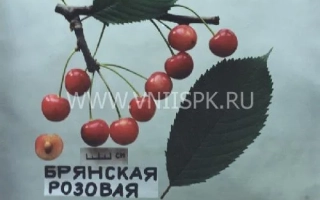
Medium-sized tree with a dense, rounded crown. Main branches are light brown with numerous lenticels on the bark. Shoots are slightly curved, light brown. Leaves 164 x 65 mm, oval with doubly serrated edges; petiole 46 mm, with rounded, dark-red glands. Flowers are saucer-shaped, 30 mm, with broadly obovate, touching petals. Pedicel 28 mm).
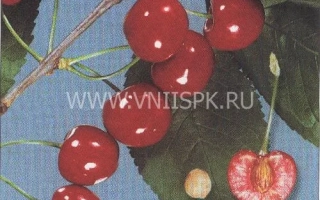
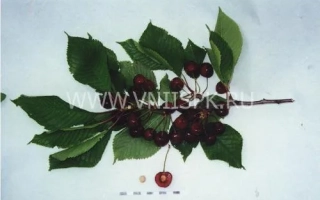
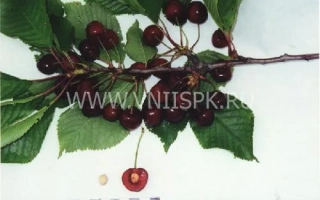
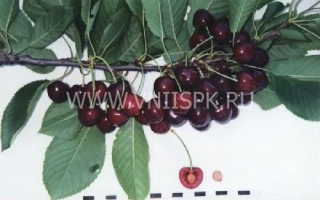
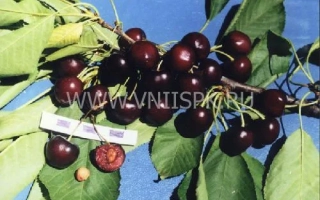
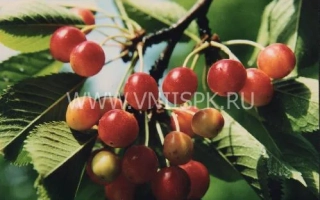
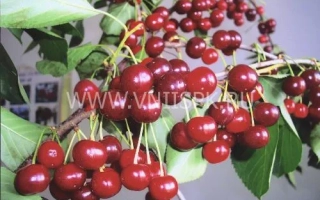
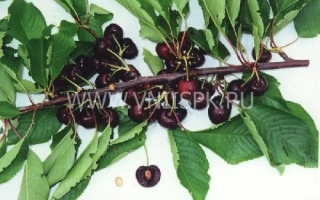
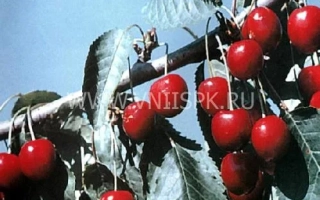
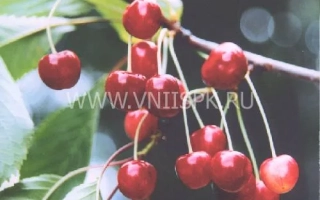
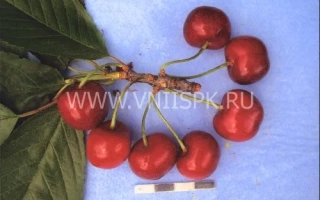
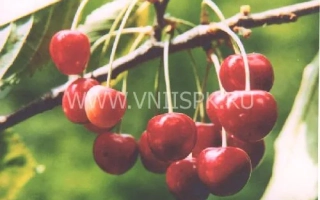
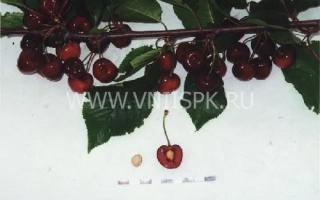
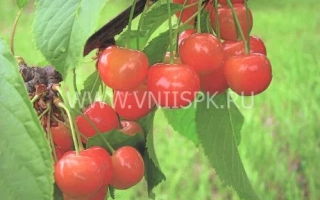
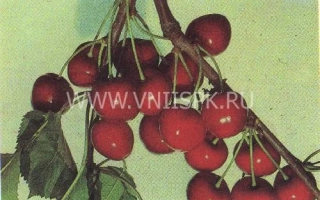
Fruits average 6.4 g and more, flat-round when fully ripe, black-red, with a clearly defined dorsal suture, dark-red juice. Flesh is dark-red, medium density, contains dry matter — 14.7%, sugars — 11.2%, free acids — 0.6%, ascorbic acid — 6 mg per 100 g fresh weight. Pit is oval-rounded, large, weighing 0.4 g, with clearly defined lateral ribs, separates well from flesh, constitutes 6.3% of total fruit weight. Peduncle 35–40 mm, firmly attached to the fruit.
Good early commercial cherry variety, characterized by excellent fruit quality and flavor combined with firm flesh. Fruits are primarily intended for fresh consumption, but suitable also for canning. Suitable for transport.
Plants enter fruiting at 4–5 years. Flowering and fruit ripening (first decade of June) are early. Best pollinators: Gede-дельфинген, Bigarreau Starkin, Napoleon, Exhibition. Winter hardiness is medium; flower buds freeze moderately in severe winters. Shows relative resistance to fungal diseases, but susceptible to fruit cracking after rain. Productivity is good: trees aged 11–17 years yield an average of 80 kg of fruit. Of interest for cultivation on dwarf rootstocks.
Advantages: early fruit ripening, high flavor and commercial value.
Disadvantages: in certain years, fruits show tendency to cracking.