This variety was created at the North Caucasus Regional Institute of Horticulture and Viticulture (Krasnodar) from seeds of the free-pollinating variety Melitopolskaya Cherno. Authors: E.M. Alexina, T.G. Prychko. A promising late-ripening variety. Included in the State Register since 2002 and approved for commercial use in the North Caucasus region.
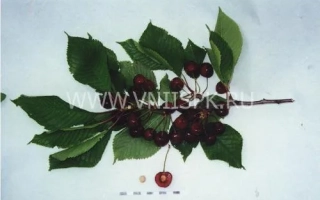
Tree of medium growth vigor with a spherical, slightly elevated crown, medium density, well-leafed. Shoots are light-brown with a silvery bloom and a small amount of lenticels. Inflorescence buds are medium-sized, oval, slightly deviated from the shoot; vegetative buds are conical and medium-sized. Fruit set is mixed type, the main part of the yield is concentrated on flower clusters (80%). Leaves are inversely egg-shaped, dark green, above average size (16.5 x 8.0) with rounded base and pointed apex, leaf margin smooth, coarsely or moderately toothed, leaf surface flat with slight curvature, matte, weak pubescence on the underside, mainly along the central vein. Stipules are located on the petiole in pairs of medium size, mostly opposite, shiny, light-red. Petiole is short and medium, fairly thick, with anthocyanic coloration. Flowers are arranged in clusters of 2-3, large, saucer-shaped, petals arranged loosely, widely inversely egg-shaped, white, stigma position relative to stamens varies, calyx cup-shaped, no toothed sepals, stamens and pistil long.
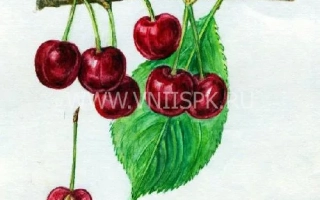
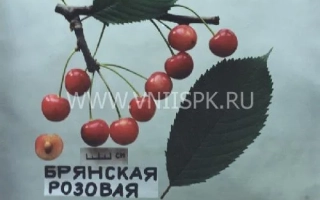
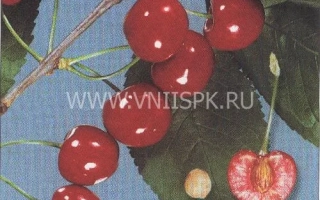
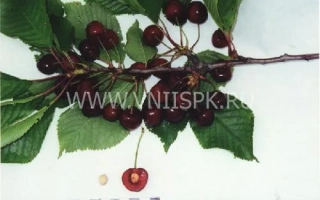
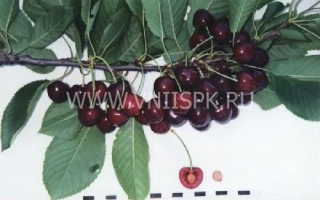
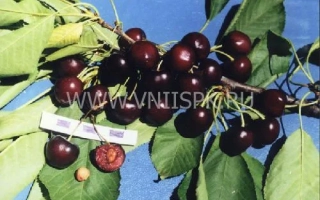
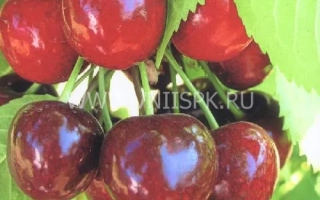
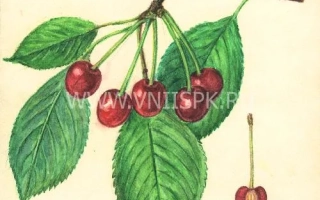
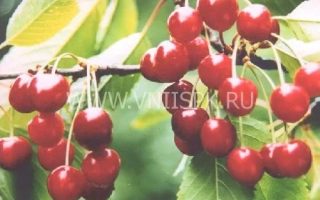
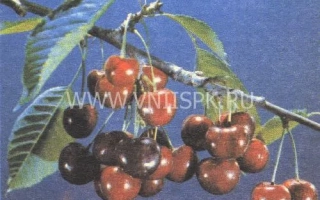
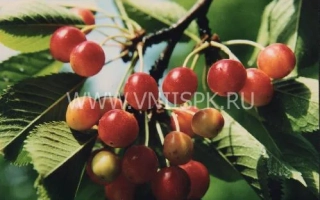
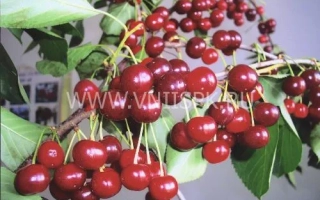
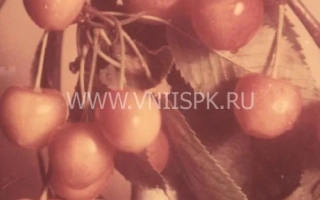
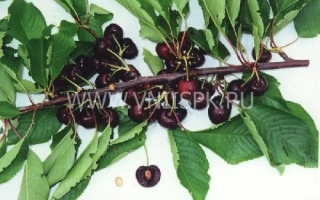
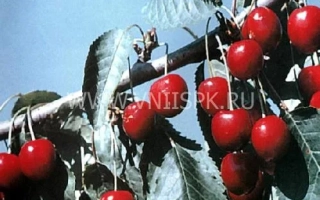
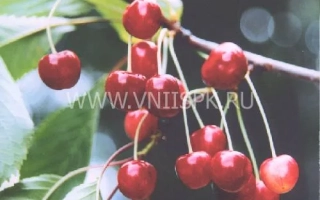
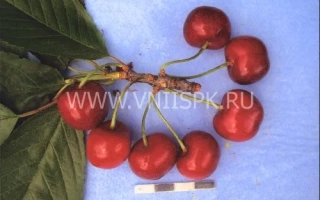
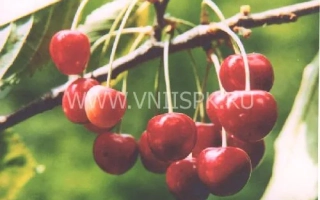
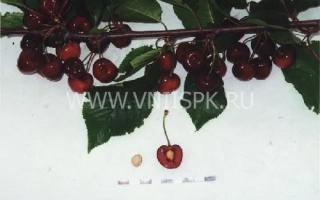
Fruits are large (9.0–10.0 g), broadly round (2.6 x 2.9 x 2.4) with wide depression and rounded apex, bright red color. Flesh is pink, firm, juice light-red. Pedicel is medium length and thickness, dry detachment from fruit. Pit is oval (0.4 g), light-brown, with rounded apex and base, easily separates from flesh. Fruits are very attractive, uniform, ripening simultaneously, high commercial and taste quality (taste evaluation 4.8 points). Contains 14.5% dry matter, 9.9% sugars, 0.7% acids, 11.0 mg/100g ascorbic acid. Excellent dessert flavor, suitable for modern processing: compotes, candied fruits, dried fruits, freezing.
This variety belongs to medium flowering and late ripening. Enters full fruiting on the 5th year after planting. Fruit set is mixed type, main part of the yield (up to 80%) concentrated on flower clusters of various ages. Self-sterile. Resistant to main fungal diseases, cherry fly, and aphids, with minimal damage. Winter hardiness of tree and generative buds is sufficient, frost resistance is enhanced, negatively reacts to lack of heat during flowering. Drought resistance is high. Average yield during full fruiting reaches 50 kg/tree — 9–10 t/ha with planting scheme 8 x 6.
Advantages: high commercial value, large fruit size, dessert qualities, suitability for modern technical processing.