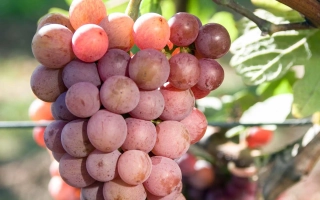
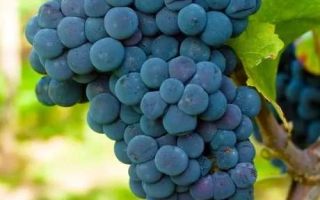
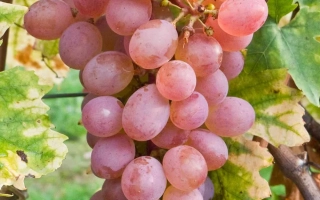
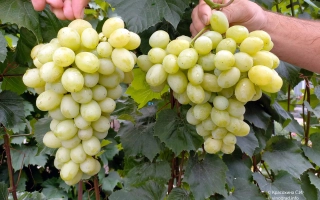
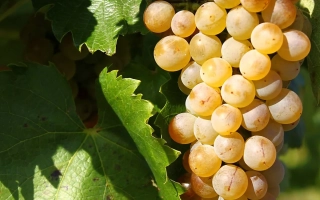
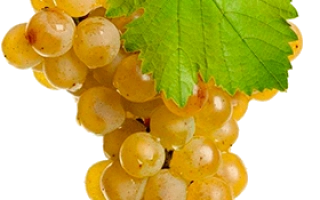
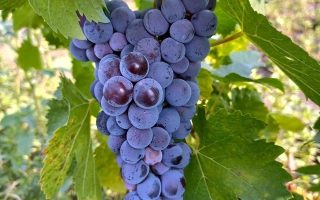
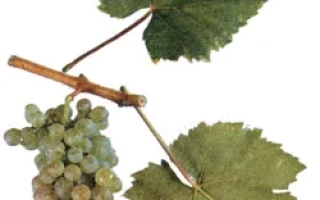
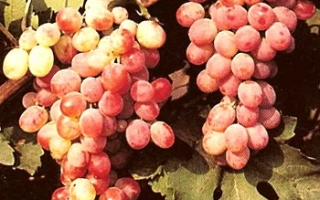
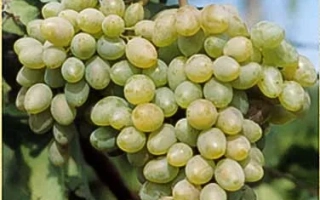
The Teltil Kuruk grape variety is a versatile, historically rich variety of unknown origin dating back to the 15th–16th centuries. It is widely cultivated in Kazakhstan and prized for its high-quality berries, primarily used for wine and juice production. The grape has a white skin and a golden-pink hue, along with a well-balanced acidity and high sugar content, enabling the production of high-quality wines, including those with controlled geographical indication (Appellation d'Origine Contrôlée).
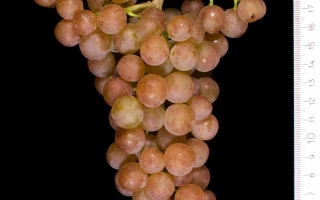
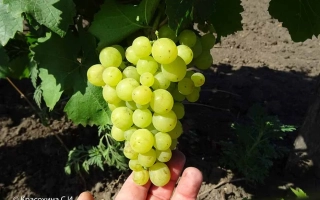
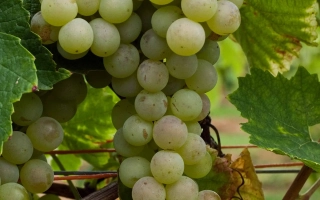
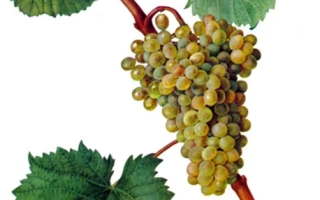
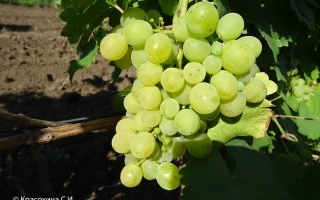
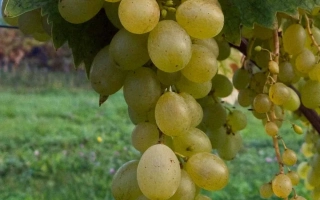
Teltil Kuruk vines exhibit medium to above-average vigor, with well-developed canes (80–95%). Leaves are leathery, slightly lobed, with large narrow-triangular teeth and dense woolly pubescence, especially on young shoots. Bunches are elongated, cylindrical-conical, medium density, weighing 190–234 grams. Berries are slightly oval, yellow-green, with thin but tough skin and dense waxy bloom. The flesh is juicy and tender, with a pleasant flavor and mild bitterness reminiscent of Cabernet Sauvignon. The vegetative period lasts about 157 days, with harvest typically occurring at the end of September to the beginning of October.
The variety is highly productive, though yields may decrease due to water deficiency, overloading of vines, or inadequate pollination, leading to berry shattering. Teltil Kuruk is resistant to frost down to -23 to -24 degrees Celsius, and if partially frozen, yield can be restored via fruiting shoots from dormant buds. The grape is moderately susceptible to mildew, but sensitive to oidium and gray mold, requiring prophylactic fungicide and insecticide treatments. For high-quality production, it is recommended to grow this variety on sandy or loamy soils using fan-trained, spur-pruned forms.