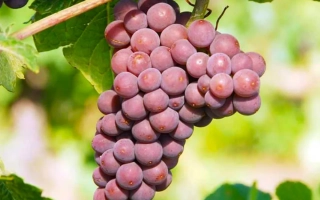
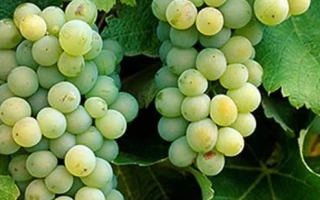
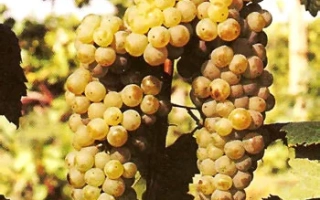
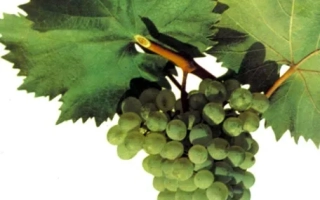
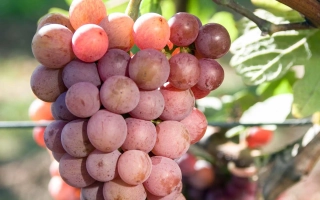
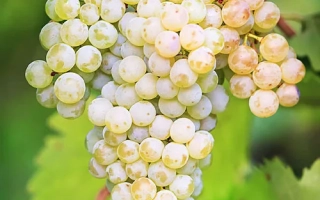
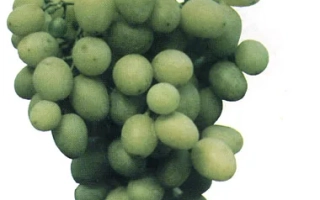
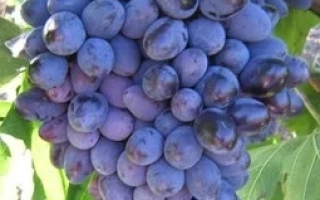
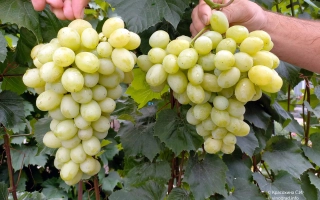
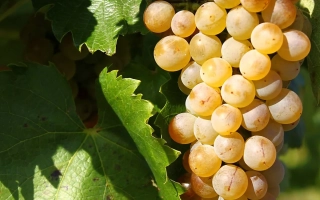
Muller Thurgau is a white grape variety developed in 1882 by German breeder Hermann Muller in Switzerland through crossing Riesling and Madlen Royal. This technical variety has been widely cultivated in Germany, Austria, Switzerland, Czech Republic, and other Central European countries. Muller Thurgau berries have a yellowish-white color with golden hues, juicy flesh, and a pleasant flavor. The variety is characterized by early ripening, usually at the beginning of harvest, and high yield, which is approximately 30% higher than Riesling.
Muller Thurgau prefers well-drained soils and requires more water than Riesling, although it is less demanding in terms of sunlight and climatic conditions. However, the variety is susceptible to gray rot, requiring careful care and irrigation. The grape is widely used for producing table wines and juice. Wines made from Muller Thurgau typically have low acidity, a sweet peach aroma, and various fruity notes, making them enjoyable when young.
Historically, Muller Thurgau was one of the dominant varieties for dry white wines in Germany until the 1980s, but its popularity declined with changing commercial preferences, and many vineyards were replaced by higher-quality varieties such as Riesling and Silvaner. Nevertheless, in certain regions, such as northern Italy, due to old vines and unique terroir characteristics, Muller Thurgau produces more serious wines with good aging potential.