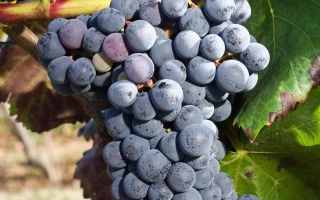
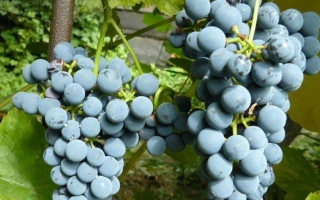
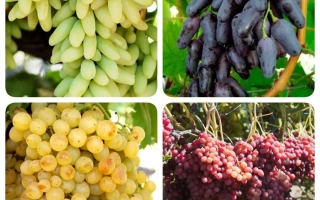
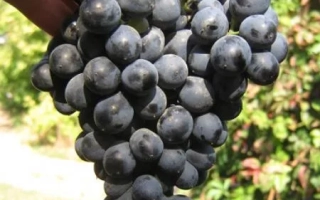
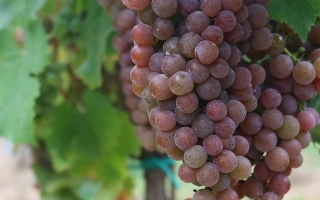
The Carmen grape variety is an early-ripening table variety developed by the Russian breeder Evgeny Georgievich Pavlovsky. This hybrid is characterized by its vigorous growth and perfect flowers, which contribute to high fruitfulness and yield. The clusters of Carmen are large, conical in shape, weighing between 600 and 800 grams, and can reach up to 1.5 kilograms with powerful growth forms. The berries are black, oval or elongated, large—weighing about 6-8 grams each, with a thin skin that is practically imperceptible when consumed. The flesh is dense and crunchy, with a simple, harmonious, and balanced taste, containing up to 20% sugar. The vines of the Carmen variety ripen well, and cuttings root satisfactorily. Despite a moderate level of resistance to fungal diseases, the bushes require regular protective measures. The frost resistance of the variety is low, therefore covering culture is necessary for successful cultivation. The harvest is not recommended to be left on the bushes for a long time after ripening, as the berries begin to wither. Carmen is adapted to various climatic conditions, but to maintain quality and yield it is important to follow agro-technical recommendations. The Carmen variety is valued for its attractive clusters with brightly colored large berries, which possess high storage ability and good transportability. Due to the high content of sugars, vitamins, and microelements, the grape differs with an excellent taste and beneficial properties. It is recommended to plant seedlings with a closed root system in autumn or spring, with mandatory drainage and fertilization of the planting hole. Carmen is successfully cultivated in various regions, from southern to northern, making it a universal choice for viticulturists.