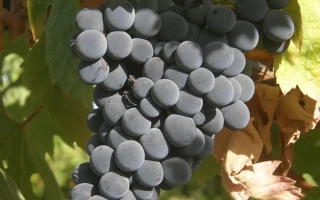
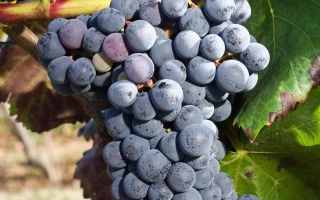
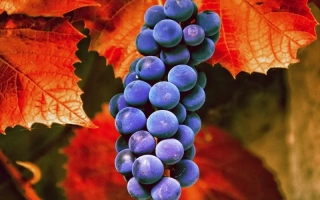
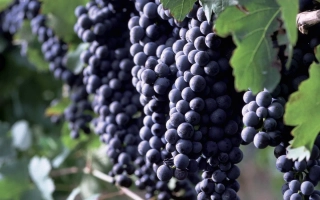
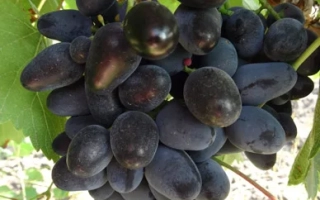
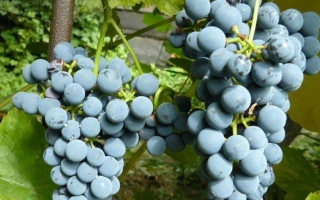
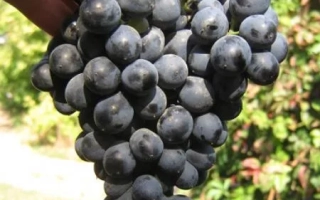
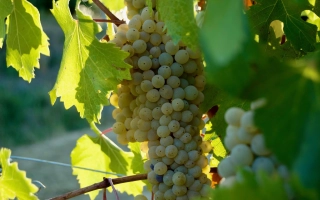
Caladoc (Caladoc) is a red technical grape variety bred in France in 1958 at the INRA Institute of Vine and Wine through the crossing of Grenache and Malbec varieties. This variety is characterized by a medium ripening period and bisexual flowers. The leaves of Caladoc are large or medium-sized, rounded, weakly lobed, five-lobed, and lack pubescence on the underside. The petiolar sinus is open, lyre-shaped with a rounded or flat-tipped bottom. Bunches are medium-sized, conical, often winged, and of medium density. Berries have medium size, weakly oval shape, dark blue color, and are covered with a dense waxy bloom. The skin is thin, while the flesh is juicy with a harmonious taste. Bushes of this variety possess medium vigor and stable yield. Caladoc is distinguished by good resistance to grey rot and is weakly affected by powdery mildew, making it a reliable choice for viticulturists seeking a high-quality harvest with minimal losses. These characteristics contribute to the stable production of high-quality wines. Wines made from Caladoc grapes are full-bodied and typical red wines with intense color and an interesting tannic structure. The tannins in these wines are sufficiently soft and do not have bitterness, which gives the drink harmony and a pleasant taste. In addition, fruitful and balanced rosé wines are produced from this variety, which are characterized by a neutral taste, expanding the possibilities for the use of Caladoc in winemaking practice.