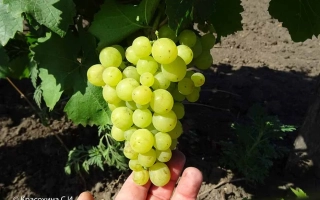
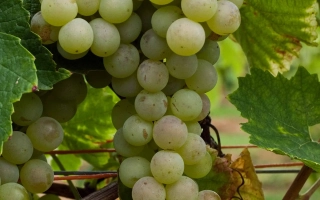
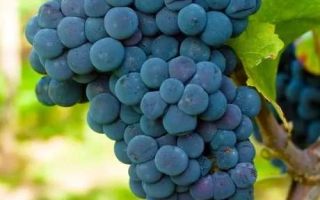
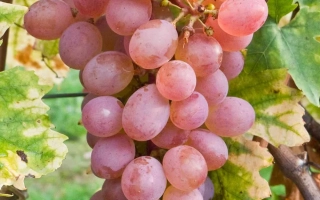
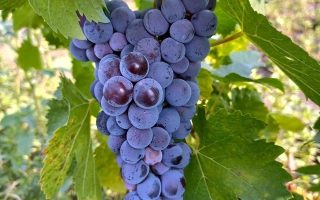
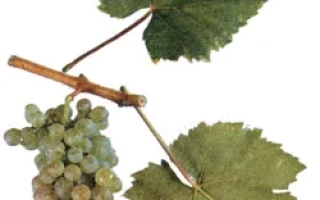
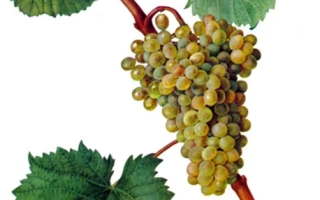
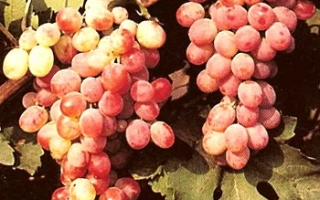
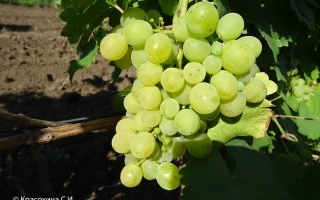
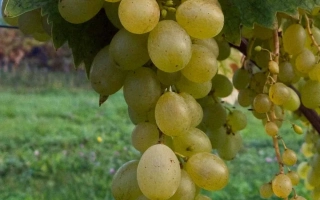
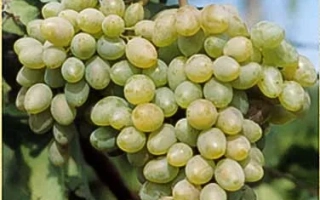
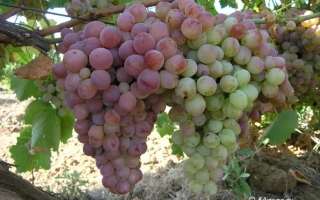
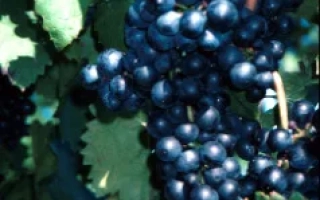
Cserszegi fuszeres — this is a technical grape variety of Hungarian origin, widely cultivated in Eastern European countries, including Ukraine, particularly the Zakarpattia region. The variety ripens at a medium maturity level, typically in late September. The vines have moderate growth vigor, with upright and well-ripened canes. Leaves are small, five-lobed, and deeply lobed, while young shoots start bronze-colored and later turn green. Flowers are hermaphroditic, promoting good pollination and high yield. Bunches of Cserszegi fuszeres are medium-sized, cylindrical or cylindrical-conical, loose or moderately dense, with shoulders and weights ranging from 150 to 180 grams and above. Berries are small, round, approximately 14x14 mm, with thick skin and a delicate pink hue when fully ripe. The flesh is juicy with a distinct varietal aroma combining classic muscat notes and spicy undertones reminiscent of Gewürztraminer. The variety accumulates sugar well — usually 17 to 21% — while acidity is above average, around 9 g/l, imparting freshness and a 'crisp' acidity to the wine. Cserszegi fuszeres exhibits high resistance to fungal diseases: its waxy leaves are lightly affected by mildew, berries are virtually immune to oidium, and the thick skin protects against gray rot even in unfavorable years. However, preventive treatments are recommended to maintain vine health. The variety withstands winter temperatures down to -21 °C without damage. Wines made from this grape are of high quality, featuring a rich and complex bouquet with aromas of Kazanlak rose, lychee, duchesse, mint, light muscat, and spices. The wine can be enjoyed young, but aging only enhances its depth and complexity.