
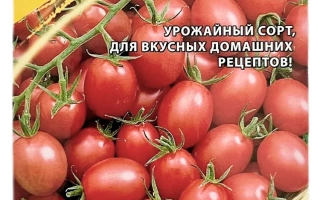


SKU #52150
·
40 views
WIND ROSE
Tomato
Ассоциация «Биотехника»User rating
0 votes0% positive reviews
No ratings yet — be the first.
Product Type
Seeds; Seed material
Plant Type
Determinant
Maturation Period
Up to 90 days
Fruit Weight
100-150 grams, More than 200 grams
Prices in stores
from1.26 €per 1000 seeds
pack from 0.15 € per 0.15 g
11 offers from 8 stores
Store offers · 11 from 8 stores
Prices are updated on loadLoading offers…
Available at: Agrokonsultant · AYRIS · Florium · Greenmarket · Mir-roz · T-Sad · Traskovskyi · Waterlilia
Aggregator catalog: prices are collected automatically from store websites, normalized by AI and converted at the current exchange rate. Before ordering, confirm the price and availability on the store's website. This block is not indexed by search engines — the data is loaded after the page opens.
About product

Tomato Wind Rose — an early-maturing determinate variety developed by Russian breeders, intended for cultivation in open ground and greenhouses, including in northern regions. Plants are bushy, compact, 30–45 cm tall, with strong, well-leafed seedlings. Leaves are medium-sized, dark green, with wavy edges and a slight downy covering. The first flower cluster forms above the 6th–7th leaf, subsequen…
Product Type
Seeds; Seed material
Plant Type
Determinant
Maturation Period
Up to 90 days
Fruit Weight
100-150 grams, More than 200 grams
Description
Tomato Wind Rose — an early-maturing determinate variety developed by Russian breeders, intended for cultivation in open ground and greenhouses, including in northern regions. Plants are bushy, compact, 30–45 cm tall, with strong, well-leafed seedlings. Leaves are medium-sized, dark green, with wavy edges and a slight downy covering. The first flower cluster forms above the 6th–7th leaf, subsequent clusters form every 1–2 leaves, ensuring a prolonged fruiting period from early July to mid-September.
Tomato Wind Rose fruits are round or flat-round in shape, with bright pink or dark pink coloration. The weight of each tomato varies from 100–120 g to 200–300 g depending on growing conditions. The skin is smooth, thin, and does not crack, while the flesh is juicy, meaty, and nearly seedless, making the fruits especially valuable for fresh consumption. Each cluster bears 4–6 fruits that ripen simultaneously, although ripening within the cluster may be uneven, allowing for harvesting in underripe form for further ripening at room temperature.
The variety exhibits high resistance to variable weather conditions, including intense sun, prolonged cold rains, and brief temperature drops to just above zero. Additionally, Tomato Wind Rose shows resistance to phytophthora and other diseases, simplifying care and increasing yield. With proper agronomy, 6–7 kg of marketable fruits can be harvested per square meter, which are well-suited for storage and long-distance transport. These tomatoes are versatile: they are suitable for fresh consumption, as well as for juice production, pickling, and canning.
Tomato Wind Rose fruits are round or flat-round in shape, with bright pink or dark pink coloration. The weight of each tomato varies from 100–120 g to 200–300 g depending on growing conditions. The skin is smooth, thin, and does not crack, while the flesh is juicy, meaty, and nearly seedless, making the fruits especially valuable for fresh consumption. Each cluster bears 4–6 fruits that ripen simultaneously, although ripening within the cluster may be uneven, allowing for harvesting in underripe form for further ripening at room temperature.
The variety exhibits high resistance to variable weather conditions, including intense sun, prolonged cold rains, and brief temperature drops to just above zero. Additionally, Tomato Wind Rose shows resistance to phytophthora and other diseases, simplifying care and increasing yield. With proper agronomy, 6–7 kg of marketable fruits can be harvested per square meter, which are well-suited for storage and long-distance transport. These tomatoes are versatile: they are suitable for fresh consumption, as well as for juice production, pickling, and canning.
Video · 9 videos
Suggest a video →Crop & resistance
Crop
Disease resistance
Specifications hover over for a hint about the specification
| Product Type | |
|---|---|
| Plant Type | |
|
Maturation Period
Maturation Period
Vegetation period from emergence to technical maturity 30-50 days. |
Up to 90 days |
|
Fruit Weight
Fruit Weight
Tomato fruits are classified by weight as: very small — less than 20 grams; small — 20 — 50 grams; medium — 50 — 100 grams; large — 100 — 200 grams; very large — more than 200 grams. |
100-150 grams, More than 200 grams |
|
Fruit Shape
Fruit Shape
Modern tomato varieties have a diverse fruit shape: flat, flat-round, round, oval, elongated-oval, pear-shaped, plum-shaped, cube-shaped, and cylindrical. On poorly fertile soils and under unfavorable growing conditions, tomato fruits may take on a more rounded shape. |
|
|
Fruit Color
Fruit Color
The fruit color of tomato varieties is influenced by the combination of skin and flesh color. Some varieties have transparent skin, others — yellow. When combined differently, the fruits can acquire quite diverse colors. The fruit color is affected by pigments (lycopene) and thei... |
|
| Transportability | |
|
Storage
Storage
Depending on the variety characteristics, the storage period for heads may vary from one month for early varieties to eight months for late cabbage varieties. |
More than 30 days |
|
Yield
Yield
Overall bulb harvest per unit area. Depends on both onion variety characteristics and agronomic practices, fertilizers, and irrigation. Under optimal growing conditions, an onion yield of 100 tons per hectare and above is not considered record-breaking. |
70-100 tons |
| Registration year | 2003 |
| Catalog | Catalog → Tomato |
| Manufacturer | Ассоциация «Биотехника» |
| Legal data |
Show · 5
|
| Country | Russia |
Not yet комментариев. Be the first!
Alternatives
Tomato seeds · similar varieties


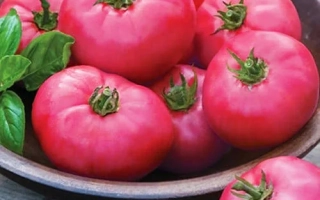


ANDREEVSKY SURPRISE
OOO AGROTEHNOLOGIChESKAYa FIRMA 'AGROS'
041 6 offers
1.16 €per 1000 seeds ≈ 60 ₴



See also
Often considered together with this variety




Recently viewed
Products you’ve viewed on this site
Reviews · 0