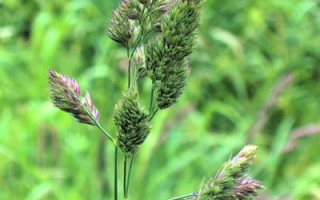
Timothy grass, also known by the Latin name Phleum and the common name Meadow Foxtail, is an annual or perennial herbaceous plant of the Grass family (Poaceae). It is widely distributed across Eurasia and Africa, and thanks to its hardiness, it is successfully cultivated on pastures and meadows worldwide. The plant reaches a height of up to one meter, forming loose bushes with tall stems; its flowers gather into dense cylindrical ears called "sultans", and the fruit is a grain.
Timothy grass is usually grown as a fodder plant for agricultural livestock. There are two main types - meadow and steppe. Meadow timothy grass is distinguished by a short ear, a dense bush, and good foliation; it grows in the northern non-black earth zone and forest-steppe zones, and can also survive on swampy and moist soils due to its low soil requirements. Steppe timothy grass is more wild, but with proper sowing (in a mixture with clover or pure) yields a harvest of 15 to 30 centners of hay per hectare and can reach 65 centners of hay and 150-250 centners of green mass on dry lands.
Timothy grass seeds are usually sown in the spring, sometimes as a catch crop under grains. With pure sowing, the first cut yields a harvest already in the second year, and when mixed with clover - immediately after the first cut. After the clover is mown, the plant continues to give a good harvest for another 3-4 years. Due to its durability and ability to quickly regrow after mowing, timothy grass is a valuable resource for the production of quality hay and green mass, and serves as an important fodder element in agroecosystems.