


SKU #35556
·
51 views
Stacy
Sunflower
HIBRISOL S.L.User rating
0 votes0% positive reviews
No ratings yet — be the first.
Hybrid Type
Simple Hybrid
Oil Content
50-55%
Vegetation Period
100-110 days
Plant; height
160-170 cm
Prices in stores
from18.41 €per 1 kg
pack from 5.22 € per pack
2 offers from 2 stores
Store offers · 2 from 2 stores
Prices are updated on loadLoading offers…
Available at: Орхидеи мира · Vegan-Tehnika
Aggregator catalog: prices are collected automatically from store websites, normalized by AI and converted at the current exchange rate. Before ordering, confirm the price and availability on the store's website. This block is not indexed by search engines — the data is loaded after the page opens.
About product

Stacy sunflower is a high-yielding hybrid with early maturity, exhibiting high resistance to various stress factors and a broad spectrum of diseases (A-G+). This variety is distinguished by its drought and heat tolerance, making it an optimal choice for cultivation in southern and southeastern regions. The vegetative period lasts approximately 105-112 days, enabling the hybrid to successfully adap…
Hybrid Type
Simple Hybrid
Oil Content
50-55%
Vegetation Period
100-110 days
Plant; height
160-170 cm
Description
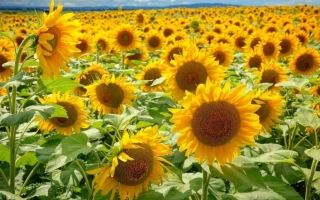
Stacy sunflower is a high-yielding hybrid with early maturity, exhibiting high resistance to various stress factors and a broad spectrum of diseases (A-G+). This variety is distinguished by its drought and heat tolerance, making it an optimal choice for cultivation in southern and southeastern regions. The vegetative period lasts approximately 105-112 days, enabling the hybrid to successfully adapt to various climatic conditions. Plant height reaches 165-175 cm, promoting good development and yield formation.
The oil content of Stacy sunflower is at the level of 51-53%, and its yield potential reaches 55 centners/ha. Seeds are treated with a complex of fungicides and microfertilizers, including nutrients and growth stimulators, ensuring reliable protection against diseases and maximizing the hybrid's potential. The hybrid is resistant to diseases such as downy mildew, gray mold, phomopsis, rust, septoria, phoma, and alternaria, as well as pests including the sunflower weevil and sunflower moth.
The cultivation technology of this hybrid involves the use of herbicide protection systems, particularly Clearfield and Granstar, allowing the application of tribenuron-methyl-based herbicides up to 50 g/ha without harm to the plant. The recommended planting density varies depending on moisture conditions: 55-60 thousand plants per hectare under adequate moisture, and 45-55 thousand plants per hectare under limited moisture. Thanks to its characteristics and comprehensive resistance, Stacy sunflower is a reliable and highly efficient choice for modern farmers.
The oil content of Stacy sunflower is at the level of 51-53%, and its yield potential reaches 55 centners/ha. Seeds are treated with a complex of fungicides and microfertilizers, including nutrients and growth stimulators, ensuring reliable protection against diseases and maximizing the hybrid's potential. The hybrid is resistant to diseases such as downy mildew, gray mold, phomopsis, rust, septoria, phoma, and alternaria, as well as pests including the sunflower weevil and sunflower moth.
The cultivation technology of this hybrid involves the use of herbicide protection systems, particularly Clearfield and Granstar, allowing the application of tribenuron-methyl-based herbicides up to 50 g/ha without harm to the plant. The recommended planting density varies depending on moisture conditions: 55-60 thousand plants per hectare under adequate moisture, and 45-55 thousand plants per hectare under limited moisture. Thanks to its characteristics and comprehensive resistance, Stacy sunflower is a reliable and highly efficient choice for modern farmers.
Crop & resistance
Crop
Disease resistance
Pest resistance
Устойчивость к заразихе
Specifications hover over for a hint about the specification
| Hybrid Type | |
|---|---|
| Oil Content | 50-55% |
| Vegetation Period | 100-110 days |
| Plant; height | 160-170 cm |
|
Herbicide Tolerance
Herbicide Tolerance
Unique combination of the herbicide EURO-LIGHTNING®, containing two active ingredients of the imidazolinone class, and high-yielding hybrids resistant to this herbicide, developed using traditional selection methods (without genetic engineering). Advantages of using CLEARFIELD te... |
|
| Registration year | 2022 |
| Catalog | Catalog → Sunflower |
| Manufacturer | HIBRISOL S.L. |
| Country | Spain |
Not yet комментариев. Be the first!
Alternatives
Sunflower seeds · similar varieties








See also
Often considered together with this variety




Recently viewed
Products you’ve viewed on this site
Reviews · 0