


SKU #57970
·
28 views
SPSHN
Sunflower
OOO 'NPO ALTAJ'User rating
0 votes0% positive reviews
No ratings yet — be the first.
Seeds; size
Medium, Large
Vegetation Period
110-120 days
Plant; height
150-160 cm
Registration year
2020
About product

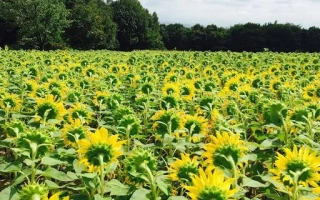
Sunflower SPSHN is a late-maturing hybrid intended for cultivation in various agroclimatic zones, including the Northern, Northwestern, Central, Volgo-Vyat, Central Chernozem, North Caucasus, Middle Volga, Lower Volga, Ural, West Siberian, East Siberian, and Far Eastern regions. It is recommended for cultivation in all agroclimatic zones of the Altai Krai. Plants reach a medium-high height of 150-…
Seeds; size
Medium, Large
Vegetation Period
110-120 days
Plant; height
150-160 cm
Registration year
2020
Description
Sunflower SPSHN is a late-maturing hybrid intended for cultivation in various agroclimatic zones, including the Northern, Northwestern, Central, Volgo-Vyat, Central Chernozem, North Caucasus, Middle Volga, Lower Volga, Ural, West Siberian, East Siberian, and Far Eastern regions. It is recommended for cultivation in all agroclimatic zones of the Altai Krai. Plants reach a medium-high height of 150-170 cm, exhibit resistance to lodging and shattering, which helps preserve yield and facilitates harvesting. The vegetation period is approximately 117 days, corresponding to a late maturation period. SPSHN is characterized by high dry matter content in green mass during the flowering phase — from 17.4% to 21.7%, as well as high levels of mono- and polysaccharides (6.8–7.4%). In the leaf-stem mass during the milky-wax ripening stage, used for silage, crude protein content reaches 10.9–11.4%, and digestible protein — 7.6–9.0%. Dry matter content varies from 25.8% to 29.9%, with fatty acid content not exceeding 0.5%, and lactic acid content of 4.2–4.5%. Feed units per hectare reach 2.77, making this variety promising for feed use. The hybrid demonstrates high resistance to various races of downy mildew (A-G) and is tolerant to diseases such as phomopsis, gray, and white rot. Due to these qualities and adaptability to stress factors, SPSHN ensures stable yield and product quality. Seeds have medium to large size, with a 1000-seed weight of approximately 59 g. This sunflower is suitable for cultivation in various regions with different climatic conditions, making it a versatile choice for farmers aiming to achieve high-quality yields.
Crop & resistance
Crop
Disease resistance
Устойчивость к заразихе
Specifications
| Seeds; size | |
|---|---|
| Vegetation Period | 110-120 days |
| Plant; height | 150-160 cm |
| Registration year | 2020 |
| Catalog | Catalog → Sunflower |
| Manufacturer | OOO 'NPO ALTAJ' |
| Legal data |
Show · 6
|
| Country | Russia |
Store offers
Prices are updated on loadLoading offers…
Aggregator catalog: prices are collected automatically from store websites, normalized by AI and converted at the current exchange rate. Before ordering, confirm the price and availability on the store's website. This block is not indexed by search engines — the data is loaded after the page opens.
Not yet комментариев. Be the first!
Alternatives
Sunflower seeds · similar varieties





See also
Often considered together with this variety







Recently viewed
Products you’ve viewed on this site
Reviews · 0